
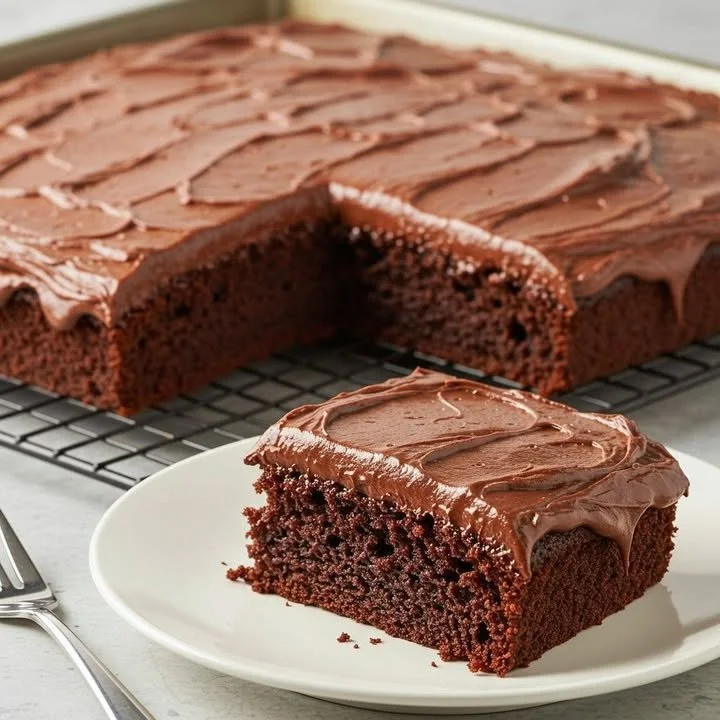
Once your batter is ready, carefully pour it into the prepared baking sheet. Make sure to spread it evenly, so it bakes uniformly. Pop it in the oven and allow it to bake for about 25-30 minutes or until a toothpick inserted into the center comes out clean. The scent of chocolate wafting through my home at this point is utterly delightful! Once baked, let the cake cool in the pan for at least 15 minutes before transferring it to a wire rack.
Now, let’s move on to the milk chocolate frosting! In a separate bowl, beat together softened butter and cocoa powder until well blended. Gradually add powdered sugar and milk, alternating and mixing until you achieve the desired consistency. I sometimes tweak the amount of milk based on how creamy I want the frosting to be. Once your cake is completely cooled, spread the frosting generously over the top. To finish off, I like to sprinkle some chocolate shavings or a few chopped nuts for texture.
Pro Tips for Best Results
I always recommend using high-quality cocoa powder for the best flavor. I tested this recipe three ways, and the results were a delightful reminder that using premium ingredients makes all the difference. If you want a richer chocolate flavor, consider adding a tablespoon of espresso powder to the dry ingredients. It really enhances the chocolate!
Also, don’t rush the cooling process; let the cake cool completely before adding the frosting. I once made the mistake of frosting a warm cake, and let me tell you—it turned into a melting chocolate river that was delicious, but not very visually appealing! It’s all about patience in baking.
Finally, I suggest making the frosting while the cake cools. It saves time and keeps the frosting from setting too much. I always make sure my butter is softened to room temperature; it makes for a smoother, creamier frosting that’s easy to spread.
Common Mistakes to Avoid
While this recipe is pretty straightforward, there are some common pitfalls I’ve learned through trial and error. First, avoid over-mixing your batter after adding flour; this can make the cake tough instead of light and fluffy. When I first started baking, I didn’t realize that gluten development could ruin the texture of a cake. (See the next page below to continue…)