
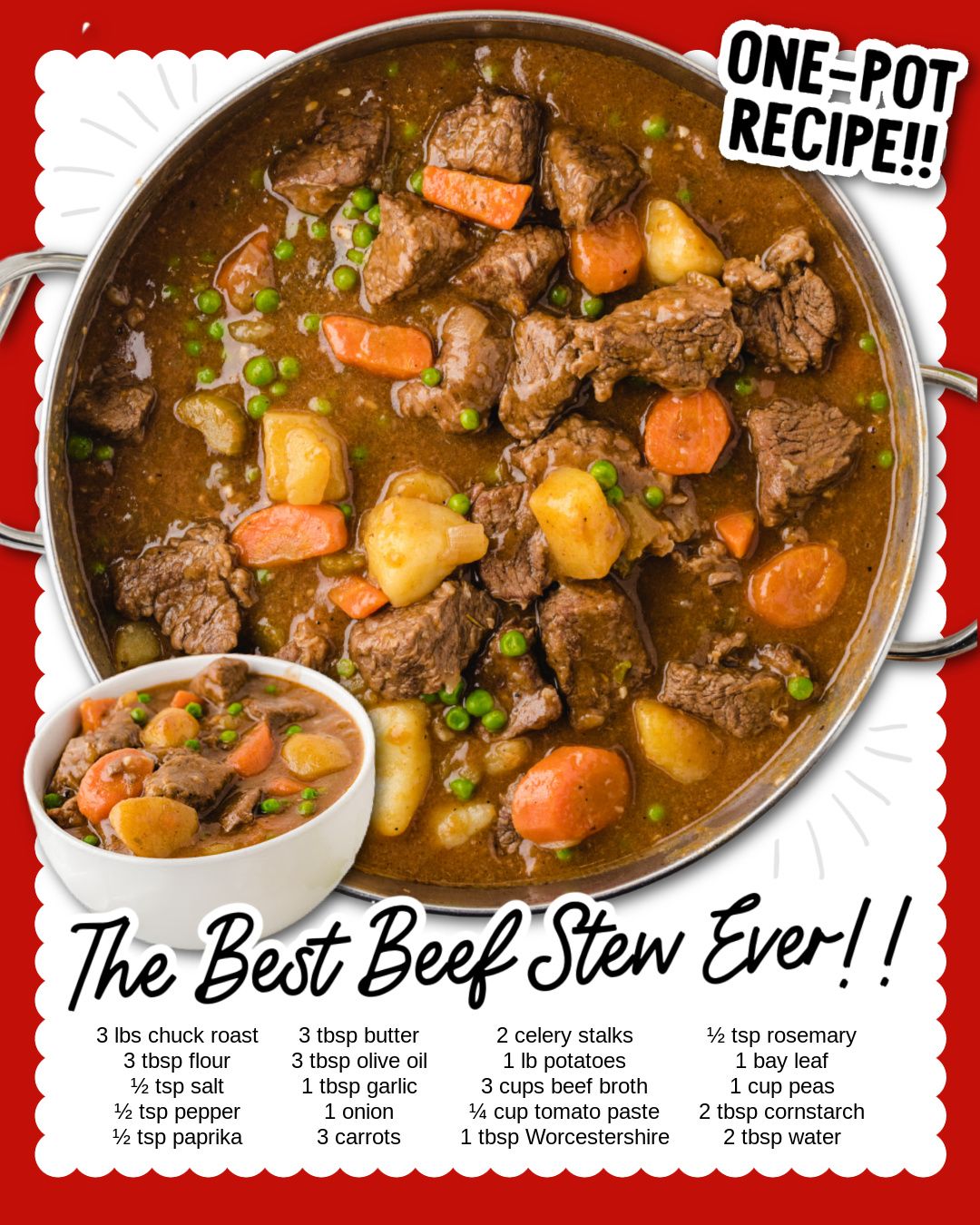
Another pitfall is under-seasoning the flour. That initial coating of salt, pepper, and paprika is your chance to season the meat from the inside out. I used to be timid here, thinking I could adjust later. But seasoning in layers is crucial for deep flavor. Don’t be afraid of that half teaspoon each of salt and pepper; it’s seasoning three pounds of meat and a whole pot of vegetables. Trust the process.
Don’t rush the vegetable sauté. If you add the broth before the onions, carrots, and celery have really softened and the tomato paste has darkened, you’re missing a layer of sweetness and depth. That few minutes of sautéing builds a flavor foundation that can’t be replicated. Let the vegetables sweat and soften, and watch the tomato paste change from bright red to a rusty, brick red color.
Finally, avoid adding the potatoes at the beginning. I did this once, thinking it would save time. They completely disintegrated after two hours of cooking, thickening the stew in a starchy, muddy way rather than with the clean thickness of the cornstarch slurry. Adding them in the last 30-45 minutes ensures they hold their shape and provide a perfect, creamy texture against the tender beef.
Serving Suggestions
I like serving this stew in wide, shallow bowls to showcase all the beautiful chunks of meat and vegetables. A final flourish of freshly chopped parsley or a crack of black pepper on top makes it look restaurant-worthy. For me, a stew this rich demands a simple, crusty bread on the side—a sourdough boule or a baguette—for dunking and sopping up every last drop of that incredible gravy. It’s non-negotiable in my house.
For a heartier meal, I’ll sometimes serve it over a bed of buttery egg noodles or a scoop of creamy mashed potatoes. The potatoes create a wonderful “double starch” situation that might seem decadent, but the way the stew gravy blankets the mash is absolute comfort food heaven. It turns the stew into more of a “beef Bourguignon” style dish that feels extra special for a dinner party.
On a really cozy night, I keep it simple with just the stew and bread, but I’ll add a bright, acidic side to cut through the richness. A simple arugula salad with a lemon vinaigrette or even just some quick-pickled red onions on the table provide a refreshing contrast that makes each bite of the stew feel new again. It balances the plate perfectly.
Variations & Customizations
This recipe is a wonderful canvas. My favorite variation is a “Guinness Beef Stew.” I substitute one cup of the beef broth for a cup of Guinness or another dark beer, adding it when I pour in the broth. It introduces a malty, slightly bitter depth that’s incredible for a St. Patrick’s Day twist. I’ll often throw in some sliced mushrooms with the onions for an even earthier flavor profile.
For a richer, deeper flavor, I sometimes use a full cup of red wine instead of a cup of broth. A nice Cabernet or Merlot works beautifully. The key is to let it simmer with the vegetables for a few minutes after adding it, to cook off the raw alcohol taste, before adding the rest of the broth. This creates a luxurious, complex sauce that feels incredibly fancy with minimal extra effort.
If you’re not a fan of peas, green beans (added in the last 15 minutes) or corn work wonderfully. I’ve also swapped the potatoes for parsnips or turnips for a lower-carb version, and they absorb the gravy just as beautifully. For an herby twist, fresh thyme is a fantastic partner or replacement for the rosemary. The stew is forgiving—make it your own!
How to Store, Freeze & Reheat
Honestly, this stew tastes even better the next day after the flavors have had time to marry. To store, let it cool completely, then transfer it to an airtight container. It will keep in the refrigerator for up to 4 days. I find the potatoes may soften a bit more, but the flavor is phenomenal. Do not leave it at room temperature for more than two hours while cooling.
This stew freezes beautifully, which is why I often double the batch. I cool it completely, then portion it into freezer-safe containers or bags, leaving some room for expansion. It keeps for up to 3 months. I’ve tried freezing it with the potatoes, and while they can become a little grainy upon thawing, they’re still perfectly tasty in the context of the hearty stew.
To reheat, I always thaw frozen stew overnight in the refrigerator. For both fridge-cold and thawed stew, I gently reheat it in a pot over low heat on the stovetop, stirring occasionally and adding a small splash of broth or water if it seems too thick. The microwave can work in a pinch, but it heats unevenly and can make the vegetables rubbery. Low and slow on the stove preserves the perfect texture.
Conclusion
This one-pot stovetop beef stew is more than just a recipe; it’s a feeling of home. It’s the quiet satisfaction of building layers of flavor, the anticipation as smells fill your kitchen, and the deep comfort of that first spoonful. I hope it brings as much warmth to your table as it has to mine. Give it a try on the next chilly day, and don’t forget the crusty bread. Happy cooking, friends