
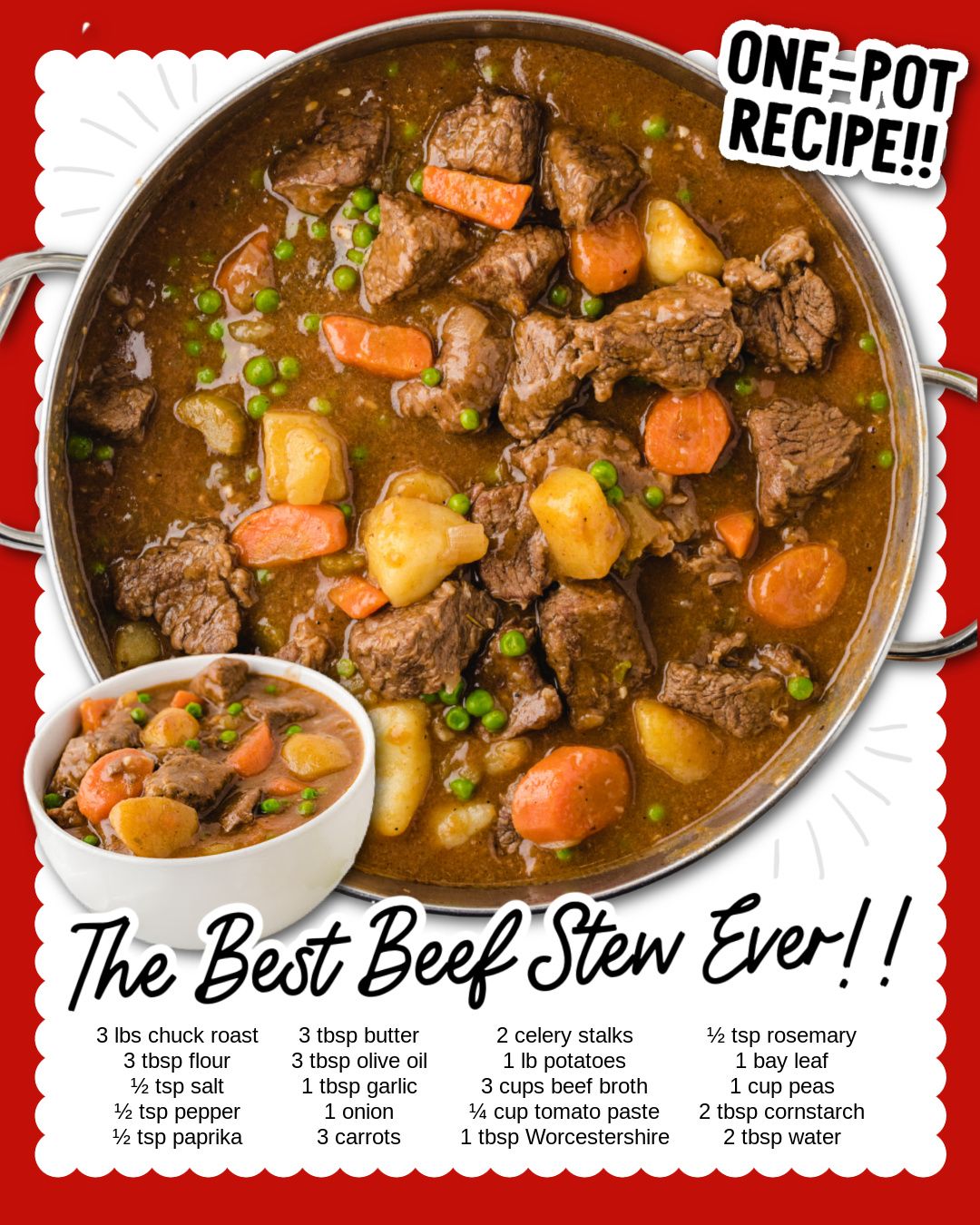
After that initial simmer, I add the potato chunks, nestling them into the rich broth. I cover it again and let it cook for another 30-45 minutes, until both the potatoes and beef are fork-tender. In the last 5 minutes, I stir in the frozen peas just to heat through. Finally, I make a slurry by mixing the cornstarch with cold water in a small bowl until smooth. I stir this into the bubbling stew, and within minutes, it transforms the broth into a luxurious, glossy gravy that coats the back of a spoon perfectly.
Pro Tips for Best Results
I tested browning the meat three different ways: all at once, in two batches, and in three batches. Crowding the pot was the biggest mistake. The meat releases steam and boils instead of searing, leaving you with gray beef and no fond. For 3 pounds of chuck, I’ve found two solid batches is the sweet spot. It feels like an extra step, but it’s the difference between a good stew and the best stew. Give each piece space to breathe in the hot oil.
Here’s what I learned the hard way about the simmer: a gentle bubble is key. The first time, I had the heat too high, causing a rapid boil that made the beef tough and shrunken. You want the liquid to be moving, but not violently rolling. Once you put the lid on, adjust the heat to the lowest setting that maintains that gentle movement. This slow, even heat is what coaxes the collagen in the chuck roast into gelatin, creating that fall-apart texture and silky sauce.
Don’t add the peas or the cornstarch slurry too early. Peas will turn to mush if simmered for more than a few minutes, losing their bright color and sweet pop. Add them at the very end. As for the slurry, always mix cornstarch with cold water before adding. Adding cornstarch directly to the hot stew will instantly create unappealing lumps. The cold slurry integrates smoothly and thickens the entire pot beautifully and evenly.
Common Mistakes to Avoid
My biggest first-time mistake was not patting the beef dry. I was in a hurry and tossed the damp cubes right into the flour. The flour became a pasty glue, and when it hit the hot oil, it just steamed and peeled off instead of creating a crisp, brown crust. This meant less flavor in the meat and less fond in the pot for our gravy base. Take the extra 60 seconds to dry the beef thoroughly—it makes a monumental difference.(See the next page below to continue…)