
Another pitfall is overcooking the sauce after adding the dairy. Once the cream and milk are in, you want to bring it to a gentle simmer. A rolling boil can cause the dairy to separate or curdle, giving your sauce a grainy texture. Keep the heat medium-low and be patient.
Don’t use freshly boiled, piping hot pasta water to thin your sauce. The extreme heat can shock the dairy. The reserved water, while hot, has cooled slightly from boiling and is the perfect temperature to adjust your sauce without risk of breaking it.
Finally, avoid using low-fat dairy substitutes. The fat in the cream and butter is necessary for a lush, cohesive sauce that won’t separate. If you must substitute, full-fat canned coconut milk is a better option than skim milk, but the classic ranch flavor will be altered.
Serving Suggestions
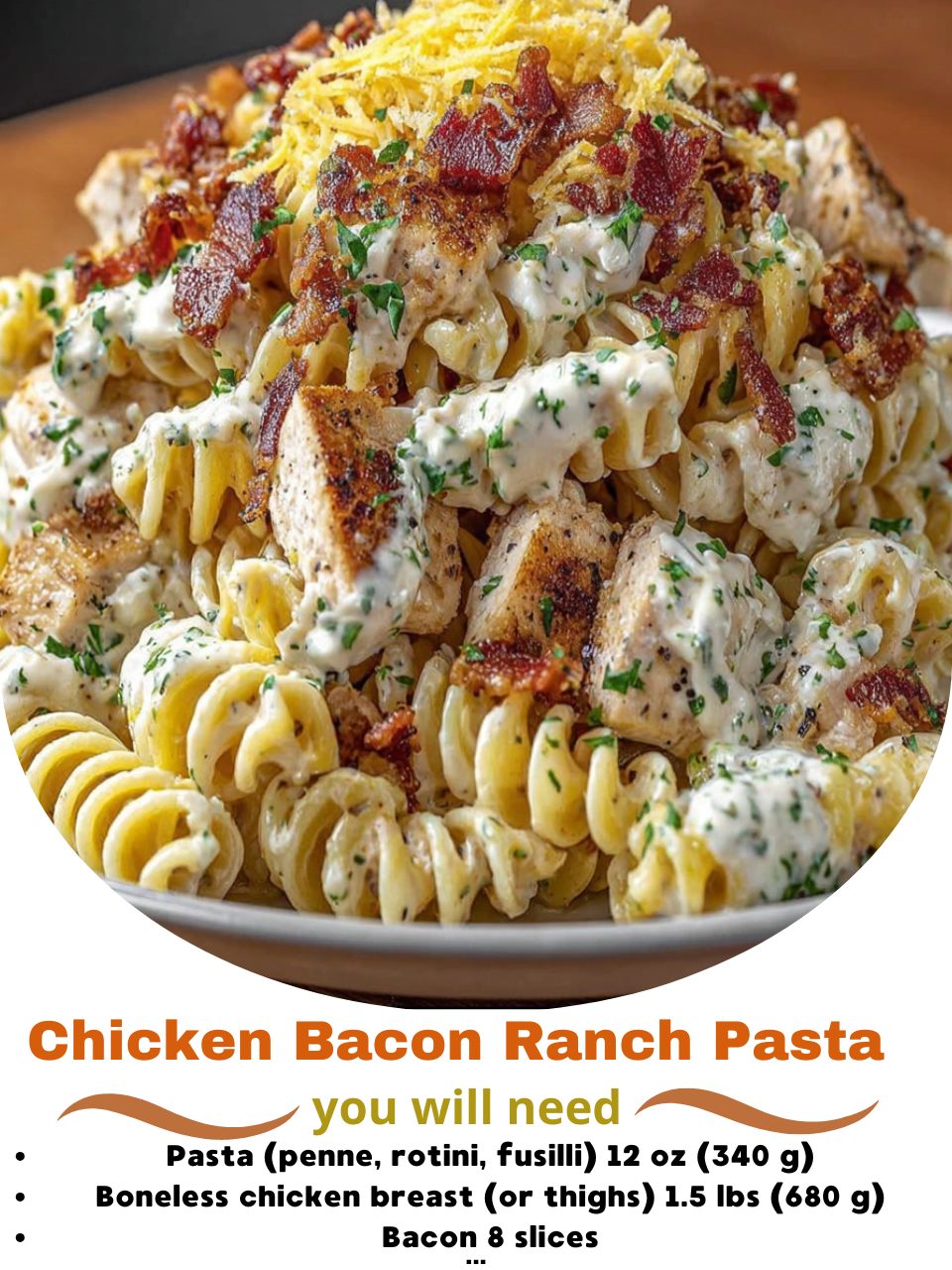
I like serving this pasta immediately, garnished with the remaining crispy bacon, a generous sprinkle of extra Parmesan, and a handful of fresh chopped parsley or chives for a pop of color and freshness. The contrast of the hot, creamy pasta with the cool, crisp garnish is perfect.
For a complete meal, I’ll serve it with a simple side salad dressed in a light lemon vinaigrette to cut through the richness. A side of garlic bread is also non-negotiable in my house for soaking up every last bit of that creamy ranch sauce left on the plate.
When I’m bringing this to a potluck or serving a crowd, I’ll keep it warm in a slow cooker on the “warm” setting. It holds beautifully, and the sauce actually thickens to the perfect consistency after sitting for 20-30 minutes.
Variations & Customizations
This recipe is wonderfully adaptable. My favorite variation is a “Loaded” version. I stir in a cup of frozen peas and a cup of chopped tomatoes during the last two minutes of simmering the sauce. It adds color, freshness, and makes it feel even more like a complete one-pot meal.
For a spicy kick, I’ll add a teaspoon of red pepper flakes to the garlic, or use a spicy ranch seasoning mix if I can find it. You can also top individual servings with sliced jalapeños or a drizzle of hot sauce.
If you want to lighten it up, you can use half-and-half instead of heavy cream and add an extra 1/4 cup of Parmesan to help thicken the sauce. You can also use a whole wheat or chickpea pasta. For a vegetarian twist, omit the chicken and bacon, use vegetable broth, and add sautéed mushrooms and spinach for heartiness.
How to Store, Freeze & Reheat
This pasta stores well in an airtight container in the refrigerator for up to 3 days. The sauce will absorb into the pasta, so it will thicken. It’s still delicious, just less saucy.
I do not recommend freezing this dish. Cream-based sauces can separate and become grainy when thawed and reheated. The pasta also becomes very soft and mushy. This is a dish best enjoyed fresh or as leftovers within a few days.
To reheat leftovers, the stovetop is best. Gently warm it in a skillet over low heat, adding a splash of milk or chicken broth to bring back the sauciness. Stir frequently. The microwave can work for single portions, but heat in 60-second intervals, stirring well between each, to avoid hot spots and an oily sauce.
Conclusion
This Chicken Bacon Ranch Pasta is the ultimate comfort food mash-up—creamy, savory, salty, and utterly satisfying. It’s proof that the simplest combinations, done right, can create a meal that feels like a celebration. I hope this recipe brings as much warmth and happy, full bellies to your home as it has to mine. Give it a try this week; you won’t regret it. Happy cooking, friends.