
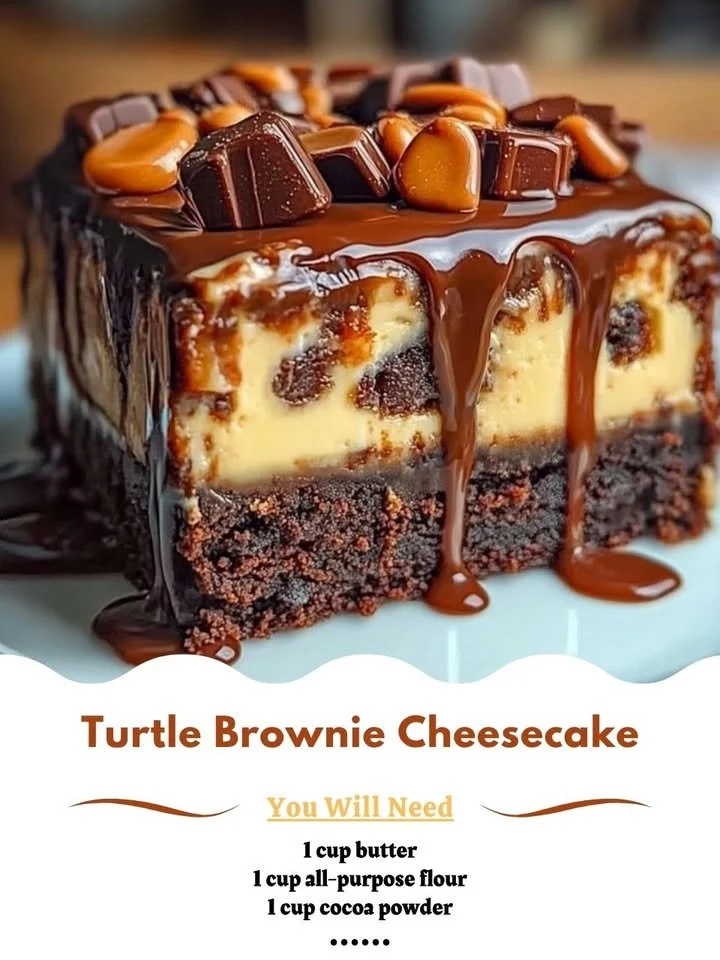
Once your brownie base is partially baked, let’s move on to the cheesecake layer. In a separate mixing bowl, beat together the softened cream cheese and sugar until it’s smooth and creamy. Add in the vanilla extract and eggs, mixing well after each addition. Finally, fold in the sour cream gently, ensuring everything is well combined. Pour this heavenly mixture over the brownie base in your springform pan, and then return it to the oven for an additional 35-40 minutes. The cheesecake should be set around the edges but slightly jiggly in the center when it’s done.
After the baking time is completed, I like to turn off the oven and leave the cheesecake inside for a little while longer – about 10-15 minutes. This helps to prevent cracking. Once it’s out and cooled a bit, let it sit at room temperature for another 30 minutes before refrigerating it for at least 4 hours (though overnight is ideal!). This waiting game is tough, but trust me, it’s completely worth it.
Before serving, warm up some caramel sauce for drizzling over the top, and sprinkle on chopped pecans and chocolate chips if you’re feeling extra indulgent. A dollop of whipped cream on the side makes it even better!
Pro Tips for Best Results
I tested this recipe three ways, and my pro tip is to allow the cream cheese to come to room temperature before mixing. This helps achieve that velvety texture. Also, don’t skip the sour cream – it elevates the cheesecake flavor and keeps it moist.
Another thing I’ve learned through trial and error is to watch the baking time closely. Ovens can be funny creatures; some run hotter than others. I always check for doneness a few minutes early to avoid overbaking, which can lead to a dry cheesecake.
Lastly, for the best visual results, let your Turtle Brownie Cheesecake chill overnight. The flavors deepen and the texture firms up beautifully – it’s like waiting for a present to be unwrapped!
Common Mistakes to Avoid
One common mistake I’ve made in the past is not reading the instructions on the brownie mix carefully – this can lead to incorrectly measuring the additional ingredients. Always measure twice, bake once, right? It’s always best to have everything prepped before you start assembling; trust me, you don’t want to be scrambling for eggs when the oven is on! (See the next page below to continue…)