
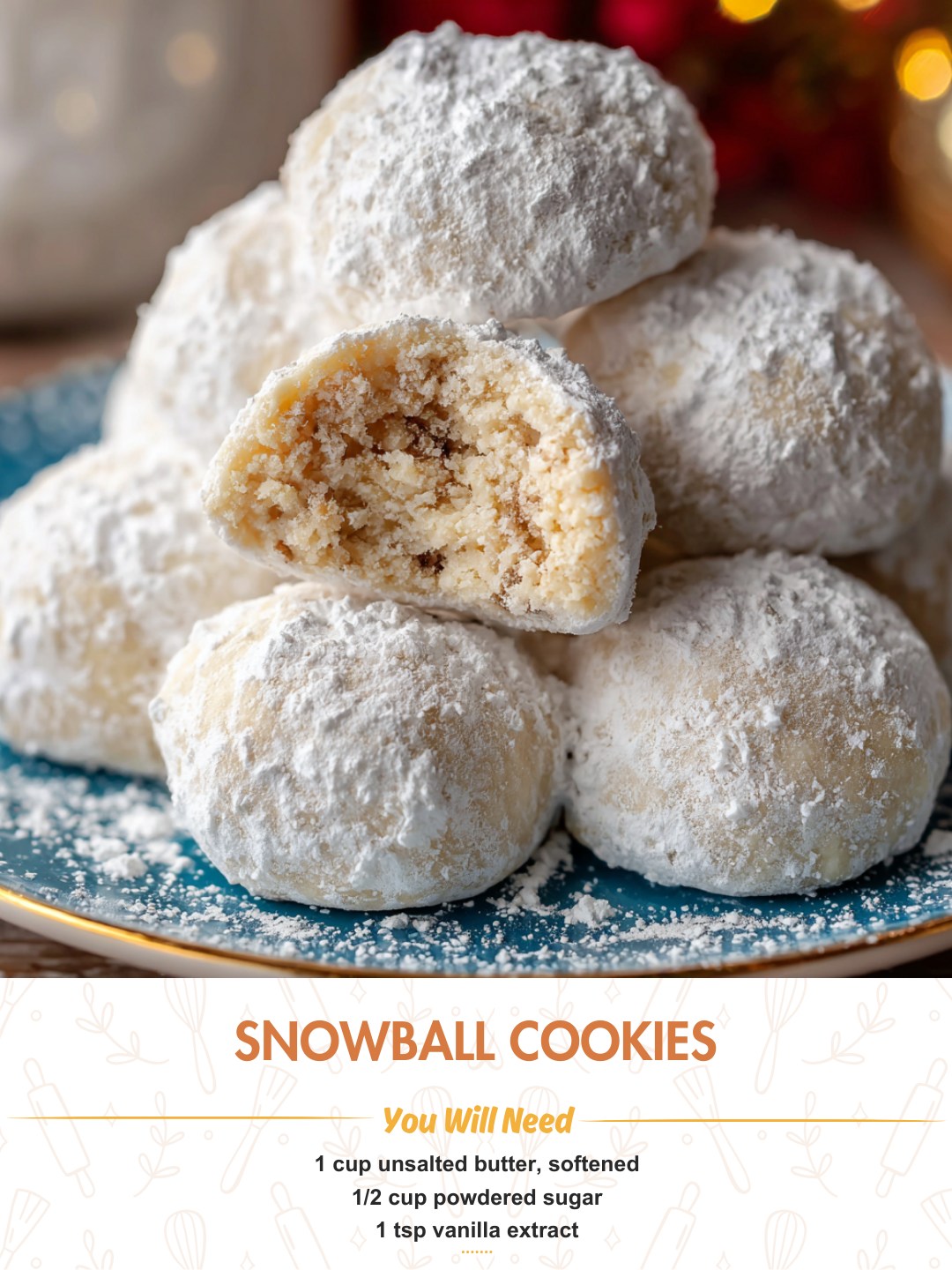
Using a small cookie scoop or a tablespoon, I portion the dough, rolling each piece between my palms to form a smooth, 1-inch ball. I place them about 2 inches apart on the prepared baking sheets—they don’t spread much, but they need space for heat circulation. I bake them for 12-15 minutes, just until the bottoms are lightly golden and the tops look dry and set. They should remain pale on top. The most important step happens the moment they come out of the oven: while still very warm, I carefully roll each cookie in the remaining powdered sugar. This first coat melts slightly into a glaze. After they cool completely on a wire rack, I give them a second, generous roll in powdered sugar for that iconic, thick, snowy finish.
Pro Tips for Best Results
I tested the nut preparation three different ways: raw and coarse, toasted and coarse, and toasted and very fine. Toasted and very fine was the clear winner. The toasting unlocks deep flavor, and the fine texture allows the nuts to be distributed evenly, acting almost like a flour and contributing to the cookie’s signature sandy, meltaway texture. Large chunks interrupt that perfect crumble.
Here’s what I learned the hard way about the powdered sugar coating: the temperature of the cookie is everything. Roll them too hot, and the sugar melts into a thin, clear glaze. Wait until they’re stone cold, and the sugar won’t stick properly. The magic window is when they are still warm to the touch but have firmed up enough to handle, about 5-8 minutes out of the oven. That first coat acts like a glue for the second, final snowy layer.
For the most uniform and tender cookies, avoid overmixing once the flour is added. Mix on low just until no dry streaks remain. Overmixing develops the gluten in the flour, which can make the cookies tough instead of tender. I also recommend chilling the dough for 30 minutes if your kitchen is very warm, as it makes rolling much easier. A cool, firm dough results in perfectly round spheres that hold their shape beautifully in the oven.
Common Mistakes to Avoid
My biggest first-time mistake was using butter that was too soft, almost melted. I thought it would cream faster, but it created a greasy dough that spread terribly in the oven. My snowballs looked like sad, flat puddles. The butter should be cool to the touch but yield easily—about 65°F. If you press it, your finger should leave a clear indent without sinking straight through. This consistency is key for structure.(See the next page below to continue…)