
Don’t try to speed up the melting process for the fudge base. White chocolate is incredibly delicate. If you turn the heat up past low, you risk scorching the bottom or causing the fats to separate, leaving you with an oily, grainy mixture. I made this mistake the first time, and I had to start over with new ingredients. Low and slow is the only way to achieve that velvety-smooth base.
Avoid using a glass baking dish if you can. Glass is a poor conductor of heat, so the caramel layer takes much longer to cool and set, which can throw off your timing and make the final product harder to release cleanly. A metal pan allows for quicker, more even cooling and setting of both the caramel and the fudge, giving you that perfect, clean flip.
Finally, don’t skip the parchment paper lining. Greasing the pan is not enough. The caramel layer is sticky, and the fudge is rich. Parchment paper with ample overhang is your insurance policy for a flawless, stress-free release. Trying to pry out the first beautiful square without it will likely end in it breaking or the fruit layer sticking to the pan. It’s a one-minute step that saves so much frustration.
Serving Suggestions
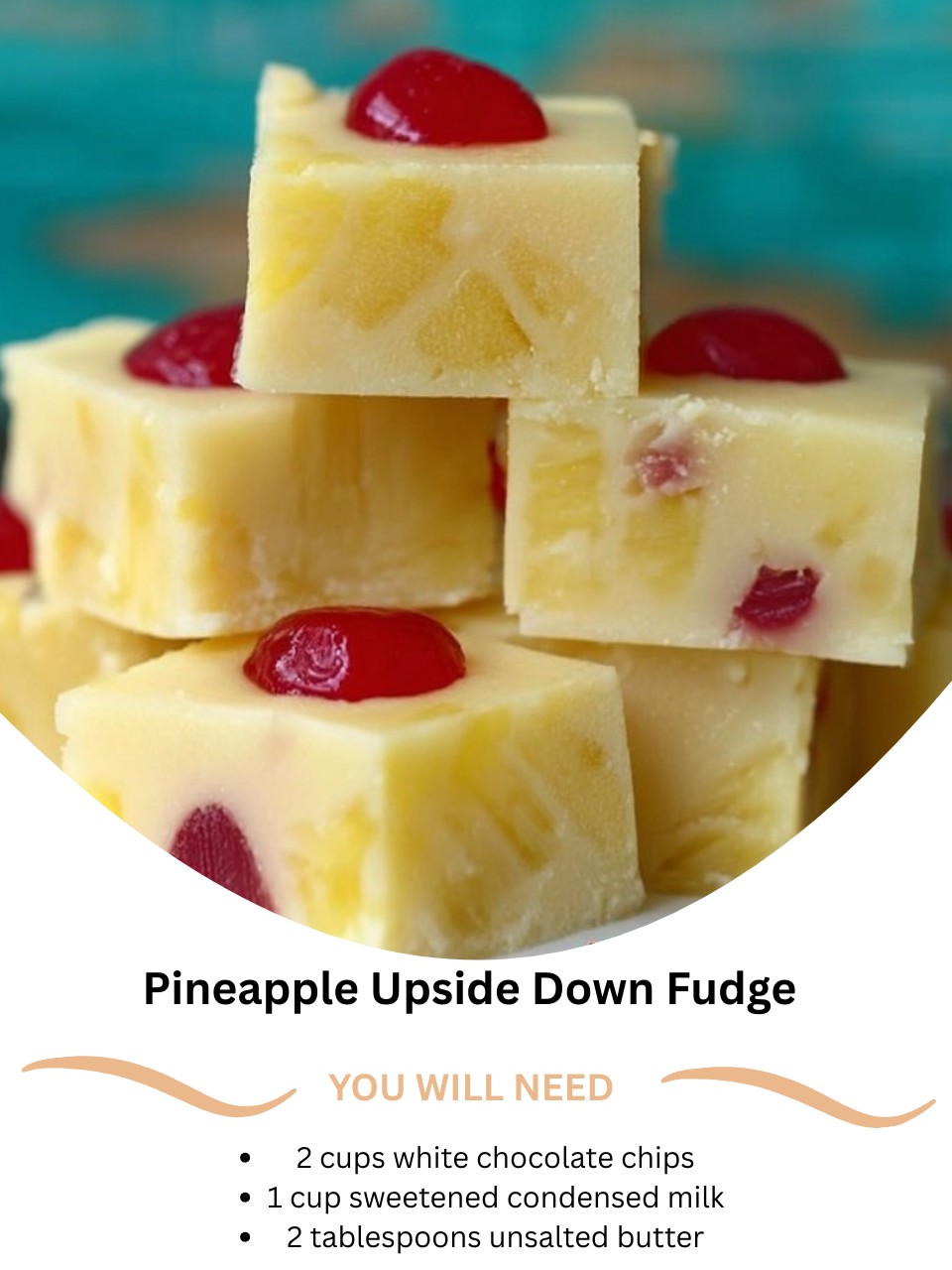
I love serving this fudge at a summer barbecue or potluck, displayed on a simple white platter. The golden pineapple and red cherries look like edible sunshine and always become the centerpiece of the dessert table. For a fun twist, I sometimes use a small cookie cutter to cut the fudge into shapes after the big flip, creating individual “mini cakes” that are adorable for a party.
This is also a fantastic giftable treat. Once sliced, I package a few squares in a clear cellophane bag tied with a green ribbon—it instantly evokes a tropical feel. It’s such a unique alternative to cookies or brownies, and because it’s so rich, a little goes a long way, making one batch perfect for several thoughtful gifts for neighbors, teachers, or friends.
For a truly decadent dessert experience, I’ll serve a square slightly chilled alongside a scoop of vanilla bean ice cream or a dollop of freshly whipped cream. The cold, creamy fudge with the cool ice cream is heavenly, and it turns a simple weeknight dessert into something that feels special and celebratory.
Variations & Customizations
For a “Tropical Upside Down” version, I’ve added 1/3 cup of toasted coconut flakes to the fudge base along with the vanilla. After arranging the pineapple, I’ll also sprinkle a thin layer of coconut over the caramel before pouring in the fudge. The toasted coconut flavor adds a wonderful depth and texture that pairs perfectly with the pineapple.
You can play with the fruit! While pineapple and cherry are classic, I’ve had great success using mandarin orange segments (well-drained and patted dry) instead of pineapple for a different citrus twist. I’ve also tried a version with peach slices and a dash of cinnamon in the caramel layer for a fall-inspired “Peach Cobbler Fudge.” The basic method is wonderfully adaptable.
If you want to enhance the cake flavor, add 1/4 teaspoon of butter extract or a tablespoon of dry yellow cake mix (yes, really!) to the melting fudge base. I tested this once on a whim, and it gave the fudge an incredible, authentic “cake batter” flavor that made the whole experience even more magical. Just be sure to stir it in completely so there are no dry pockets.
How to Store, Freeze & Reheat
This fudge stores beautifully in the refrigerator. I keep it in an airtight container, with layers separated by parchment paper, for up to one week. The cool temperature helps maintain its perfect, firm-yet-creamy texture. You can let it sit out for an hour or two before serving to slightly soften, but I don’t recommend leaving it at room temperature for an entire day, as the fruit layer can become sticky.
Yes, you can freeze it for longer storage. I wrap the whole block or individual squares tightly in plastic wrap, then place them in a heavy-duty freezer bag. It will keep for 2-3 months. To thaw, I transfer it to the refrigerator overnight. Thawing at room temperature can cause condensation on the beautiful fruit topping, making it wet.
There is no need to reheat this fudge. It is meant to be enjoyed cool. If it is too firm straight from the fridge, a 10-15 minute rest on the counter is all it needs. The goal is to preserve that stunning glossy fruit topping and the smooth, sliceable texture of the fudge beneath, which is best achieved served chilled.
Conclusion
This Pineapple Upside Down Fudge is more than just a recipe to me; it’s a little slice of edible joy and nostalgia that never fails to impress. It has become my secret weapon for celebrations and my favorite way to bring a taste of the tropics to any table. I hope it brings as much happiness to your kitchen as it has to mine, creating sweet memories with every delicious, gorgeous square. Now, go grab that can of pineapple—it’s time to create some magic.