
Do not skip the egg in the ricotta mixture. I thought it was optional, but leaving it out led to a ricotta layer that was loose and didn’t hold its structure when sliced. The egg acts as a binder, setting the cheese layer firmly so it slices neatly between the noodles and sauce.
Avoid assembling the lasagna with piping hot sauce. If you pour a boiling sauce over the noodles and cheese, it can start cooking the eggs in the ricotta prematurely and make the noodles too soft. Let your sauce cool for at least 15-20 minutes before you start layering. This protects the integrity of every component.
Finally, don’t forget to tent your foil when covering the dish for baking. If you press the foil directly onto the cheese topping, it will stick and pull off your beautiful, melted cheese when you remove it. I lightly spray the underside of the foil with cooking spray or make a loose, domed tent over the dish to prevent contact.
Serving Suggestions
I love serving this lasagna with a very simple, crisp green salad dressed in a bright Italian vinaigrette. The acidity and crunch are the perfect counterpoint to the rich, cheesy pasta. A slice of warm, garlicky focaccia or a cheesy breadstick on the side is also non-negotiable in my house for sopping up any extra sauce.
For a true Italian-American feast, I’ll start with a light antipasto platter with olives, marinated vegetables, and cured meats. The lasagna is such a hearty centerpiece that keeping the starters light makes perfect sense. A glass of medium-bodied red wine, like a Chianti, pairs beautifully.
Leftovers are a gift. I adore reheating a square for lunch the next day; the flavors have melded even more. Sometimes, I’ll even fry a cold slice in a little butter in a skillet for a crispy, decadent treat—it’s a game-changer.
Variations & Customizations
For a “Million Dollar Veggie” version, I replace the meat with a mix of sautéed mushrooms, zucchini, bell peppers, and spinach. I’ll also add a layer of roasted butternut squash puree for sweetness. Using a rich marinara and upping the herbs makes it incredibly satisfying.
You can easily make a half-and-half version. I often use 1 lb of sweet Italian sausage and 1 lb of ground beef for a perfect flavor balance. For a richer sauce, stir in 1/4 cup of heavy cream or a splash of red wine during the last 10 minutes of simmering.
For a different cheese profile, I’ll substitute part of the mozzarella with fontina for extra meltability, or add thin slices of fresh mozzarella between layers. A sprinkle of goat cheese on the ricotta layer adds a wonderful tangy note.
How to Store, Freeze & Reheat
To store leftovers, I let the lasagna cool completely, then cover the baking dish tightly with plastic wrap and foil. It will keep in the refrigerator for 4-5 days. The flavor, as I said, only gets better.
This lasagna freezes exceptionally well. I assemble it completely in a foil baking dish, wrap it tightly in plastic and then foil, and freeze it before baking. It keeps for up to 3 months. To cook, I bake it from frozen, covered, adding about 30-50 minutes to the baking time.
To reheat individual portions, I use the oven or toaster oven (350°F until hot through, about 20 minutes) to preserve texture. The microwave can make the noodles rubbery. For a whole frozen baked lasagna, I thaw it overnight in the fridge first, then reheat covered at 350°F until bubbly.
Conclusion
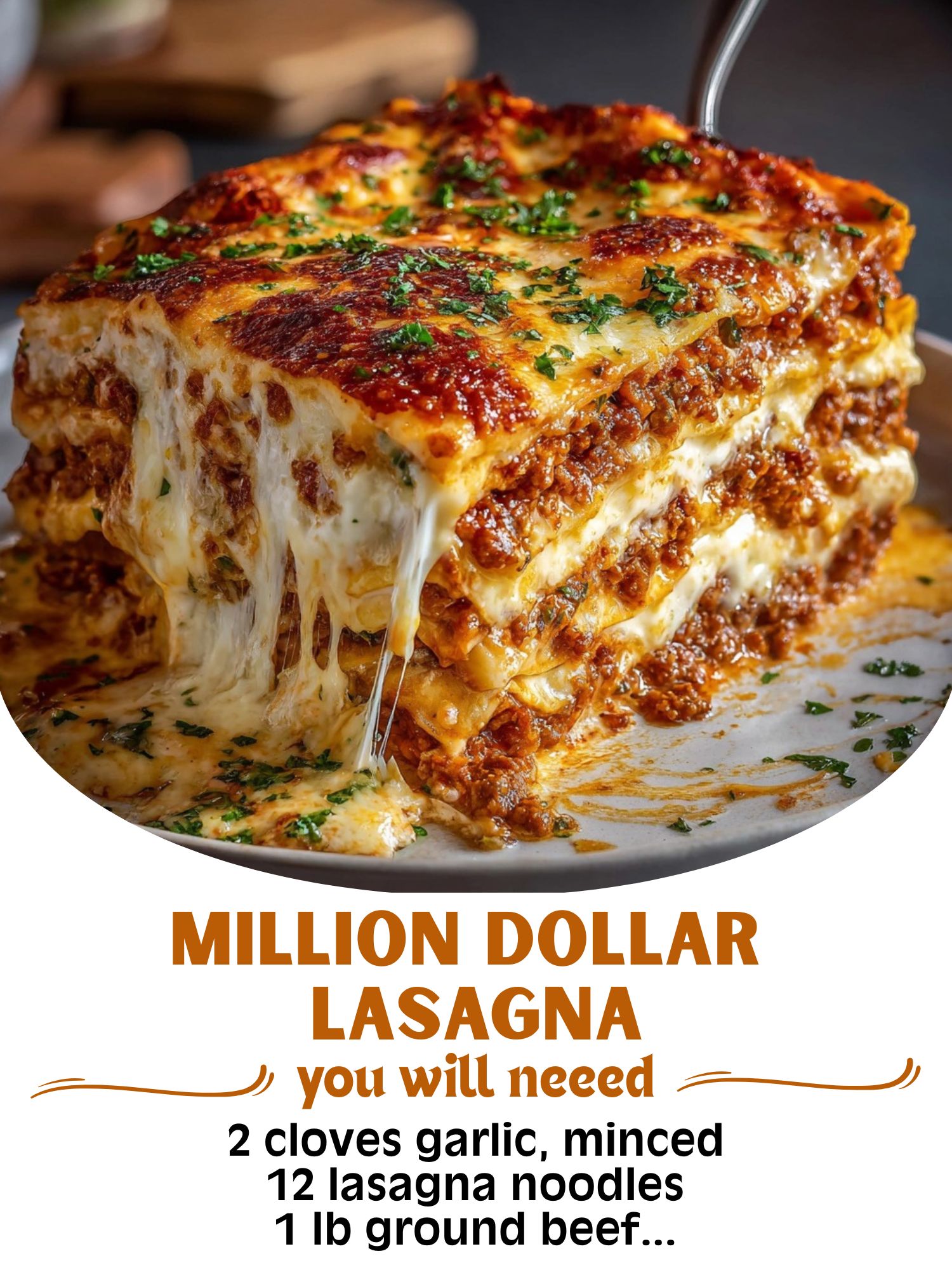
This Million Dollar Lasagna is more than a meal; it’s a project of love, a centerpiece for gatherings, and a testament to how magnificent simple ingredients can be when treated with care. It has brought so much joy to my table, and I hope it brings the same to yours. Roll up your sleeves, pour yourself a glass of wine, and get ready to create a legend in your own kitchen.