
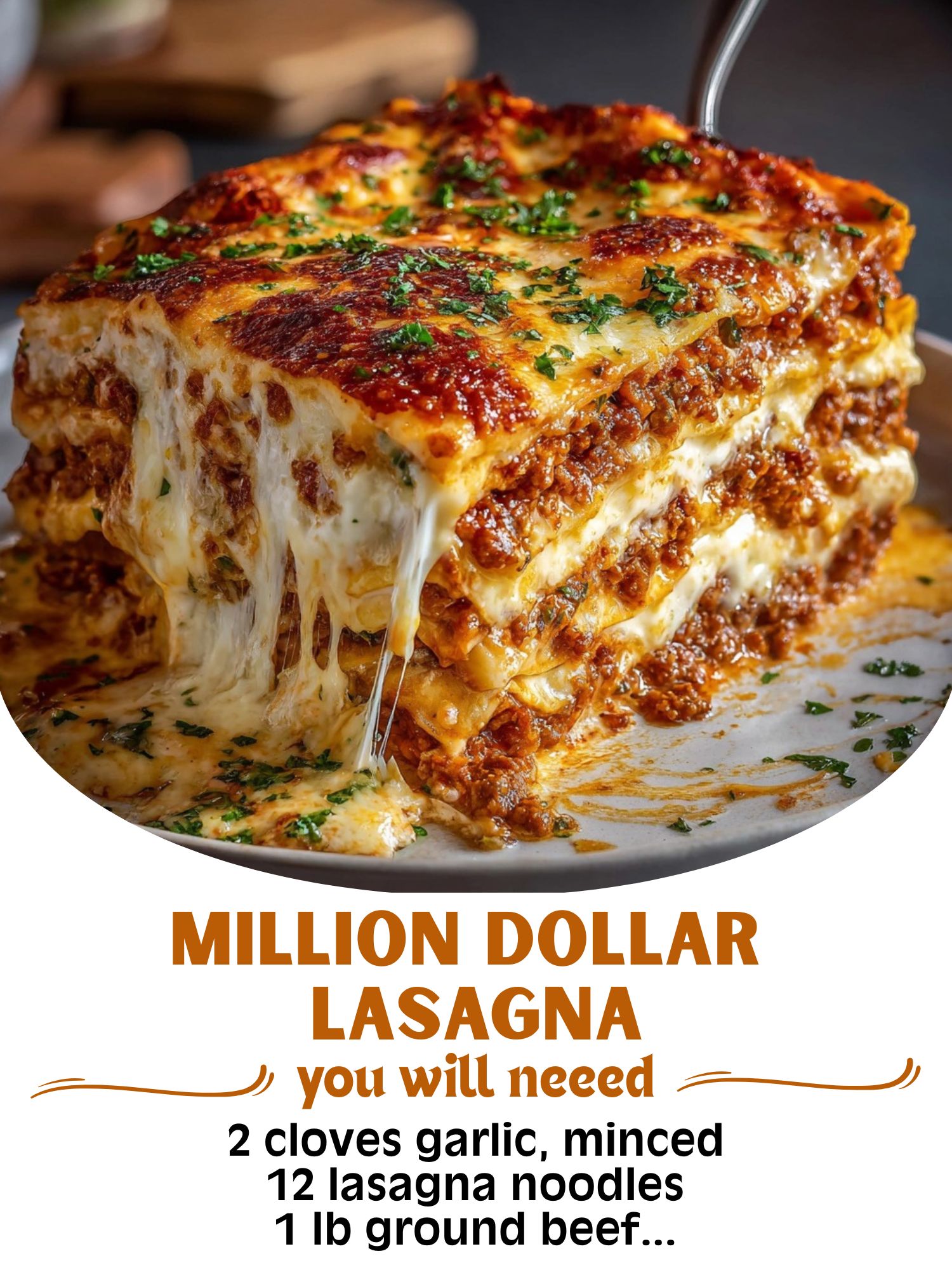
I’ll never forget the first time my “Million Dollar Lasagna” emerged from the oven. The scent that filled my kitchen was nothing short of epic—a rich, meaty tomato sauce bubbling at the edges, the nutty, toasted aroma of Parmesan forming a golden crust, and the unmistakable, comforting smell of melted cheeses weaving through it all. As I let it rest, watching the layers settle, I knew this wasn’t just another pasta bake. The first slice held its shape perfectly, revealing distinct, sumptuous layers of tender noodles, hearty meat sauce, and velvety cheese. It tasted like a labor of love, complex and deeply satisfying. It earned its name not from costly ingredients, but from the priceless reactions it gets every single time I serve it.
Why You’ll Love This Recipe
You will fall in love with this recipe because it delivers that coveted “special occasion” lasagna experience with clear, reliable steps. It’s built on layers of flavor, not shortcuts, yet it demystifies the process. You’ll learn the secrets to a sauce that simmers with purpose, a cheese blend that’s creamy and flavorful, and the importance of patience for the perfect slice. This lasagna is an investment of time that pays off in leftovers, freezes like a dream, and truly earns its celebratory reputation.
Ingredients
For the Meat Sauce:
- 1 tablespoon olive oil
- 1 medium yellow onion, finely diced
- 2 cloves garlic, minced
- 1 lb ground beef (I use 80/20 for flavor)
- 1 lb Italian sausage, casings removed
- 1 (28 oz) can crushed tomatoes
- 1 (15 oz) can tomato sauce
- 1 (6 oz) can tomato paste
- 2 teaspoons dried oregano
- 1 teaspoon dried basil
- 1/2 teaspoon crushed red pepper flakes (optional)
- 2 teaspoons granulated sugar (trust me, don’t skip this)
- Salt and black pepper to taste
For the Cheese Filling:
- 32 oz (4 cups) whole milk ricotta cheese
- 1 large egg
- 1/2 cup freshly grated Parmesan cheese
- 1/4 cup fresh parsley, chopped
- 1/2 teaspoon salt
For Assembly:
- 12 traditional (not no-boil) lasagna noodles
- 1 lb mozzarella cheese, shredded (about 4 cups)
- 1/2 cup freshly grated Parmesan cheese for topping (See the next page below to continue…)
Equipment Needed
- Large pot for boiling noodles
- Large Dutch oven or heavy-bottomed pot for sauce
- Mixing bowls (medium and large)
- 9×13 inch baking dish
- Aluminum foil
- Box grater
- Ladle and wooden spoon
Step-by-Step Instructions
My journey always begins with the heart of the dish: the sauce. In my Dutch oven, I heat the olive oil over medium heat and sauté the diced onion until it’s soft and translucent, about 5 minutes. Then, I add the minced garlic and stir for just 30 seconds until fragrant—any longer and it risks burning. Next, I add the ground beef and Italian sausage, breaking them up with my wooden spoon. I cook until the meat is no longer pink, then I carefully drain off most of the excess fat. This step is crucial; too much grease will make the final lasagna oily.
Now, for building deep flavor. I stir in the tomato paste and cook it with the meat for a full two minutes. This caramelizes the paste and removes any tinny flavor. Then, I pour in the crushed tomatoes, tomato sauce, and all my seasonings: oregano, basil, red pepper flakes, sugar, salt, and pepper. The sugar is my secret weapon; it doesn’t make the sauce sweet, it perfectly balances the acidity of the tomatoes. I bring the sauce to a simmer, then reduce the heat to low, cover it partially, and let it bubble gently for at least 45 minutes, stirring occasionally. This slow simmer is non-negotiable—it marries the flavors and thickens the sauce so it won’t water out your lasagna.
While the sauce simmers, I prepare the other components. I cook the lasagna noodles in a large pot of well-salted boiling water, but I cook them for 2-3 minutes less than the package says for al dente. They will finish cooking in the oven, and this prevents them from turning to mush. I drain them and lay them flat on clean kitchen towels or parchment paper. In a bowl, I mix the ricotta, egg, 1/2 cup of Parmesan, parsley, and salt until it’s beautifully combined. I also shred my mozzarella from a block; the pre-shredded kind doesn’t melt as well. (See the next page below to continue…)
Assembly is my favorite, almost meditative part. I spread a thin layer of meat sauce on the bottom of my baking dish to prevent sticking. Then, I place 4 noodles slightly overlapping. Next, I spread one-third of the ricotta mixture over the noodles, followed by one-third of the remaining meat sauce, and a generous sprinkle of shredded mozzarella. I repeat these layers two more times. For the grand finale, I top the final noodle layer with the last of the meat sauce, the last of the mozzarella, and a hearty shower of the remaining 1/2 cup of Parmesan. I cover the dish tightly with foil.
Pro Tips for Best Results
The resting time is the most important step you cannot rush. After baking, I let my lasagna rest on the counter, still covered in foil, for a full 25-30 minutes. This allows the layers to set. If you cut in immediately, it will be a delicious but soupy mess. The wait is agonizing but transformative—it guarantees those iconic, clean layers when you serve.
I tested no-boil noodles versus traditional. While convenient, no-boil noodles often suck up too much moisture, leaving you with a drier lasagna, or not enough, leaving a firmer bite. Par-boiling traditional noodles to al dente gives you total control over the final texture. It’s one extra pot, but for a “Million Dollar” result, it’s worth it.
Use whole milk ricotta. I tried part-skim once, and the filling was less creamy and almost grainy. The higher fat content in whole milk ricotta makes the cheese layer luxuriously smooth and rich. Draining any excess liquid from the ricotta tub before mixing is also a great trick for a thicker filling.
Common Mistakes to Avoid
My biggest first-time mistake was using a watery, quick-cooked sauce. I simply browned the meat, dumped in the tomatoes, and assembled. The result was a lasagna swimming in liquid with bland flavor. Don’t do what I did! The long, slow simmer is what concentrates the flavors and evaporates excess liquid, creating a sauce thick enough to coat a spoon. (See the next page below to continue…)
Do not skip the egg in the ricotta mixture. I thought it was optional, but leaving it out led to a ricotta layer that was loose and didn’t hold its structure when sliced. The egg acts as a binder, setting the cheese layer firmly so it slices neatly between the noodles and sauce.
Avoid assembling the lasagna with piping hot sauce. If you pour a boiling sauce over the noodles and cheese, it can start cooking the eggs in the ricotta prematurely and make the noodles too soft. Let your sauce cool for at least 15-20 minutes before you start layering. This protects the integrity of every component.
Finally, don’t forget to tent your foil when covering the dish for baking. If you press the foil directly onto the cheese topping, it will stick and pull off your beautiful, melted cheese when you remove it. I lightly spray the underside of the foil with cooking spray or make a loose, domed tent over the dish to prevent contact.
Serving Suggestions
I love serving this lasagna with a very simple, crisp green salad dressed in a bright Italian vinaigrette. The acidity and crunch are the perfect counterpoint to the rich, cheesy pasta. A slice of warm, garlicky focaccia or a cheesy breadstick on the side is also non-negotiable in my house for sopping up any extra sauce.
For a true Italian-American feast, I’ll start with a light antipasto platter with olives, marinated vegetables, and cured meats. The lasagna is such a hearty centerpiece that keeping the starters light makes perfect sense. A glass of medium-bodied red wine, like a Chianti, pairs beautifully.
Leftovers are a gift. I adore reheating a square for lunch the next day; the flavors have melded even more. Sometimes, I’ll even fry a cold slice in a little butter in a skillet for a crispy, decadent treat—it’s a game-changer.
Variations & Customizations
For a “Million Dollar Veggie” version, I replace the meat with a mix of sautéed mushrooms, zucchini, bell peppers, and spinach. I’ll also add a layer of roasted butternut squash puree for sweetness. Using a rich marinara and upping the herbs makes it incredibly satisfying.
You can easily make a half-and-half version. I often use 1 lb of sweet Italian sausage and 1 lb of ground beef for a perfect flavor balance. For a richer sauce, stir in 1/4 cup of heavy cream or a splash of red wine during the last 10 minutes of simmering.
For a different cheese profile, I’ll substitute part of the mozzarella with fontina for extra meltability, or add thin slices of fresh mozzarella between layers. A sprinkle of goat cheese on the ricotta layer adds a wonderful tangy note.
How to Store, Freeze & Reheat
To store leftovers, I let the lasagna cool completely, then cover the baking dish tightly with plastic wrap and foil. It will keep in the refrigerator for 4-5 days. The flavor, as I said, only gets better.
This lasagna freezes exceptionally well. I assemble it completely in a foil baking dish, wrap it tightly in plastic and then foil, and freeze it before baking. It keeps for up to 3 months. To cook, I bake it from frozen, covered, adding about 30-50 minutes to the baking time.
To reheat individual portions, I use the oven or toaster oven (350°F until hot through, about 20 minutes) to preserve texture. The microwave can make the noodles rubbery. For a whole frozen baked lasagna, I thaw it overnight in the fridge first, then reheat covered at 350°F until bubbly.
Conclusion
This Million Dollar Lasagna is more than a meal; it’s a project of love, a centerpiece for gatherings, and a testament to how magnificent simple ingredients can be when treated with care. It has brought so much joy to my table, and I hope it brings the same to yours. Roll up your sleeves, pour yourself a glass of wine, and get ready to create a legend in your own kitchen.