
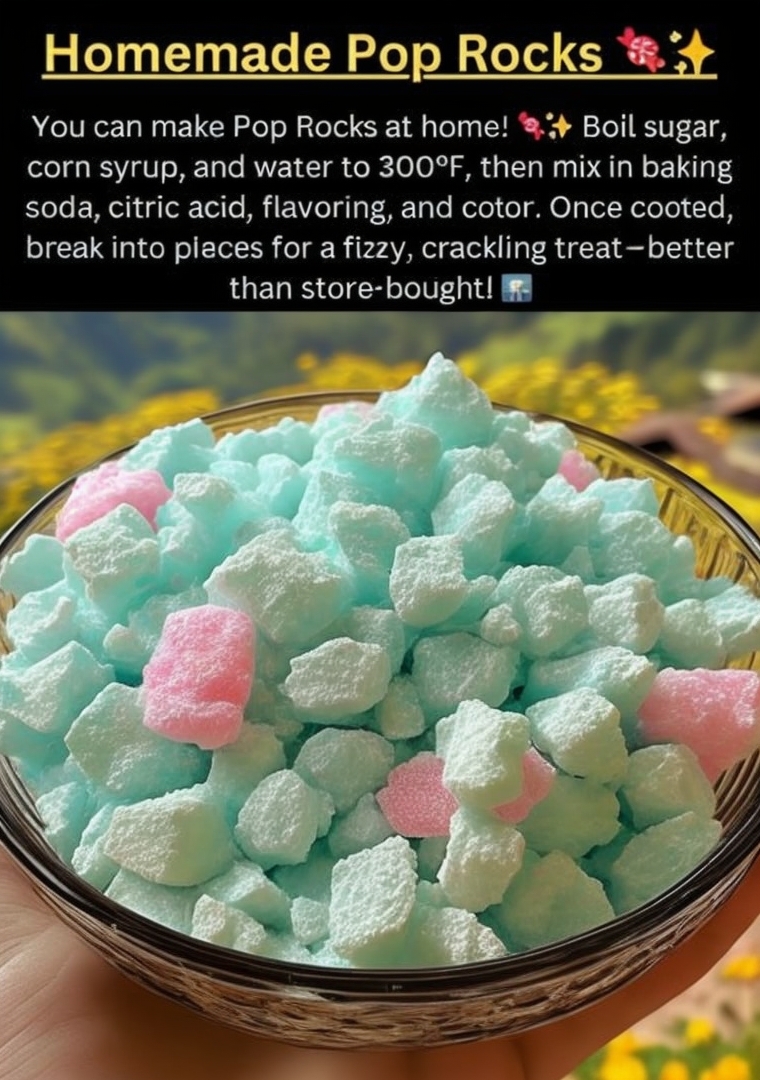
Now, the hardest part: the wait. I let the candy sheet cool completely at room temperature. This takes about 30-45 minutes. Trying to break it while warm will result in sticky, pliable pieces that won’t pop properly. Once it’s completely cool and hard, I use my hands (protected with a clean kitchen towel) or the handle of a butter knife to crack the sheet into small, Pop Rock-sized pieces. The sound of it shattering is incredibly satisfying. And then, the taste test: that first piece on my tongue erupts into a crazy, crackling party.
Pro Tips for Best Results
My number one tip is to use a reliable candy thermometer. I tested this by trying to judge the stage by dropping syrup in water (the “cold water test”), and I failed miserably. Under-cooked syrup stays sticky and chewy; over-cooked syrup burns and tastes bitter. 300°F is the sweet spot for the hard, glassy structure that will shatter properly. A digital thermometer that clips to the pot is the best investment for this project.
Grinding the citric acid and baking soda into a fine, uniform powder is the secret to the pop. I’ve tried just whisking them together as-is, and the result was uneven fizz—some pieces were duds, others were volcanic. Taking the extra two minutes to grind them ensures every single crystal of sugar gets coated with the reactive mixture, leading to a consistent, explosive experience in every bite.
Work with speed and confidence once you hit temperature. The syrup is over 300 degrees and will start to set up as it cools. Have all your add-ins measured and within arm’s reach. The moment you remove it from heat, you have about a 60-second window to add the powders and flavoring and get it poured. Hesitation leads to a pot full of solid, unusable candy. I set up my station like a TV chef before I even turn on the stove.
Common Mistakes to Avoid
The first and biggest mistake I made was stirring the syrup as it boiled. I got nervous and gave it a little stir around 250°F. Almost instantly, the clear syrup became cloudy and grainy. This is sugar crystallization, and it ruins the smooth, glassy texture you need. Remember: after the initial stir to combine, don’t touch it with a spoon until it’s off the heat. Just swirl the pan gently if you need to distribute heat. (See the next page below to continue…)