
Equipment Needed
- Heavy-bottomed medium saucepan
- Candy thermometer (digital is best and non-negotiable)
- Silicone spatula
- Baking sheet lined with a silicone mat or heavily greased parchment paper
- Small bowls for pre-measured dry ingredients
- Mortar and pestle or spice grinder (for a fine powder)
- Tongs or a butter knife for breaking the candy
Step-by-Step Instructions
First, let’s talk safety and preparation. Making candy is a hot business, so I clear my stove of any clutter and make sure my little ones are occupied elsewhere. I line my baking sheet with a silicone mat—I’ve tried greased parchment, but the candy can sometimes stick horrifically. A silicone mat is your best friend here. Then, I measure out my dry ingredients: the baking soda and citric acid. This is crucial: I grind them together in a mortar and pestle until they’re a super-fine powder. Any coarse grains won’t incorporate properly and can create “dead spots” in your candy. I set this mixture aside, along with my chosen extract and food coloring.
Now, for the syrup. In my heavy-bottomed saucepan, I combine the sugar, corn syrup, water, and a tiny pinch of salt. I stir it just until the sugar looks wet, then I attach my candy thermometer and turn the heat to medium-high. Here’s the golden rule: DO NOT STIR AFTER THIS POINT. I learned the hard way that stirring can cause crystallization, leading to a grainy, sad candy. I just let the mixture bubble away, swirling the pan occasionally for even heating. I watch that thermometer like a hawk. It needs to hit 300°F, which is the “hard crack” stage.
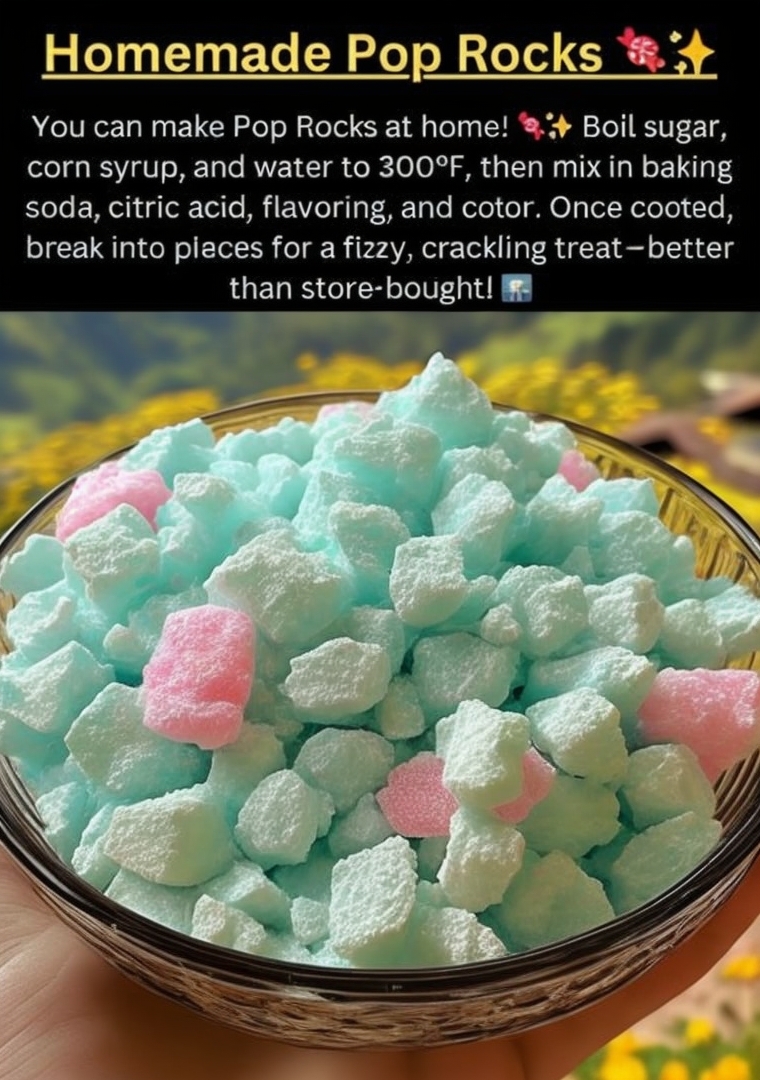
The moment the syrup hits 300°F, I act fast. I immediately remove the pan from the heat and let the furious bubbles subside for about 30 seconds. Then, I quickly whisk in my pre-mixed baking soda and citric acid powder. It will foam up dramatically—this is normal and exciting! As soon as it’s combined, I whisk in the flavor extract and food coloring. The whole mixture will be frothy and light. I immediately pour it onto my prepared silicone mat. I don’t spread it; I let it flow and settle into its own thin, irregular shape. It starts hardening almost the second it touches the mat. (See the next page below to continue…)