
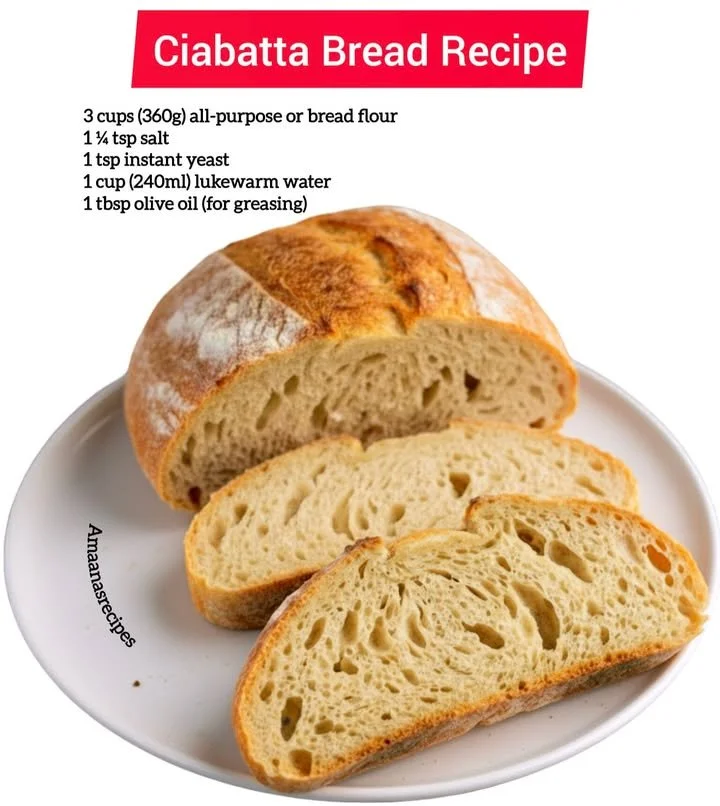
Too much flour on your work surface can also lead to issues. When I first started, I’d be overly generous in dusting to prevent sticking, but this actually inclined to dry out the dough and yield a tougher texture. Just a little flour goes a long way. Lastly, don’t rush slicing before it cools down. Trust me, let it rest for at least 30 minutes after it comes out. It’s worth it for that perfect soft crumb!
Serving Suggestions
Fresh ciabatta is incredibly versatile, and I love serving it in many ways. It’s perfect alongside olive oil for dipping, perhaps with a sprinkle of sea salt. When I have friends over, I cut it into cubes, serve it alongside a cheese platter, and watch it disappear! I find that the lovely airiness of homemade ciabatta pairs delightfully with rich, hearty cheeses.
Another favorite of mine is making panini. Sometimes, I just grill up some veggies or slice up leftover roasted chicken to make the perfect sandwich. Ciabatta’s crusty exterior holds everything together beautifully, and the soft inside makes each bite absolutely delightful. I also enjoy toasting slices for bruschetta—a few ripe tomatoes, a drizzle of balsamic glaze, and fresh basil, and I’m in heaven!
Sometimes, I’ll even use leftover ciabatta to create croutons for my salads. I love cutting up the bread into bite-sized pieces, tossing them in olive oil and seasoning, then toasting them in the oven until golden brown. It’s a satisfying way not to let any delicious bread go to waste!
Variations & Customizations
While I adore the classic ciabatta, I’ve also enjoyed experimenting with variations. Adding herbs like rosemary or thyme can elevate the flavor beautifully. Sometimes I mix in a handful of olives or sun-dried tomatoes to the dough before the first rise, creating a delicious twist. These flavorful additions add depth and highlight the rustic nature of ciabatta.
Another fun customization I tried was incorporating some whole wheat flour into the mix. I love the nuttiness and character it brings to the bread. Just remember to adjust the water slightly; whole wheat flour tends to absorb more liquid. I found that a mix of about 25% whole wheat to 75% all-purpose gave a lovely balance.
If I’m feeling adventurous, I might incorporate a little cheese, like grated parmesan or even some sharp cheddar, into the dough. It adds a lovely richness that pairs well with a warm bowl of soup. Who can resist the combination of bread and cheese?
How to Store, Freeze & Reheat
First things first, to store leftover ciabatta, I wrap it in a clean kitchen towel. I find that this keeps the crust nice while preventing it from becoming too hard. It generally lasts about 2 days at room temperature, although I’ve never had a loaf last past the first day because my family devours it!
If I know I won’t finish the bread within a couple of days, I often slice the ciabatta and place it into a freezer bag. It freezes wonderfully! When I want a slice, I can pull it out, pop it right into the toaster from the freezer, and have a perfect piece back in no time.
To reheat, I usually place a frozen slice directly on the rack in a preheated oven at 350°F for about 10 minutes. The result? A crispy crust that brings me right back to that freshly baked aroma. There’s simply nothing like it!
Conclusion
Making homemade ciabatta bread is a joyful experience that fills my kitchen with warmth and delightful aromas. With a bit of patience and the right techniques, anyone can master this classic Italian bread. It’s become a staple in my home, and I hope it finds a special place in yours as well. Happy baking!