
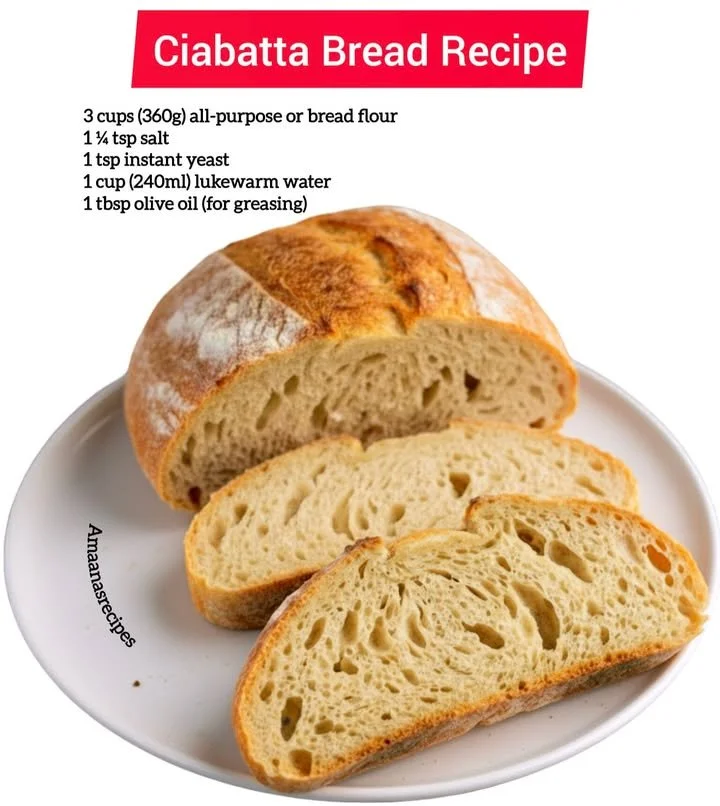
Next, it’s time for the first rise. I cover my bowl with plastic wrap or a wet cloth and leave it in a warm spot. Ideally, you want to let it rise for about 2-3 hours. I love watching it puff up and develop those lovely air bubbles. After the dough has risen, I flour my work surface generously to prevent sticking. I gently turn the dough out onto the floured surface, taking care not to deflate it too much. Folding it a few times to create layers is all it needs before shaping it into a rough rectangle.
The next step is to divide the dough into pieces; I use a bench scraper for this part. I usually make about 2-4 loaves, depending on how big I want them. After cutting, I shape each piece with my hands and place them onto a prepared baking sheet lined with parchment paper. The final rise happens now and lasts about 45 minutes. Preheating the oven is essential during this time—if you have a baking stone, it’s a great time to place it in there! I always bake my ciabatta with a steam-dispensing tray or just a pan of boiling water beneath to help achieve that lovely crust.
Pro Tips for Best Results
I found that using high-quality flour makes a noticeable difference in the final product. I’ve tested the recipe three ways: with regular all-purpose, bread flour, and a mix, and I’m convinced that King Arthur’s all-purpose flour has given me the best texture. If you can manage to mix the dough in the morning and let it rise in the fridge throughout the day, you will get a deeper flavor development. It smells divine when I pull it from the fridge.
One of my favorite moments is when the dough finishes rising before baking. I always gently poke it with a floured finger; if it springs back slowly, I know it’s perfect for the oven! Also, don’t skip the steam; it’s the secret to a crusty exterior that contrasts beautifully with the soft, airy inside. The first time I forgot this step, I was left with a loaf that just didn’t have the same bite.
Lastly, patience is key. When I first began making this bread, I would be tempted to cut into it right after baking. But waiting for it to cool completely before slicing allows the texture to set just right. There’s nothing worse than crumbly bread, and this little piece of advice has saved me baking heartbreak on multiple occasions!
Common Mistakes to Avoid
One common mistake I’ve made in my baking adventures is not measuring my ingredients properly. I started with volume measurements, but after realizing how much a slight variation can impact the dough’s hydration, I invested in a kitchen scale. Now I weigh my flour and water, ensuring perfect results every time.
Another slip-up I had was not giving the dough enough time to rise. I’d get impatient and rush through the second proof—this resulted in denser loaves and a lack of those beautiful air pockets. My advice? Embrace the wait! Also, watch your oven temperature. Every oven has its quirks, and if it runs cooler than expected, a longer bake may be necessary. Learning to read your dough and crust color is paramount. (See the next page below to continue…)