
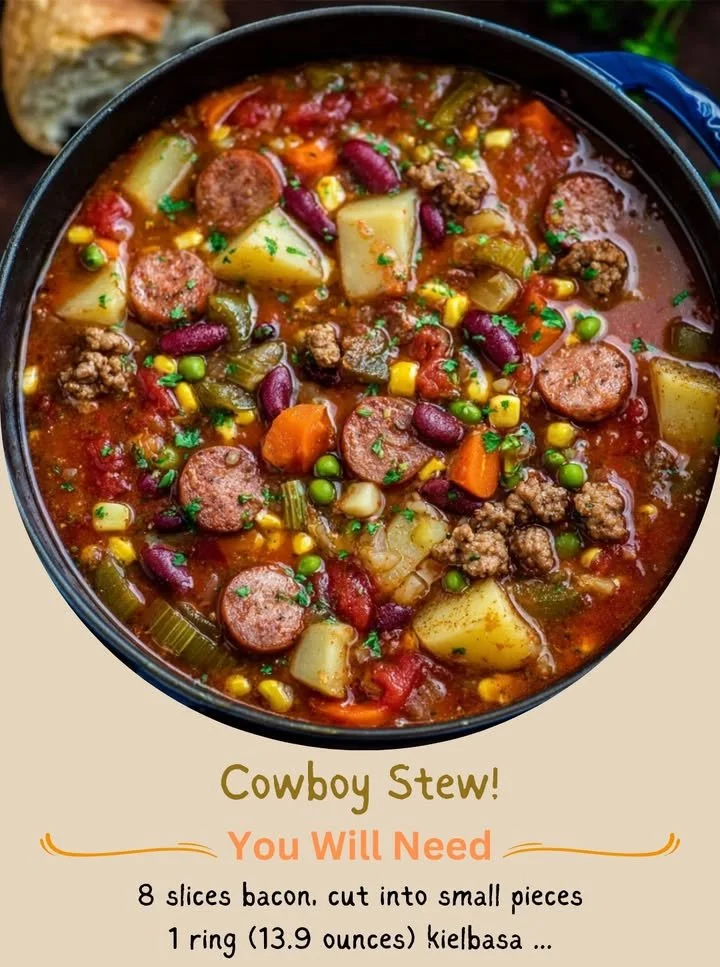
Another common issue is forgetting to drain and rinse canned beans. If you skip this step, it can create a slightly metallic taste in your stew, which you definitely want to avoid. I’ve learned this the hard way!
Also, watch your vegetable cuts. If you chop them too large, they take longer to cook. My first attempts at Cowboy Stew had me sinking my teeth into raw carrots, which was a lesson learned! Aim for bite-sized pieces to ensure everything cooks evenly.
Lastly, don’t be shy with seasonings. If it feels like you might be adding too much salt or spice, trust me—it might still need that boost! I often need to remind myself that extra flavor means extra comfort.
Serving Suggestions
For me, the perfect accompaniment to Cowboy Stew is a crusty loaf of bread. There’s something so wonderfully rustic about scooping up the stew with pieces of bread, and it feels like the perfect comfort food moment. I also sometimes serve it with a side salad, which adds a fresh crunch that balances the hearty stew nicely.
If I’m feeling indulgent, I’ll sprinkle some shredded cheese on top and let it melt before serving. A little avocado or sour cream on the side can also brighten up the bowl and add a creamy texture that complements the spices in the stew.
Lastly, don’t forget about drinks! A nice glass of red wine pairs perfectly with the savory richness of Cowboy Stew, making for a truly comforting meal that feels complete.
Variations & Customizations
What I truly love about Cowboy Stew is the freedom it offers for personalization. If you want to bulk it up with greens, I recommend adding in some kale or spinach toward the end of cooking. They wilt down pleasantly and sneak in more nutrients without sacrificing flavor!
Another variation I tried was swapping out the meat entirely for lentils. My vegetarian friend loved it, and I was amazed at how well lentils soaked up the broth and spices, making it a delightful meat-free option.
You can also play around with the beans—you could use kidney beans or pinto beans instead of black beans. It’s a great way to make use of what you have on hand. Each type of bean adds its own unique character, which makes for an interesting twist every time!
How to Store, Freeze & Reheat
Storing Cowboy Stew is super simple! I let it cool completely and then transfer it to an airtight container. It keeps well in the fridge for about 3-4 days, so it’s perfect for meal prep or leftovers!
When it comes to freezing, this stew is a champ. I divide it into portions in freezer-safe bags or containers before freezing. When I pull it out for a quick meal, I simply thaw it in the refrigerator overnight before reheating.
To reheat, I like using the stovetop, as it warms more evenly, but the microwave works too. Just make sure to stir halfway through and add a splash of broth if it seems a bit thick. Seeing that steam rise as it heats up reminds me why I love this dish so much!
Conclusion
Cowboy Stew has definitely earned a cherished spot in my recipe collection. It’s warm, hearty, and full of flavors that make me feel right at home. If you’re looking for a comforting meal that brings the family together and warms the soul, I highly recommend giving this a try. Each spoonful feels like a hug from the inside, and I hope it brings as much joy to your kitchen as it has to mine!