
Do not substitute margarine or oil for the butter. The butter does more than add flavor; its milk solids and water content are part of the chemical reaction that helps the fudge set properly. Using oil will give you a greasy, soft product that may not firm up. Real, unsalted butter is a must for structure and that classic fudge taste.
Avoid using a thin, lightweight pot. A heavy-bottomed saucepan distributes heat evenly and prevents hot spots that can cause the sugar to burn on the bottom before the rest of the syrup is ready. A burnt bottom will ruin the entire batch with a bitter flavor. If you don’t have one, use the lowest heat possible and stir very, very carefully before it boils.
Finally, don’t rush the beating process. If you stop beating as soon as it thickens a little, the fudge will be too soft and won’t slice cleanly. You need to beat it until it truly loses its gloss and holds a shape when you dollop it with the spoon. This transformation is the sign that it’s ready to set up firm in the pan.
Serving Suggestions
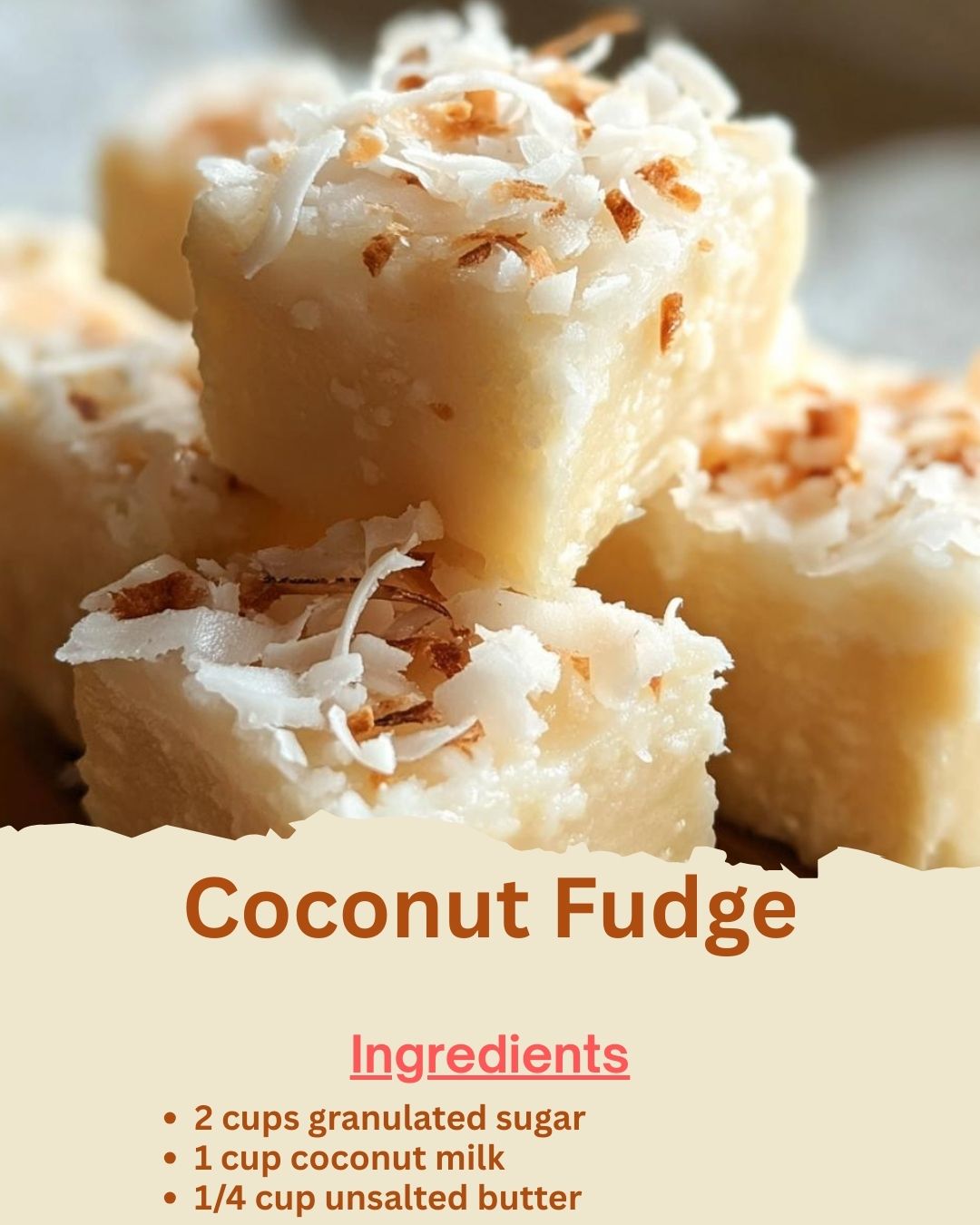
I love cutting this fudge into small, elegant squares and arranging them on a simple white platter. The toasted coconut topping makes it look beautifully rustic and professional. It pairs fantastically with a cup of strong black coffee or a tropical tea, like passionfruit or mango, which complements the coconut flavor perfectly.
For a special dessert presentation, I’ll sometimes place a square of fudge alongside a scoop of pineapple sorbet or vanilla bean ice cream, and perhaps a drizzle of dark chocolate sauce. The combination of creamy, cold ice cream and rich, coconutty fudge is absolutely divine and feels like a restaurant-quality treat.
This fudge is my go-to for gifting. I’ll layer the squares in a decorative tin with parchment paper between the layers. It travels beautifully, doesn’t need refrigeration, and feels so much more personal than a box of chocolates from the store. A little ribbon and a tag make it a heartfelt present for neighbors, teachers, or hostesses.
Variations & Customizations
For a decadent “Chocolate Coconut” version, I’ll stir in 1 cup of semi-sweet chocolate chips right after I take the pot off the heat, letting them melt from the residual heat before I start beating. It creates a marbled, swirled fudge that’s a beautiful combination of both flavors. You can also sprinkle the top with flaky sea salt for a sweet-and-salty kick.
If you love texture, fold in 1/2 cup of chopped dried pineapple or mango along with the untoasted coconut. It adds little chewy, fruity bursts that make the fudge taste even more like a tropical paradise. Toasted macadamia nuts are another classic addition that adds a wonderful buttery crunch.
For a fun, colorful twist perfect for holidays, you can add a few drops of food coloring to the mixture just before pouring it into the pan. Pink for Valentine’s Day or green for Christmas, with matching sprinkles pressed into the top alongside the coconut, makes for a festive and delicious treat.
How to Store, Freeze & Reheat
To store this fudge, I keep it in an airtight container at cool room temperature. It will stay perfectly fresh and maintain its ideal creamy texture for 1-2 weeks. I separate layers with parchment paper to prevent sticking. Do not refrigerate it, as the cold can cause it to become too hard and can encourage sugar bloom (those white spots).
Yes, you can freeze it successfully. I wrap the whole slab or individual pieces tightly in plastic wrap, then place them in a freezer bag or container. It will keep for up to 2 months. Thaw it overnight in the refrigerator, then let it come to room temperature on the counter for an hour before serving. This prevents condensation from making it sticky.
There is no need to reheat this fudge. It is meant to be enjoyed at room temperature where its texture is soft and creamy. If it becomes too firm from being in a cold place, simply letting it sit on the counter for a while will restore its perfect consistency. Microwaving will melt it.
Conclusion
This Coconut Fudge is more than just a confection; it’s a little jar of sunshine and a testament to how magical simple ingredients can be. It has brought so much sweet joy to my kitchen and to the people I’ve shared it with. I hope this recipe encourages you to try your hand at homemade candy and brings a taste of creamy, tropical delight to your table. Now, go grab that saucepan—your sweet escape awaits.