
Another error is using cold steak or cold fillings. If you add refrigerated steak and veggies straight from the fridge to your quesadilla, it will take much longer for the inside to heat up, often resulting in a burnt exterior before the cheese inside has melted. I let my sliced steak and veggies come to room temperature for a few minutes while I prep the cheese crust. A warm filling means a perfectly melted interior by the time the outside is crisp.
Trying to move or flip the quesadilla too early is a sure path to a messy break. The cheese crust needs a minute to set and fuse to the tortilla. If you try to slide the spatula under it too soon, the cheese will still be liquid and will separate. Let it cook until you can gently shake the pan and the tortilla moves freely—that’s your sign the crust has set and it’s ready to flip or fill.
Finally, using a dull knife to slice the finished quesadilla will crush your beautiful crispy shell. Use a very sharp chef’s knife or a pizza cutter and press straight down in one clean motion. A sawing motion will tear the crust and push the filling out. For the cleanest, most satisfying wedges, a sharp blade is your best friend.
Serving Suggestions
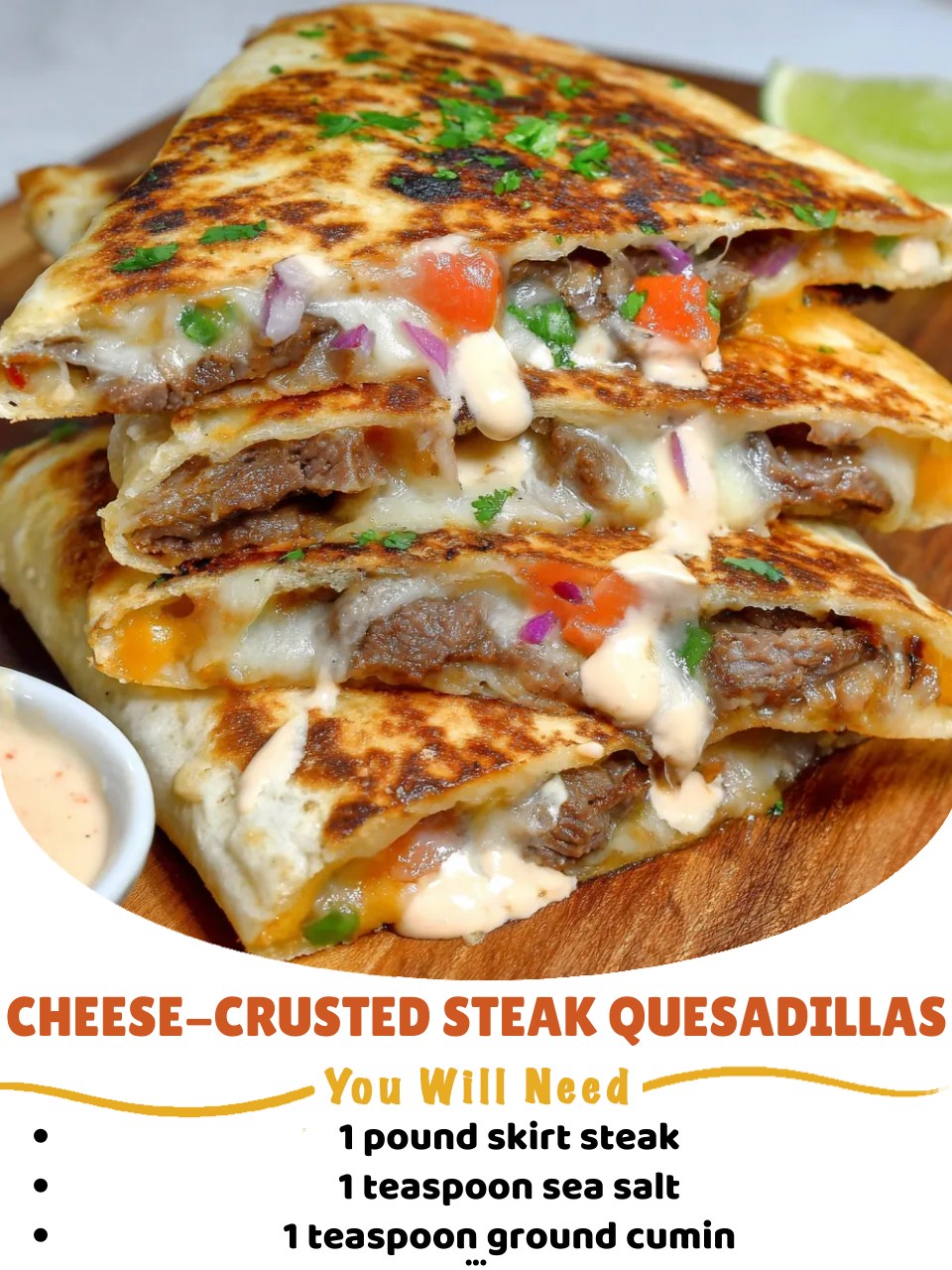
I love serving these quesadillas right out of the skillet, already sliced into wedges, on a big wooden board. The contrast of the golden, lacy edges is so visually appealing. I put all the dips—a bowl of cool sour cream, fresh salsa, chunky guacamole, and lime wedges—right in the center so everyone can dive in. It’s a fun, interactive, and messy meal in the best way.
While these are a full meal on their own, I often round out the plate with simple sides. A quick cabbage slaw with lime and cilantro, a bowl of black beans simmered with a bit of garlic and cumin, or some Mexican street corn (elote) are all fantastic companions. The fresh, often acidic sides perfectly balance the rich, cheesy, crispy quesadilla.
For a party or game day, I make them smaller, using 6-inch tortillas, and cut them into quarters. They become the ultimate finger food and are always the first appetizer to disappear. I set up a “dippin’ station” with multiple sauces, and they’re a guaranteed hit that feels much more special than ordinary quesadillas.
Variations & Customizations
This recipe is endlessly versatile. Don’t have steak? Use shredded rotisserie chicken, cooked shrimp, or carnitas. For a vegetarian version, use seasoned black beans, roasted sweet potatoes, or sautéed mushrooms as the main filling. The cheese-crust method works with any filling you love.
You can change up the cheese for the crust too. Oaxaca cheese is fantastic for a stringy, authentic melt. A spicy Pepper Jack adds heat right into the crust. For the inside cheese, adding a sprinkle of cotija or queso fresco after cooking gives a salty, crumbly contrast. Feel free to play with the spices in the marinade—a chipotle powder adds smoke, or a touch of oregano adds earthiness.
For a different twist, try the cheese-crust method with corn tortillas for a gluten-free option (they’re just more delicate to flip). You can also add a thin spread of refried beans inside for extra creaminess, or a drizzle of chipotle crema before folding. The basic technique is your playground.
How to Store, Freeze & Reheat
Leftovers can be stored in an airtight container in the refrigerator for up to 3 days. The crispy crust will soften in the fridge, but it’s still delicious. To re-crisp, reheat them in a dry skillet over medium heat for a few minutes per side. The oven (375°F for 10 mins) or an air fryer also works wonderfully to bring back the crunch. Avoid the microwave, as it will make everything soggy.
You can freeze assembled, uncooked quesadillas for a quick future meal. Assemble them (with the cheese crust already cooked onto one side and the fillings inside), wrap each tightly in plastic wrap, and place in a freezer bag. They’ll keep for up to 2 months. To cook from frozen, don’t thaw. Cook in a skillet over medium-low heat, covered, for 4-5 minutes per side, until heated through and crisp.
I do not recommend freezing the quesadillas after they’ve been fully cooked and then reheating, as the texture of the crispy cheese crust becomes irreversibly soggy. For best results, either eat them fresh, re-crisp fridge leftovers in a pan, or freeze them before the final cooking stage.
Conclusion
These Cheese-Crusted Steak Quesadillas are more than just a meal; they’re a fun, flavorful technique that will change the way you think about a simple tortilla and some cheese. They’ve brought so much joy and crunch to my kitchen, and I know they’ll do the same for yours. I hope this recipe inspires you to play with your food, embrace the sizzle, and create your own crispy, cheesy masterpiece. Now, go heat that skillet and get ready for the most gloriously crispy quesadilla of your life.