
Overcrowding the skillet when searing is a common error. If your roast is too large for the pan, sear it in two stages, or just do the two largest sides thoroughly. Crowding the pan steams the meat instead of searing it, and you won’t get that crucial brown crust. A proper sear requires space and a hot pan.
Underseasoning the cooking liquid is a silent flavor killer. The slow cooker is a gentle environment, and flavors can become muted. Be generous with salt and pepper on the meat, and don’t be afraid to season the broth as well. I always taste the gravy at the end and adjust with a little more salt or a dash of Worcestershire sauce if needed.
And finally, boiling the potatoes instead of simmering them. A violent boil can cause the potatoes to absorb too much water and become waterlogged, leading to gluey, sad mash. A gentle simmer is all you need. Start them in cold, salted water and bring it up to a simmer—this ensures they cook evenly from the outside in.
Serving Suggestions
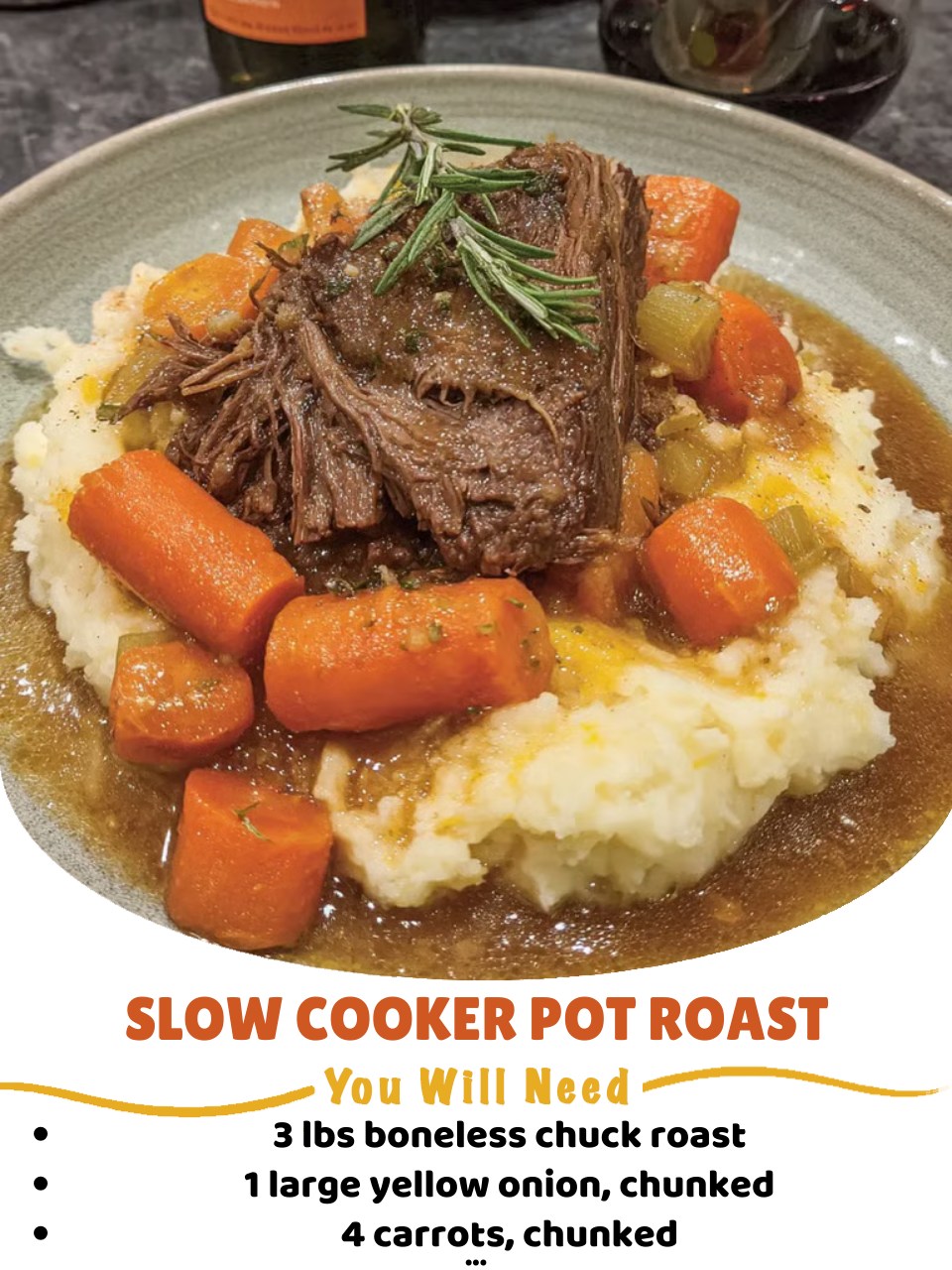
I love serving this family-style. I pile the shredded pot roast and vegetables on a large, warm platter and pour some of the gravy over the top. I place the bowl of goat cheese mashed potatoes right next to it, sprinkled with fresh chives. I let everyone serve themselves at the table, encouraging them to make a well in their potatoes for extra gravy. It’s cozy, interactive, and feels like a celebration.
For a more elegant plating, I’ll use a ring mold to place a neat cylinder of mashed potatoes in the center of a shallow bowl. I arrange shreds of beef and a few carrots and onions around it, then ladle the rich gravy over everything, letting it pool around the plate. A final sprinkle of chives and a crack of black pepper make it look like it came from a fancy bistro.
This meal is perfect for a busy week because the leftovers are arguably even better. The next day, I’ll shred any remaining beef and pile it, with some gravy and vegetables, onto a soft roll for an incredible French dip-style sandwich. The mashed potatoes reheat beautifully for a quick side.
Variations & Customizations
You can easily add other root vegetables to the slow cooker. Parsnips, turnips, or small potatoes (like baby reds or golds) are fantastic additions. Just cut them into large chunks so they don’t overcook and turn to mush. For a deeper flavor, use a dark beer or red wine in place of half of the beef broth.
For the mashed potatoes, try swapping the goat cheese for another soft cheese. Boursin garlic & herb cheese is a fantastic, flavorful alternative. For a dairy-free version, use vegan butter and a tangy vegan cream cheese. You can also stir in some prepared horseradish to the potatoes for a zesty kick that pairs wonderfully with the beef.
If you don’t have a slow cooker, this works beautifully in a Dutch oven in a 300°F oven for 3-4 hours. For an instant pot version, use the sauté function to sear, then pressure cook on high for 60-70 minutes with a natural pressure release.
How to Store, Freeze & Reheat
Leftovers keep wonderfully. Store the shredded beef, vegetables, and gravy together in an airtight container in the refrigerator for up to 4 days. Store the mashed potatoes separately. The flavors meld and often taste even better the next day.
Both components freeze very well. Freeze the beef and gravy in a sealed container for up to 3 months. The mashed potatoes can be frozen, though their texture may be slightly less creamy upon thawing (adding a little extra butter or milk when reheating helps). Thaw overnight in the refrigerator.
Reheat the beef and gravy gently in a saucepan over low heat, adding a splash of broth or water if it’s too thick. Reheat mashed potatoes in the microwave, covered, stirring every 30 seconds, or in a saucepan over low heat with a splash of milk. Avoid high heat to prevent the beef from toughening or the potatoes from becoming gummy.
Conclusion
This Slow Cooker Pot Roast with Goat Cheese Mashed Potatoes is the definition of heartwarming, soul-satisfying food. It has carried me through countless busy seasons and chilly nights, always delivering comfort and joy. I love how it turns simple, humble ingredients into a meal that feels both deeply familiar and excitingly new. I hope this recipe finds its way into your kitchen and becomes a cherished tradition for your own family. Now, go sear that roast—your home is about to smell like heaven.