
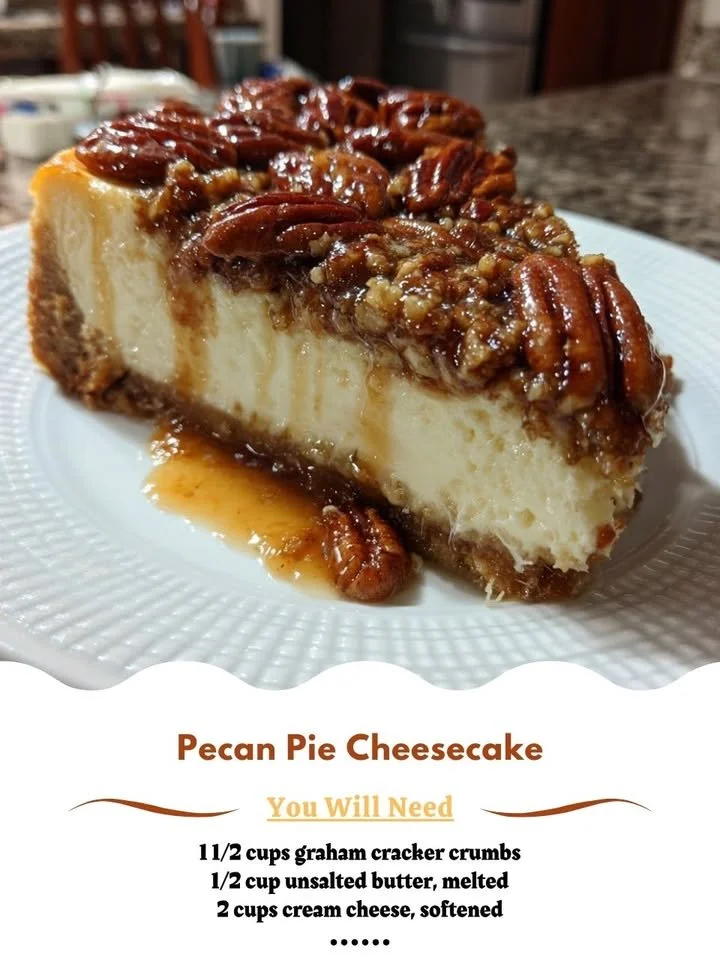
For the cheesecake filling, I whip the softened cream cheese until it’s creamy and fluffy. After adding in the sugar and vanilla, I slowly mix in the eggs, one at a time, ensuring a smooth batter. Then, I fold in the sour cream to give it that creamy richness that pairs so perfectly with the pecans. Speaking of pecans, I always like to fold in the chopped pecans at this point, as it adds a wonderful texture that complements the smoothness of the cheesecake.
Once the filling is mixed, I pour it over the crust in the springform pan and spread it out evenly. Now comes the fun part—creating the pecan pie topping! I mix together the corn syrup, brown sugar, vanilla, cinnamon, and salt in a separate bowl. Once mixed, I carefully pour this mixture over the cheesecake layer, and I can already smell the sweet and nutty aroma wafting through my kitchen. I gently tap the pan on the counter to release any air bubbles, and then I pop it into the oven.
I bake the cheesecake for about 60-70 minutes, keeping a close eye on it to ensure it cooks perfectly. The tension in my kitchen builds as the wonderful scent fills the air, and I can already imagine how delicious this dessert is going to be!
Pro Tips for Best Results
One of the best tips I can give you is to make sure your cream cheese is softened. When I tested this recipe a few times, I found that if I tried mixing cold cream cheese, the filling turned out lumpy. Trust me, nobody wants a lumpy cheesecake! To achieve that dreamy, creamy texture, I recommend leaving the cream cheese out for at least an hour before you start.
I also like to bake my cheesecake in a water bath. It helps prevent the top from cracking and keeps the cheesecake moist and delicious. I wrap the outside of my springform pan with aluminum foil to prevent leaks, then place it in a larger pan filled with water that reaches about halfway up the side of the springform pan. It sounds a bit complicated, but it’s worth it for that perfect finish!
Lastly, patience is key. Once the cheesecake is done baking, it needs to cool slowly. I leave it in the oven with the door slightly ajar for about an hour before transferring it to the countertop. This helps to avoid the sudden temperature change that can lead to cracks. Just because I found this out the hard way doesn’t mean you have to!
Common Mistakes to Avoid
One mistake I often see is overmixing the cheesecake batter. When I first started making cheesecakes, I thought more mixing would make it smoother. In reality, overmixing can incorporate too much air, which may cause the cheesecake to crack while baking. I learned the hard way to mix just until combined for a beautifully creamy texture! (See the next page below to continue…)