
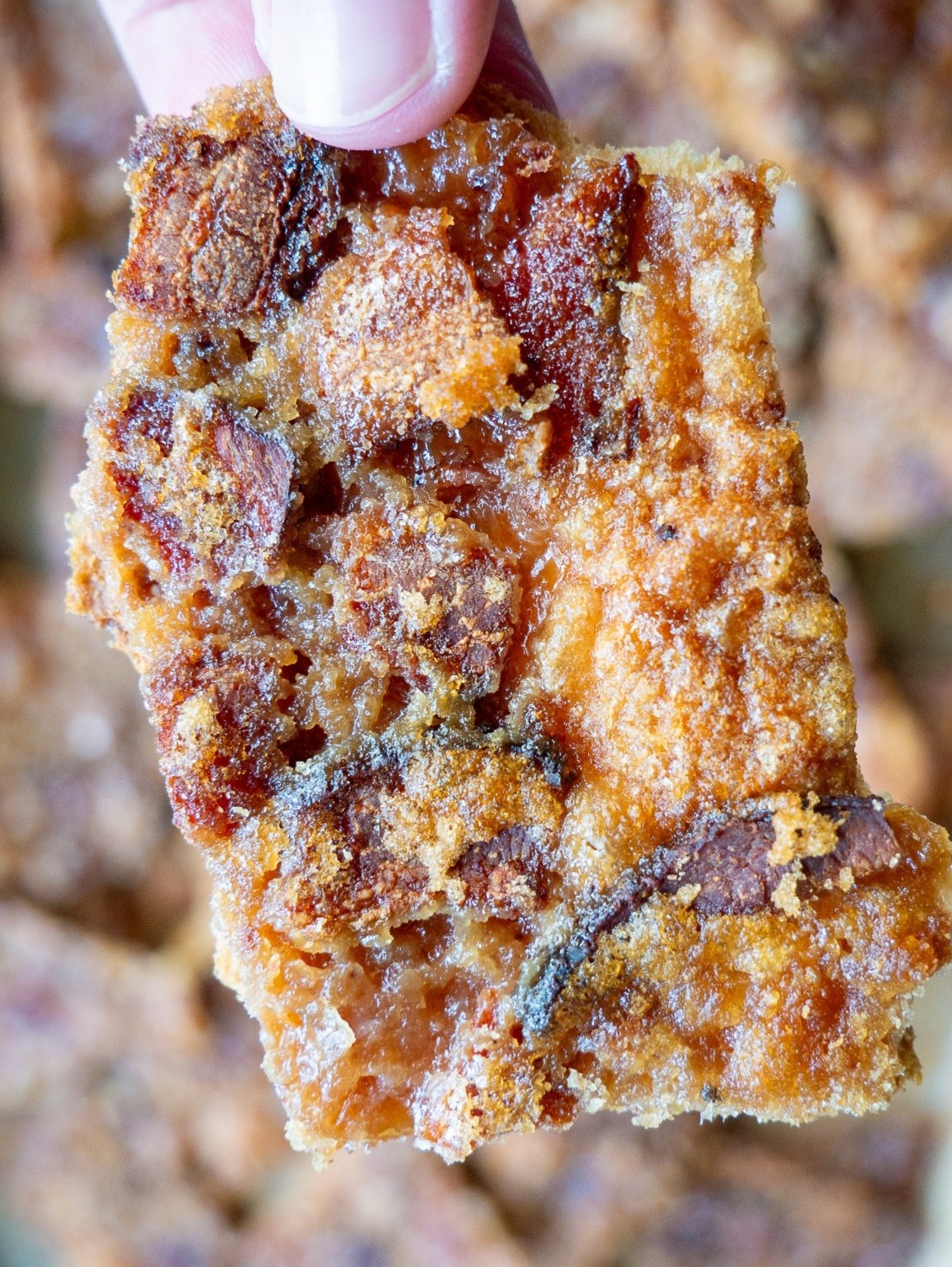
Without a second to spare, I carefully pour the hot, bubbling toffee over the bed of bacon on my prepared sheet. I use the back of my spoon to gently spread it into an even layer, working fast as it begins to set. If I’m using chocolate, I immediately sprinkle the chocolate chips over the hot toffee. The residual heat will melt them in about 3 minutes; then I spread the melted chocolate into a thin layer with an offset spatula. Finally, I sprinkle the reserved chopped bacon and a tiny pinch of flaky sea salt over the top. I let it cool completely at room temperature until it’s hard and snappy, which takes a couple of hours. The sound of breaking it into pieces is music to a candy-maker’s ears.
Pro Tips for Best Results
I tested the bacon prep three different ways: frying (splattery and uneven), microwaving (quick but chewy), and baking on a rack. Baking on a rack was the clear winner. The hot air circulates all around, rendering the fat perfectly and yielding bacon that is uniformly crisp without being greasy. Greasy bacon will make your toffee oily and prevent a clean snap. Taking the time to bake it properly is foundational.
Here’s what I learned the hard way about the candy cook: altitude and humidity matter. I once made this on a very humid day and the toffee never fully hardened, staying slightly chewy. Now, I only make it on dry days. If you live at high altitude, you may need to cook the syrup to a slightly lower temperature (about 295°F), as the lower boiling point means water evaporates differently. Always trust your thermometer and the hard crack test (a drop in cold water should solidify into a hard, brittle thread).
For the cleanest break and most professional look, score the toffee while it’s still slightly warm. After it has set for about 20-30 minutes (when the chocolate, if using, is set but the toffee underneath is still a bit warm), I use the tip of a sharp knife to lightly score lines where I want to break it later. This guides the fractures and prevents random, jagged pieces when you finally break it up after it’s fully hardened.
Common Mistakes to Avoid
My first batch was a sticky, teeth-pulling mess because I didn’t cook the syrup to a high enough temperature. I got nervous and pulled it off at 280°F (soft crack stage). Don’t do what I did! You must have the courage to take it all the way to 300°F (hard crack). This ensures the water has cooked out sufficiently for the toffee to set up hard and snappy. A candy thermometer is your best friend and removes all the guesswork.(See the next page below to continue…)