
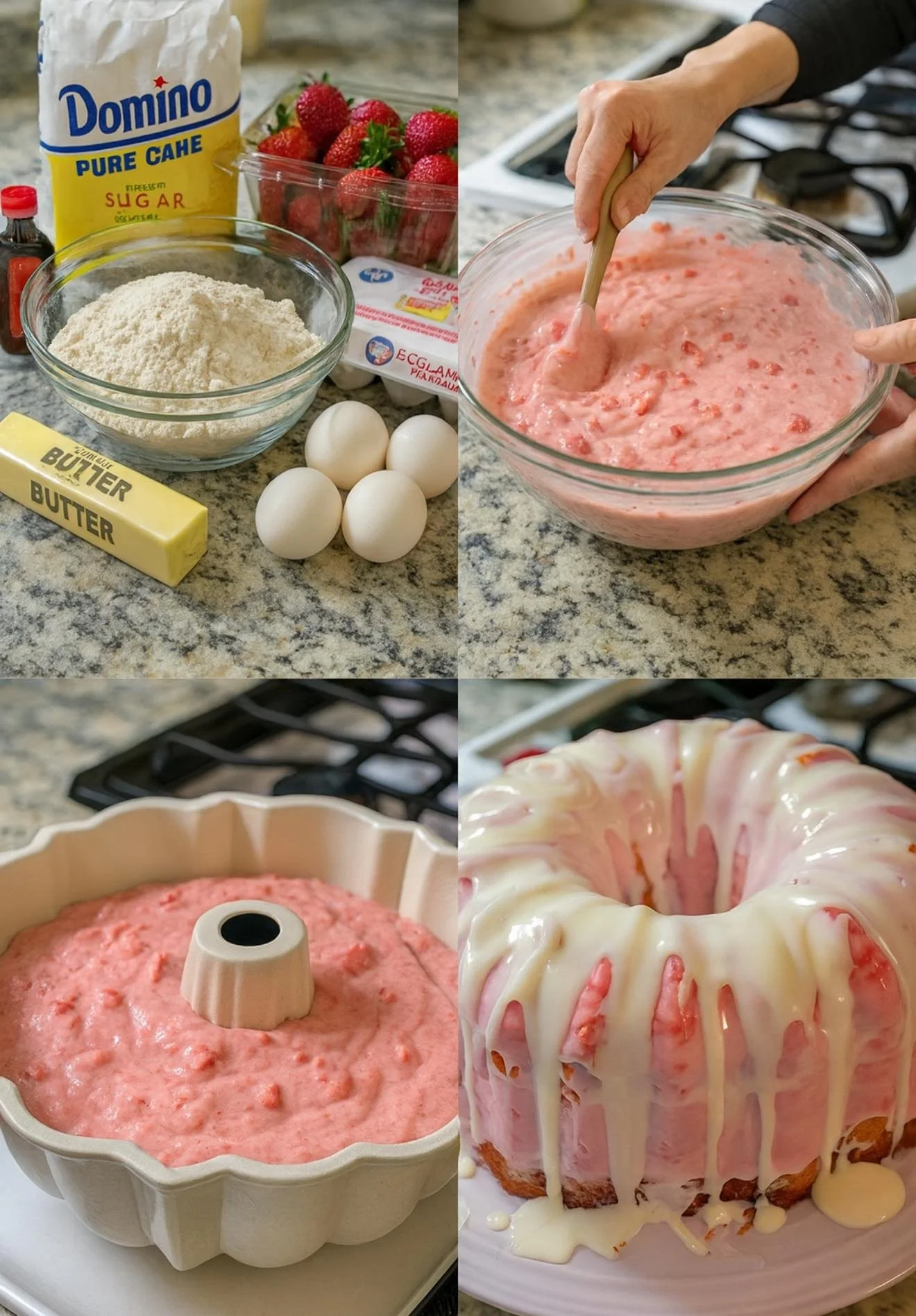
After your egg mixture is well combined, mix in the vanilla extract. In a separate medium bowl, whisk together the flour, baking powder, baking soda, and salt. Slowly incorporate the dry ingredients into the wet mixture, alternating with the milk until everything is just combined. I always make sure not to overmix at this stage to keep the cake tender. This is where the magic happens! The batter will be thick and creamy, and you may want to take a moment to revel in its texture.
Now, it’s time to fold in those juicy strawberries. I recommend gently stirring them in with a rubber spatula to avoid breaking them apart. Once the strawberries are evenly distributed, pour your batter into the prepared loaf pan. I like to gently tap the pan on the counter to release any air bubbles, ensuring an even rise in the oven. Bake for about 60-70 minutes or until a toothpick inserted in the center comes out clean. The aroma of strawberries and sweetness wafting through my kitchen during baking is just heavenly!
Pro Tips for Best Results
When I first tested this recipe, I found that using room temperature ingredients (especially the cream cheese and eggs) made a huge difference in the final texture of the cake. It really helps it aerate more effectively, making for a lighter pound cake. I also love to use fresh strawberries rather than frozen, as they create a beautiful flavor and texture that elevates this cake to the next level.
Another tip from my kitchen: don’t skip the resting time after the cake is done baking! Letting it cool in the pan for about 10-15 minutes before transferring it to a cooling rack helps maintain its moisture. The last thing you want is a dry pound cake! Finally, if you can resist the urge, try letting it sit overnight before slicing. The flavors meld together beautifully, making each bite even more delicious.
Lastly, if you want to add a little something extra, consider drizzling a simple glaze over the cooled pound cake. Just mix powdered sugar with a bit of milk until you reach a pourable consistency, and let it sit for a few minutes to set. It’s a small touch that makes a big impact!
Common Mistakes to Avoid
One of the biggest mistakes I made the first time around was not measuring my flour correctly. Too much flour can lead to a dense pound cake that isn’t as moist. I recommend using the spoon and level method for accurate measurement. Spoon the flour into your measuring cup, then level it off with a knife rather than scooping it directly from the bag.
Another pitfall to watch out for is overmixing the batter once you add the dry ingredients. I’ve done this, thinking I needed to ensure everything was perfectly combined, but overmixing can lead to a tough texture. Keep it gentle—just mix until you see no dry flour left.
Lastly, be mindful of overbaking the cake. Since every oven is different, it’s crucial to keep an eye on the cake in the last 10 minutes of baking. Once the top is golden brown and a toothpick comes out clean, don’t hesitate to take it out. Burning the edges can be a real disappointment after all that work! (See the next page below to continue…)