
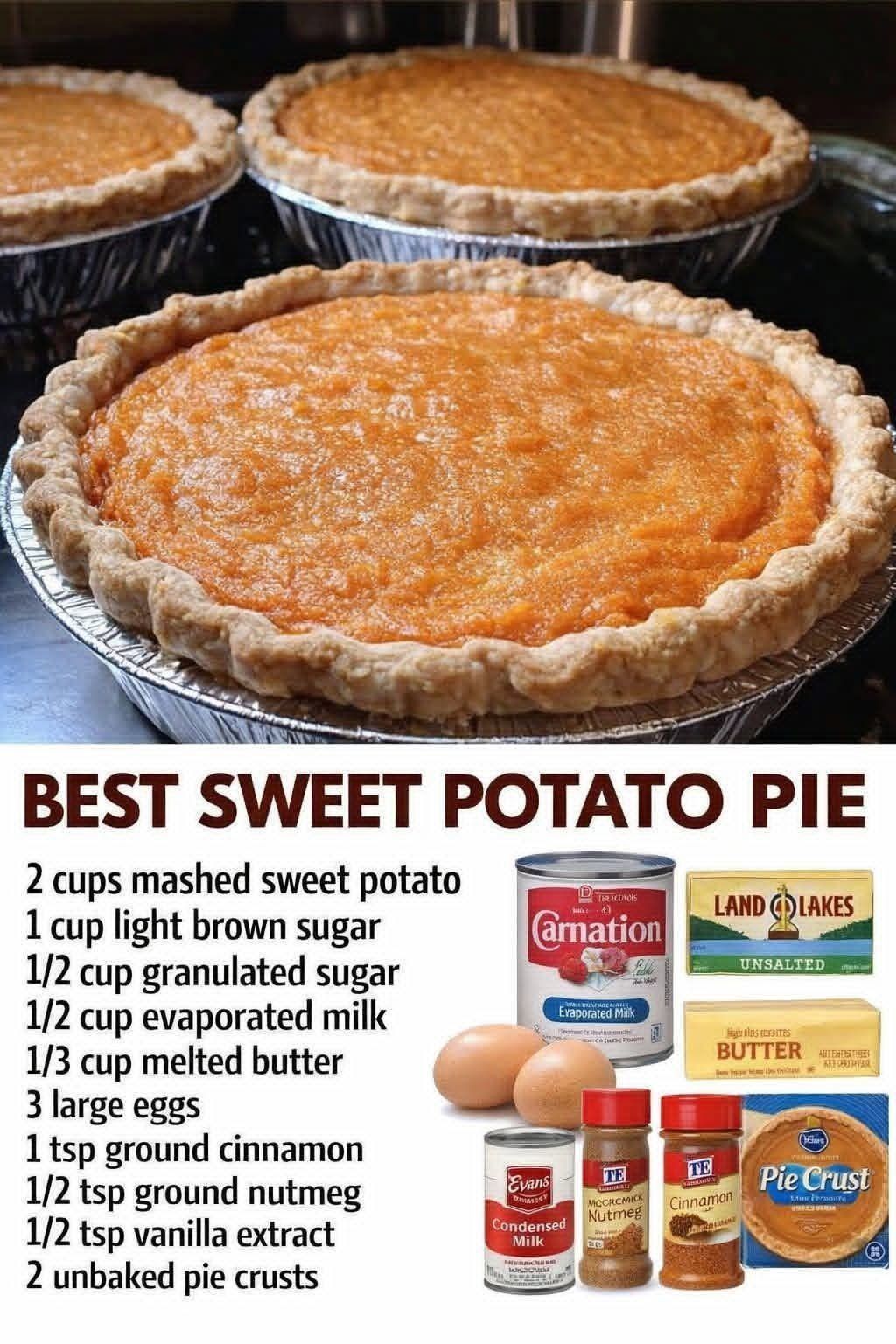
Now, for the eggs. This is where patience matters. I crack the three room-temperature eggs into a small bowl first (to avoid shell mishaps), then add them one at a time to the sweet potato mixture, beating well after each addition. I mix just until each egg is fully incorporated before adding the next. Overbeating at this stage can incorporate too much air, which might cause the filling to puff and crack dramatically in the oven. The final batter should be velvety and pourable, like a thick custard.
I place my two unbaked pie crusts in their plates on a rimmed baking sheet—this catches any spills and makes moving them in and out of the oven easier. I divide the filling evenly between them. The baking sheet goes into a preheated 350°F (175°C) oven. I bake for 50-60 minutes. The true test of doneness isn’t just a set timer; it’s when the edges are puffed and the center still has a slight, gentle jiggle—like set Jell-O—when I nudge the pan. It will firm up as it cools. I let the pies cool completely on a wire rack, a process that takes a few hours but is essential for the perfect slice.
Pro Tips for Best Results
My biggest tip is about the sweet potato prep. I’ve tested boiling versus roasting, and trust me, roasting is the only way to go. Boiling introduces too much water into the flesh, leading to a filling that can be weepy or bland. Roasting caramelizes the natural sugars, giving you a deeper, more complex flavor and a drier mash, which makes for a denser, more luxurious pie. Let the roasted potatoes cool slightly before handling, but mash them while they’re still warm for easiest blending.
Second, use room-temperature ingredients. Having your eggs and evaporated milk at room temperature prevents the melted butter from solidifying into little flecks when you mix everything together. It ensures a smoother, more homogeneous filling. I take my eggs and the can of evaporated milk out about an hour before I start. If I forget, I place the eggs in a bowl of warm water for 10 minutes and set the unopened can of milk in a bowl of warm water as well.
Finally, don’t skip the baking sheet underneath the pies. I learned this the hard way when a full pie bubbled over in my oven, creating a smoky, burnt-sugar mess that took forever to clean. The rimmed baking sheet is insurance. It also promotes more even baking by shielding the bottom crust from direct oven heat. And for an extra-flaky bottom crust, I sometimes pre-bake (or “blind bake”) my crusts for just 8-10 minutes before adding the filling, but Grandma’s version never did, and it still turns out wonderfully.(See the next page below to continue…)