
Now, let’s make the filling! In another large mixing bowl, beat the softened cream cheese and granulated sugar together until the mixture is smooth and creamy. I like to use an electric mixer for this part; it really helps avoid any lumps and gives the filling a delightful, airy texture. Next, add in the vanilla extract, eggs (one at a time), sour cream, and ground cinnamon. Mix until everything is well combined and velvety. The smell of cinnamon and vanilla at this point is heavenly!
Pour the creamy filling over your slightly cooled crust, spreading it out evenly with a spatula. It’s looking good! Now, to avoid cracking, I recommend placing a baking sheet under your springform pan before putting it in the oven. Bake at 325°F for about 50-60 minutes, or until the center of the cheesecake is just set—it should slightly jiggle but not be liquid. Don’t open the oven door too soon to avoid shock; basing it on smell, you’ll know when it’s getting close!
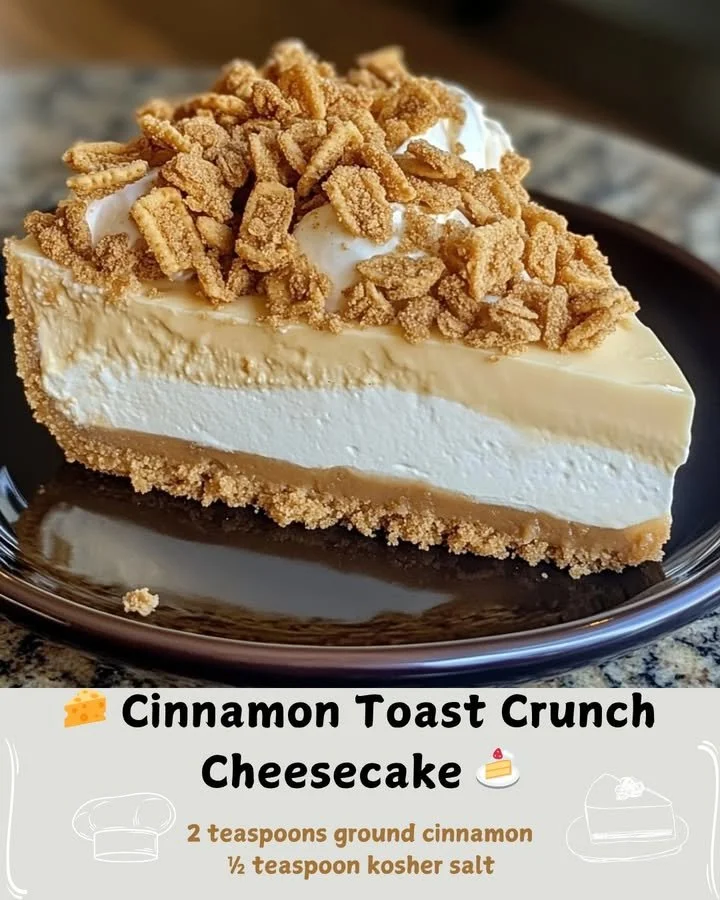
Once baked, turn off the oven and let the cheesecake sit in the oven for an additional hour. This cooling process gives it a chance to set while preventing cracks from forming on the surface. After that, let it cool to room temperature, then refrigerate for at least four hours (or overnight, if you can wait!). Just before serving, top with whipped cream and a sprinkle of extra Cinnamon Toast Crunch.
Pro Tips for Best Results
I tested this recipe three ways before finding the right baking time. Trust me when I say the one-hour cooling time in the oven makes a significant difference. It truly helps the cheesecake set perfectly without any cracks! Also, if you’re short on time, you can use store-bought crushed cinnamon cereal, but I find that crushing it fresh in my kitchen adds that personal touch and flavor depth that’s unbeatable.
Another tip? Let your cream cheese come to room temperature before beating. I know it’s tempting to skip this step, but having warm cream cheese leads to a smoother filling, which is essential for that creamy texture we’re after. Plus, don’t rush the chilling process. This cheesecake truly benefits from being left overnight in the fridge, allowing the flavors to meld beautifully.
Lastly, I’ve found that cutting the cheesecake while it’s chilled gives cleaner slices. You can dip your knife in hot water and wipe it clean between cuts for those perfect, professional-looking pieces. Trust me; your friends and family will be impressed!
Common Mistakes to Avoid
One mistake I often made in the past was overbaking my cheesecakes. It’s crucial to realize that the cheesecake will continue cooking even after you take it out of the oven. Checking for a slight jiggle in the center is key to getting that perfect creamy center. If you bake it until it’s completely firm, you’ll end up with a dry texture, which no one wants!
Another pitfall is not allowing the cream cheese to soften adequately. If it’s too cold, you’ll have lumps in your filling that can ruin the otherwise smooth cheesecake. Patience pays off here—plan to let it sit out for about an hour before mixing.
Also, make sure your oven temperature is accurate. If your oven tends to run hot or cold, it could affect baking times significantly. I invested in an oven thermometer, and it was a game changer! Lastly, don’t forget to use aluminum foil to wrap the outside of your springform pan if you’re concerned about water seeping in during the baking water bath method, ensuring a worry-free experience. (See the next page below to continue…)