
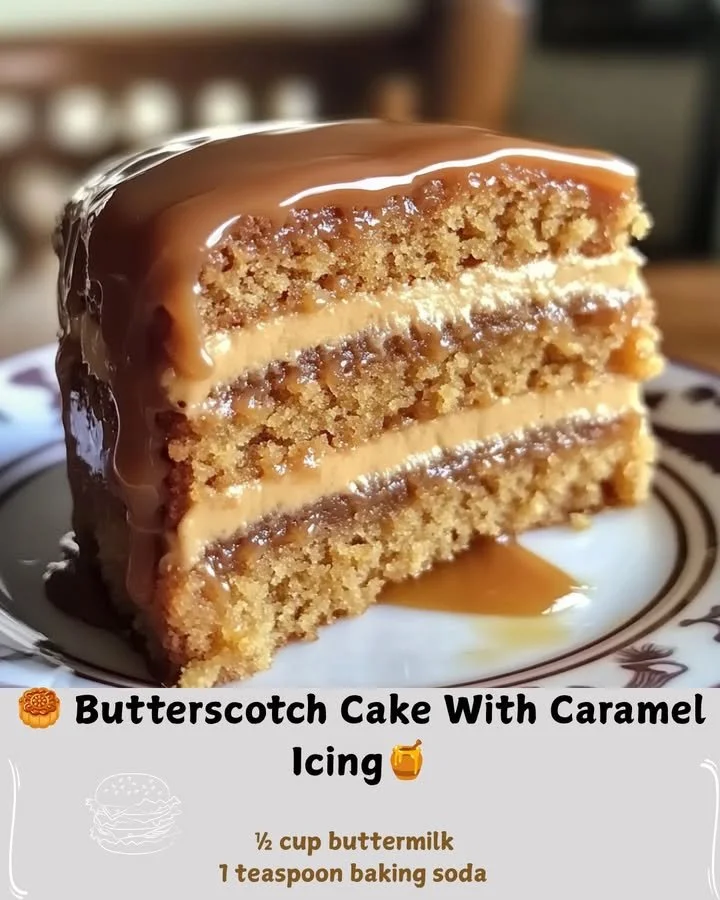
Next, I whisk together the flour, baking powder, baking soda, and salt in another bowl. Gradually, I add the dry mixture to the wet ingredients, alternating it with the buttermilk and the vanilla extract. The batter should be smooth and creamy, with a lovely butterscotch aroma wafting through my kitchen. Once the batter is ready, I pour it into my prepared pan and spread it evenly. Into the oven it goes for 30-35 minutes, or until a toothpick inserted in the center comes out clean. The smell is heavenly!
While the cake is baking, I prepare the caramel icing. In a saucepan over medium heat, I combine the granulated sugar and butter. As the ingredients melt and blend, I stir continuously until the mixture turns a golden brown. I then carefully add in the heavy cream, being cautious as it will bubble up. The smell of the buttery caramel is absolutely intoxicating! I then stir in the vanilla extract and a pinch of salt, allowing the icing to cool slightly before using it on the cake.
Once the cake is done, I let it cool in the pan for about 10 minutes before transferring it to a cooling rack. While it’s still warm, I drizzle the caramel icing generously over the top. As it seeps into the cake, I can hardly wait to dig in!
Pro Tips for Best Results
I’ve tested this butterscotch cake three different ways to find the perfect flavor and texture. First, I experimented with using dark brown sugar instead of light, and while it added a deeper flavor, I found that it made the cake too dense for my liking. Stick with light brown sugar for that classic butterscotch taste!
Another tip I can’t stress enough is to make sure all your ingredients are at room temperature before you start mixing. This makes for a smoother batter and results in a cake that bakes evenly. I always let my eggs and buttermilk sit out for about half an hour before I start baking.
Lastly, don’t skip the cooling time! It can be incredibly tempting to dive right in, but letting the cake cool allows it to set properly. This means fewer crumbles when you slice it, and trust me, it’s worth the wait!
Common Mistakes to Avoid
One common mistake I’ve made in the past is not properly measuring the flour. Too much flour can lead to a dry cake, while too little can make it too wet. I recommend spooning the flour into your measuring cup and leveling it off with a knife for the most accurate measurement. (See the next page below to continue…)

