
Next, in a separate mixing bowl, beat the softened cream cheese with an electric mixer until it’s smooth and creamy. Gradually add in your powdered sugar, vanilla extract, cinnamon, and a pinch of salt, mixing well after each addition. Once everything is thoroughly combined, it should have a silky texture that makes it irresistible.
In another bowl, whip the heavy cream until it forms stiff peaks. Gently fold the whipped cream into the cream cheese mixture until fully incorporated. This step adds that dreamy lightness to the cheesecake that I absolutely love. Pour this delicious filling over your cooled crust and smooth it out using a rubber spatula. Cover the pan with plastic wrap, then chill in the refrigerator for at least 4 hours, or preferably overnight.
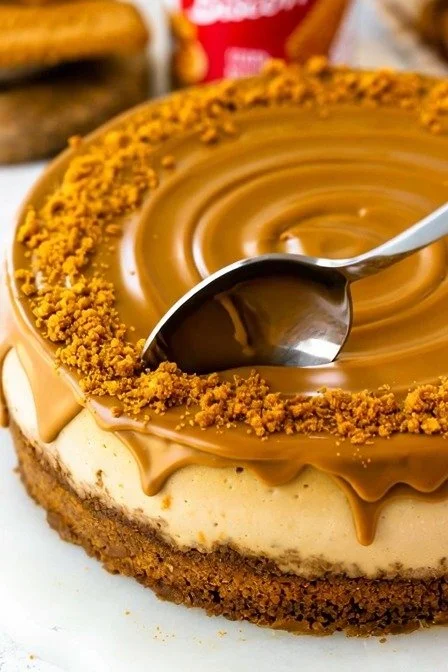
Once the cheesecake has set, it’s time to serve! Carefully run a knife around the edges of the springform pan to help release the cheesecake, then gently remove the sides. I usually top it with extra whipped cream and crushed Biscoff cookies for that extra touch!
Pro Tips for Best Results
One thing I’ve learned while perfecting this recipe is to use room temperature cream cheese. This makes it so much easier to achieve a smooth filling. I once tried making it straight from the fridge, and the result was a lumpy mess that I had to redo! Trust me; it’s worth the wait.
Also, if you’re short on time, you can skip baking the crust. Just use the crushed cookies mixed with butter and refrigerate it as is for a no-bake option. I’ve tried both methods and both are equally delicious, but the baked crust has a lovely texture that I favor.
Finally, don’t skip the chilling time! I’ve tried to be impatient and cut corners, only to end up with a soft cheesecake. Allowing it time to set is crucial for that perfect density. Your patience will be rewarded with the best cheesecake you’ve ever made!
Common Mistakes to Avoid
One common mistake I made early on was overmixing the cream cheese mixture. If you beat it too much, you can incorporate too much air, causing cracks on the cheesecake’s surface when it bakes. Learn from my experience; a gentle hand goes a long way here! (See the next page below to continue…)

