
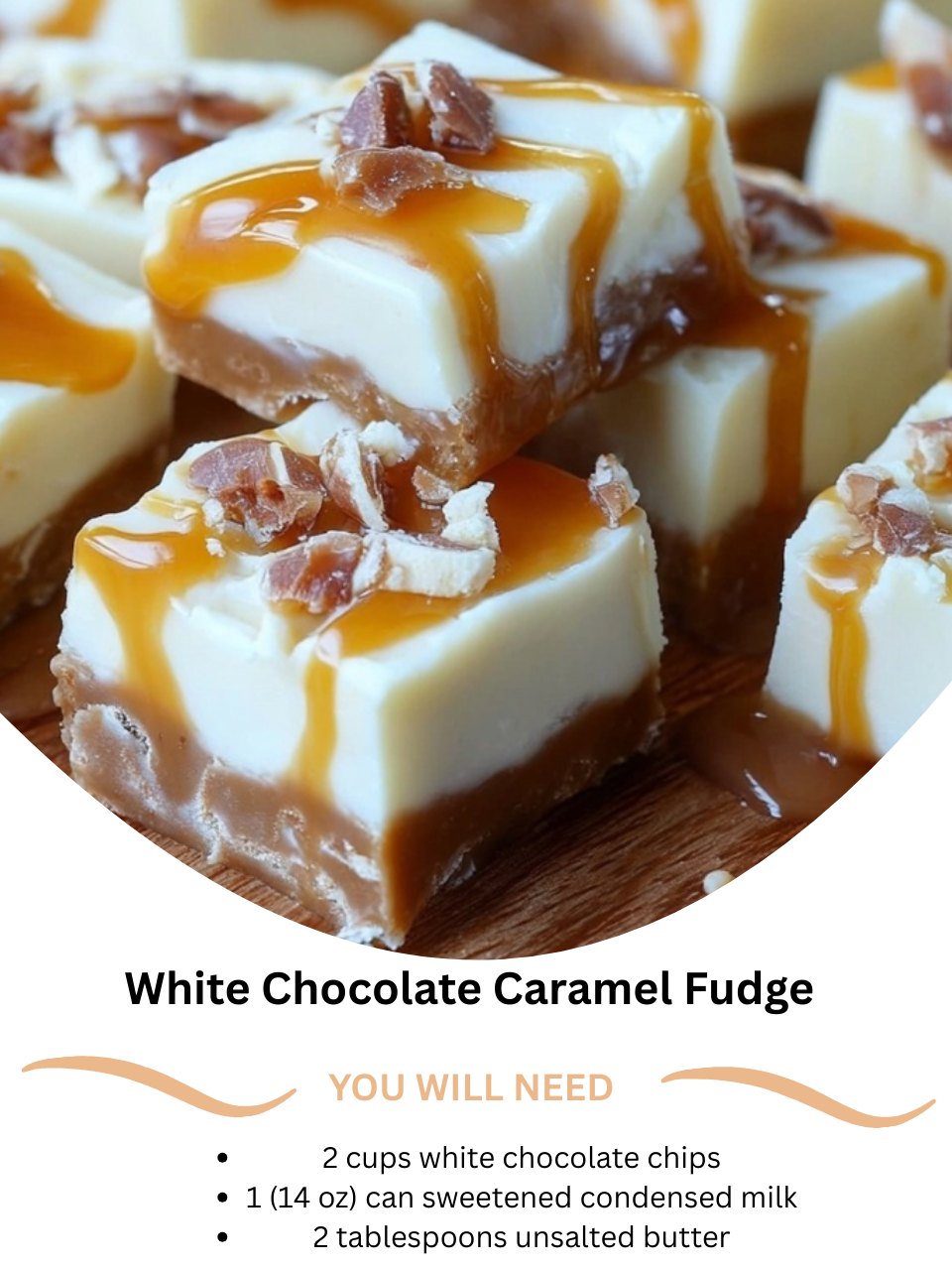
Here comes the fun, artistic part. I drizzle about half of the caramel over the first layer of white fudge in long, deliberate lines. Then, I carefully spoon the remaining third of the white fudge over the top—it’s okay if it doesn’t cover everything perfectly. Finally, I finish with the rest of the caramel. With a knife or toothpick, I gently drag it through the layers in wide, swirling motions, aiming for a marbled effect. My first time, I over-swirled and lost the beautiful contrast. Once satisfied, I let the pan cool completely on the counter before covering and refrigerating it for at least 4 hours, or better yet, overnight.
Pro Tips for Best Results
I tested the caramel consistency three different ways, and here’s the verdict: you need a thick, spoonable caramel, like a good quality dulce de leche or a homemade salted caramel that holds its shape. I once used a thin, runny ice cream topping, and it bled into the white chocolate, creating a soft, homogenous layer instead of distinct, beautiful swirls. Thick caramel is non-negotiable for that perfect layered texture and visual appeal.
Here’s what I learned the hard way about setting time: you cannot rush the chill. I got impatient and tried to slice a batch after just two hours in the fridge. The knife went through the firm top layer and then squished into a soft, messy center. A full four hours is the absolute minimum, but an overnight rest is truly ideal. This slow, cold setting allows everything to firm up perfectly, giving you that clean, creamy slice that holds its shape beautifully.
For those stunning, clean-cut squares, your knife is key. After the full chill, I lift the entire block out using the parchment sling. I run my sharpest chef’s knife under very hot water, wipe it completely dry, and make my first cut. I re-heat and dry the knife after every two or three cuts. This little trick melts through the fudge just enough to prevent it from dragging or cracking, revealing those gorgeous, sharp layers and swirls in every single piece.
Common Mistakes to Avoid
My biggest initial mistake was using medium heat to melt the base. Impatience leads to scorched milk and seized, grainy chocolate. I had to throw away my first attempt. Don’t do what I did! The lowest possible heat is your friend. If you’re unsure, use a double boiler. It takes a few extra minutes, but it’s a foolproof way to guarantee that silky-smooth texture we’re after without any risk of burning.(See the next page below to continue…)