
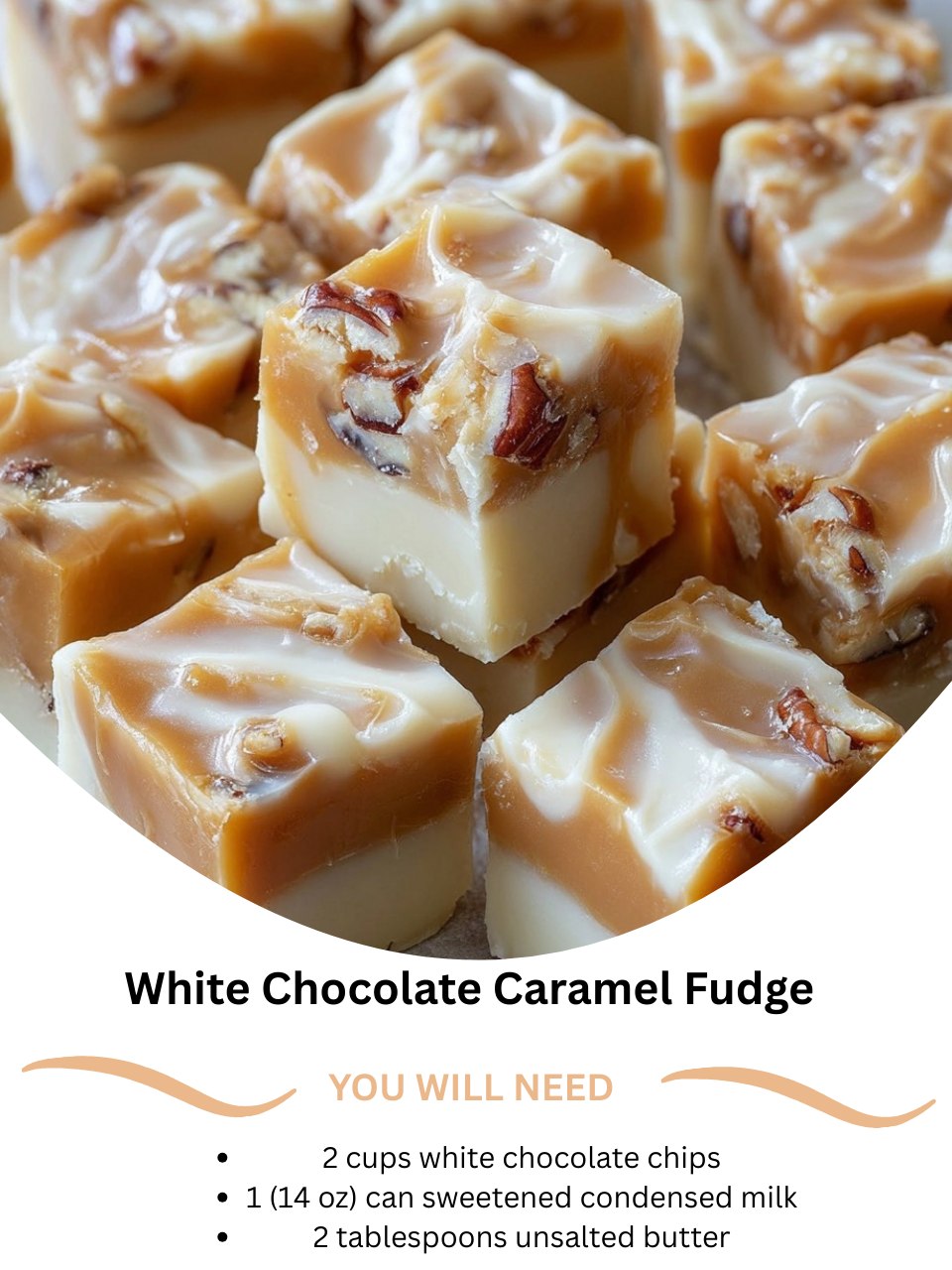
Here comes the artistic part. I drizzle about half of the caramel sauce over the first layer of white fudge in the pan. Then, I carefully pour the remaining third of the white fudge over the top. Finally, I finish with the rest of the caramel, drizzling it in lines or pools. With a knife or a toothpick, I gently drag it through the layers in wide, swirling motions. The goal is to marble, not mix. My first time, I over-swirled and lost the beautiful contrast. Once swirled, I let the pan cool completely on the counter before covering it and transferring it to the fridge to set firmly for at least 4 hours.
Pro Tips for Best Results
I tested the caramel consistency three different ways, and here’s the golden rule: your caramel sauce needs to be thick, like the kind you’d use for ice cream topping. I once used a runny caramel, and it bled into the white chocolate base, creating a muddy, soft texture instead of defined swirls. If your sauce is thin, simmer it in a separate pan for a few minutes to reduce and thicken slightly before using. Let it cool a bit so it doesn’t melt the fudge base when you swirl.
Here’s what I learned the hard way about setting time: patience is non-negotiable. This fudge needs a full, uninterrupted chill in the fridge. I’ve poked it after two hours, and while the top seems firm, the center is still much too soft to slice. A minimum of four hours is required, but I truly recommend letting it set overnight. This slow, cold setting ensures the fats crystallize properly, giving you that firm yet melt-in-your-mouth creamy bite that defines perfect fudge.
For picture-perfect slices, the knife technique is everything. After the full chill, I use the parchment sling to lift the entire block onto a cutting board. I run my sharpest chef’s knife under very hot water, wipe it completely dry, and make my first cut. I re-heat and dry the knife after every two or three cuts. This little extra step prevents dragging and squishing, giving you clean, beautiful squares where every layer and swirl is visible. It’s the difference between homemade and artisan-looking.
Common Mistakes to Avoid
My first attempt failed because I used high heat to speed up the melting. White chocolate is temperamental and will seize—turning into a grainy, clumpy mess—if it gets too hot. Don’t do what I did! Low and slow is your mantra. If you see any graininess starting, you can sometimes save it by immediately removing it from the heat and stirring in an extra tablespoon of cold butter, but prevention is much easier than the cure.(See the next page below to continue…)