
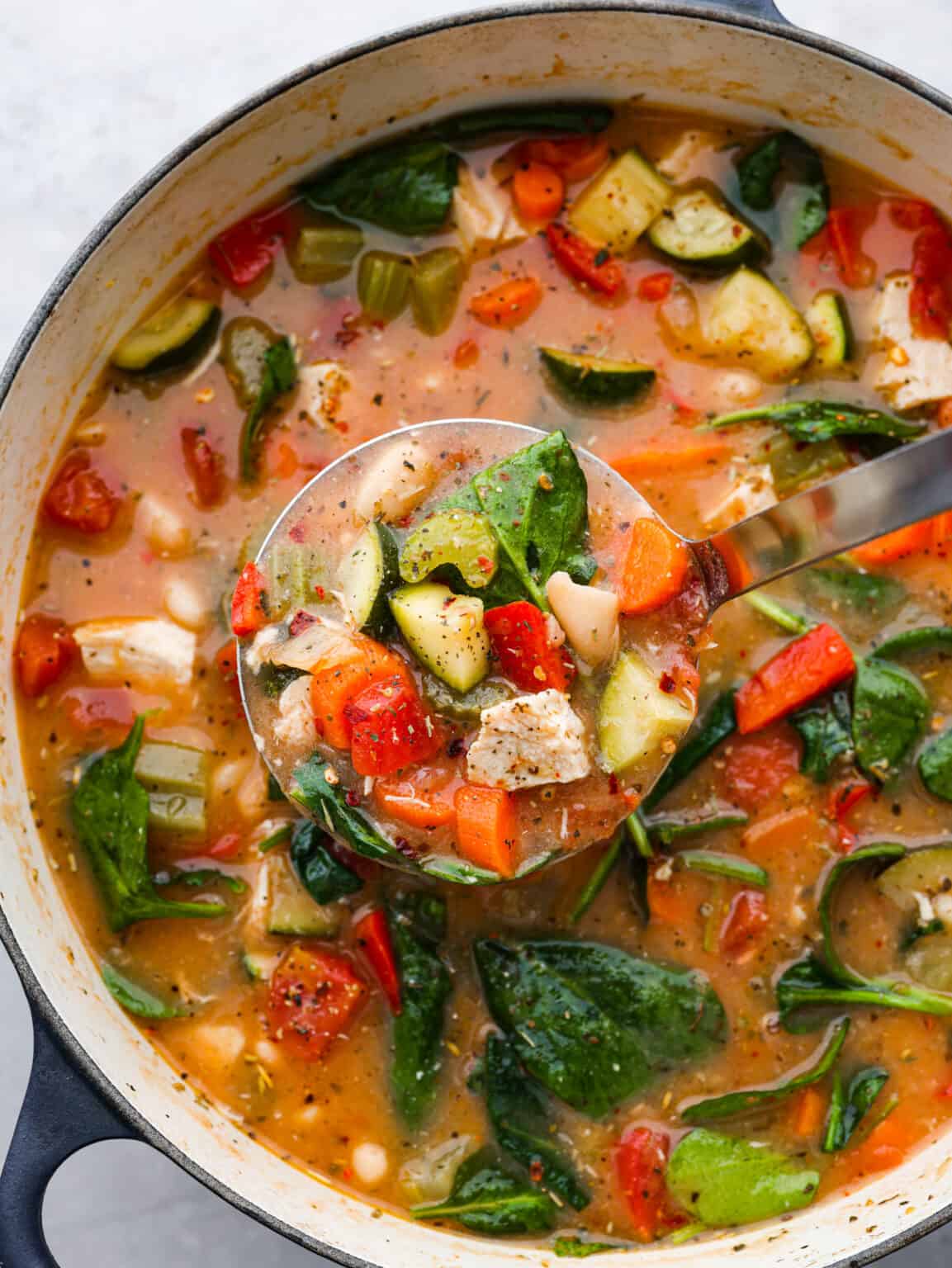
Unlike a basic chicken soup, Tuscan Vegetable Chicken Stew leans into Italian flavors and texture. Onion, garlic, carrots, and celery are sautéed in a mix of butter and olive oil until tender, then zucchini and red bell pepper are added for color and sweetness. Flour is sprinkled over the vegetables to make a quick roux, and chicken broth is whisked in to form a lightly thickened base that clings to the vegetables and chicken.
Cannellini beans, Italian seasoning, red pepper flakes, and canned tomatoes give the stew its Tuscan character—earthy, a little spicy, and full of body—while chopped cooked chicken, fresh spinach, and a splash of cider vinegar go in at the end so the chicken stays tender, the greens stay vibrant, and the flavors pop.
Equipment
- Large heavy‑bottomed pot or Dutch oven (at least 4–5 quarts).
- Wooden spoon or heat‑safe spatula for sautéing and stirring.
- Cutting board and sharp knife for chopping chicken and vegetables.
Ingredients
- 1 tablespoon olive oil.
- 3 tablespoons butter.
- ½ medium onion, diced.
- 2 cloves garlic, minced.
- 2 cups carrots, chopped.
- 2 cups celery, chopped.
- 1 large zucchini, chopped.
- 1 sweet red bell pepper, chopped.
- ¼ cup all‑purpose flour.
- 4 cups chicken broth.
- 1 tablespoon Italian seasoning.
- ½ teaspoon crushed red pepper flakes (optional, to taste).
- 1 (19 oz) can cannellini beans, drained and rinsed.
- 1 (28 oz) can diced tomatoes, undrained.
- 1 cup cooked chicken breast, chopped (or use thighs for extra tenderness).
- 1 cup fresh spinach leaves, chopped.
- 2 tablespoons cider vinegar.
- Salt and black pepper, to taste.
- Fresh parsley and grated Parmesan cheese, for garnish (optional).
Instructions And Steps
Start by sautéing the base vegetables. In a large pot or Dutch oven over medium‑high heat, add the butter and olive oil. Once the butter has melted and the fats are shimmering, add the diced onion, minced garlic, chopped carrots, and chopped celery.
Cook, stirring occasionally, for about 4–5 minutes until the vegetables are tender and the onion is translucent. This step builds sweetness and flavor into the stew, so you want the vegetables soft but not browned.
Next, add the quicker‑cooking vegetables. Stir in the chopped zucchini and sweet red bell pepper and cook for about 2 minutes, just until they begin to soften slightly.
These vegetables don’t need as long as the carrots and celery; they’ll finish cooking in the stew, so you’re simply taking off their raw edge and coating them in the flavored fat. The pot should now be full of colorful vegetables glistening in butter and olive oil.
Build the roux and broth base. Sprinkle the flour evenly over the vegetables and stir to coat them, forming a loose roux that will later thicken the stew. Cook this mixture for about 1 minute, stirring constantly, to cook off the raw flour taste; it will look slightly pasty and cling to the vegetables.
Then, slowly pour in the chicken broth while continuously stirring. Adding the broth gradually and stirring as you go helps prevent lumps and ensures the flour dissolves smoothly into the liquid. Continue stirring until the mixture starts to thicken and everything comes together into a lightly creamy broth surrounding the vegetables.
Once the broth has thickened slightly, layer in the beans, seasonings, and tomatoes. Stir in the Italian seasoning and crushed red pepper flakes, if using, so they disperse evenly. Add the drained and rinsed cannellini beans and the entire can of diced tomatoes with their juices.
Cannellini beans add body, protein, and a creamy bite that balances the tender vegetables and chicken, while the tomatoes bring acidity and depth to the broth. Stir well so the beans and tomatoes are evenly distributed and the spices are mixed through the stew.
Bring the stew to a boil, then reduce to a simmer. Increase the heat briefly so the mixture comes to a gentle boil, stirring frequently to keep the bottom from sticking as it thickens. Once it reaches a boil, add the chopped cooked chicken, then immediately reduce the heat to low.
Simmer the stew uncovered for 25–30 minutes, stirring occasionally, until the vegetables are fully tender and the broth has thickened to a hearty, stew‑like consistency. Simmering uncovered allows some of the liquid to evaporate, concentrating the flavors and giving the stew that satisfying, spoon‑coating texture.
Finish the stew with spinach and vinegar. After the stew has simmered and everything is tender, stir in the chopped fresh spinach and cider vinegar. Cook for an additional 3–4 minutes, just until the spinach has wilted and the vinegar has blended into the broth.
The spinach adds a fresh, green element and extra nutrients without overpowering the other flavors, while the cider vinegar brightens the stew and balances the richness of the butter, beans, and chicken. Taste the stew and season with salt and black pepper to your preference; the broth, beans, and chicken stock contribute some salt already, so adjust gradually.
To serve, ladle the Tuscan Vegetable Chicken Stew into bowls. Garnish with chopped fresh parsley for color and a sprinkle of grated Parmesan cheese for a salty, umami lift if desired. The Parmesan melts slightly into the hot stew, adding a subtle creaminess and deep Italian flavor.
Serve with crusty bread for dunking, garlic bread, or over a scoop of mashed potatoes or polenta if you want an extra hearty meal. The stew will continue to thicken as it stands, and leftovers tend to taste even better the next day after the flavors have time to meld.
Tips And Tricks
Using pre‑cooked chicken makes this stew faster and keeps the texture of the meat tender. Recipes often call for cooked chicken breast, but cooked thighs or rotisserie chicken also work well and add extra flavor.
If you don’t have cooked chicken on hand, you can poach or roast some ahead of time, or even quickly sauté cubes of chicken in the pot before starting the vegetables, then set them aside and add them back during the simmer. The cannellini beans are key to the Tuscan feel of the dish; their creamy interior and mild flavor pair especially well with the Italian herbs and tomato base.
Adjusting the thickness is straightforward because of the flour roux. If the stew is thicker than you like after simmering, stir in a little more chicken broth until it reaches your preferred consistency. If it’s thinner than you’d like, let it simmer uncovered for a few more minutes to reduce, or stir in a small slurry of additional flour and broth, letting it cook a bit longer to thicken.
Using butter and olive oil together gives both richness and flavor; if you prefer a lighter stew, you can use all olive oil and reduce the butter without losing the overall character.
The cider vinegar at the end is an important finishing touch; it sharpens and brightens the flavors so the stew doesn’t taste flat or heavy. If you don’t have cider vinegar, a splash of white wine vinegar or even lemon juice can approximate that effect.
You can also customize the vegetables easily—kale or Tuscan kale can stand in for spinach, and other Mediterranean vegetables like fennel, artichokes, or cherry tomatoes can be added for variety, as seen in other Tuscan‑style chicken and bean stews. However you tweak it, Tuscan Vegetable Chicken Stew delivers a colorful, vegetable‑packed, Italian‑inspired one‑pot meal that feels both wholesome and deeply comforting.