
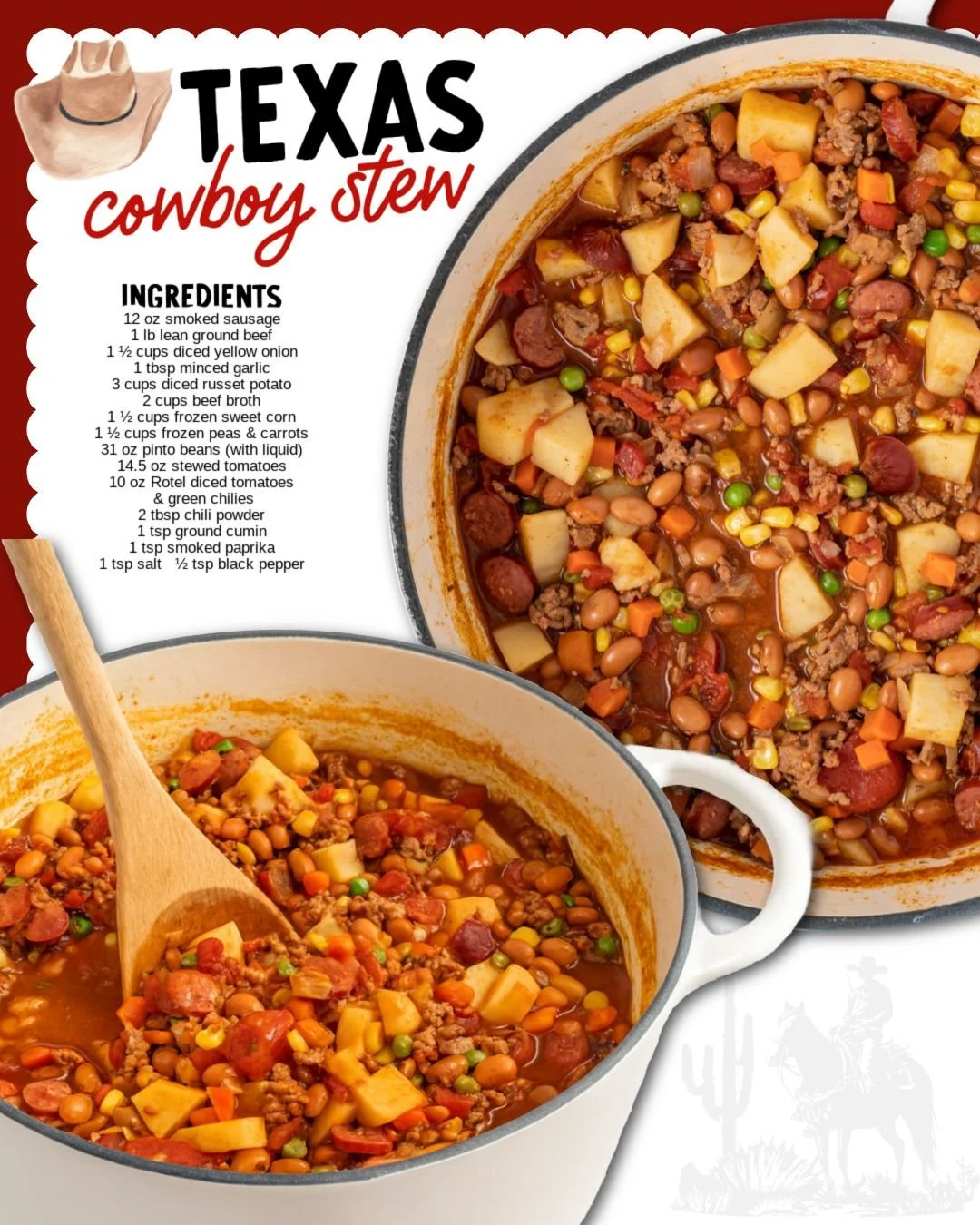
Another pitfall is adding all the ingredients at once without paying attention to cooking times. I made this mistake once and ended up with mushy potatoes. Now, I add the starchy ingredients first and the more delicate ones later to maintain that perfect texture.
I’ve also found that some people don’t season enough, which can lead to bland flavoring. I always recommend tasting the broth before serving and adjusting the spices accordingly. A sprinkle of salt or a dash of chili powder at the end can really make a difference!
Lastly, make sure to use a good-quality broth or stock. I’ve experimented with various brands, and I can definitely tell the difference. A rich, flavorful broth elevates the whole dish, while a cheap one can leave your stew one-dimensional.
Serving Suggestions
When I serve my Texas Cowboy Stew, I love to create a cozy atmosphere. I like to lay out all the garnishes—shredded cheese, sour cream, fresh cilantro—so everyone can customize their bowls. It adds a fun, interactive element to the meal. Plus, it looks inviting and colorful!
I often pair the stew with homemade cornbread or buttery biscuits. There’s just something magical about dipping that warm, flaky bread in a hearty stew. If I’m feeling extra fancy, I’ll make a simple side salad to complement the richness of the dish.
Another great idea is to serve the stew inside a bread bowl! Just hollow out a small round loaf of bread, fill it with steaming stew, and watch smiles appear at the table. It’s not only delicious but also adds a fun twist to the meal!
Variations & Customizations
One of the best things about Texas Cowboy Stew is how flexible it is. If you’re not a fan of beef, you can easily swap it out for turkey or even a plant-based option like quinoa or lentils. I’ve tried using ground turkey before, and it turned out great with a little extra spice to compensate for the milder flavor.
You can also mix up the vegetables based on what you have on hand. I’ve made versions with bell peppers, zucchini, or even butternut squash. Each variation adds its unique twist while still keeping that hearty stew essence.
Don’t forget about the beans! While kidney and black beans are traditional, I’ve had great success with pinto beans, navy beans, or chickpeas. The trick is using what you enjoy or what’s in your pantry at the moment. It makes the stew personalized!
How to Store, Freeze & Reheat
After enjoying my stew, I typically let any leftovers cool down before storing them in an airtight container in the fridge. It usually lasts about 3-4 days, though I doubt it’ll last that long in my house!
If I have a larger batch or just want to plan ahead, I freeze the stew in individual portions. I simply let it cool completely, then transfer it into freezer-safe containers, leaving a little room at the top for expansion. It can last up to 3 months in the freezer!
When it’s time to eat my frozen stew, I usually thaw it overnight in the fridge. Then, I reheat it gently on the stove, adding a splash of broth or water if needed. It’s comforting to have a warm bowl of stew ready to go on a busy night!
Conclusion
In conclusion, Texas Cowboy Stew is a recipe that not only fills your belly but also your heart. I hope you find as much joy in making this stew as I do, gathering around the table with loved ones, and sharing warm bowls of comfort. Whether it’s a chilly night or a casual gathering, this stew will surely become a beloved recipe in your home. Happy cooking, friends!