
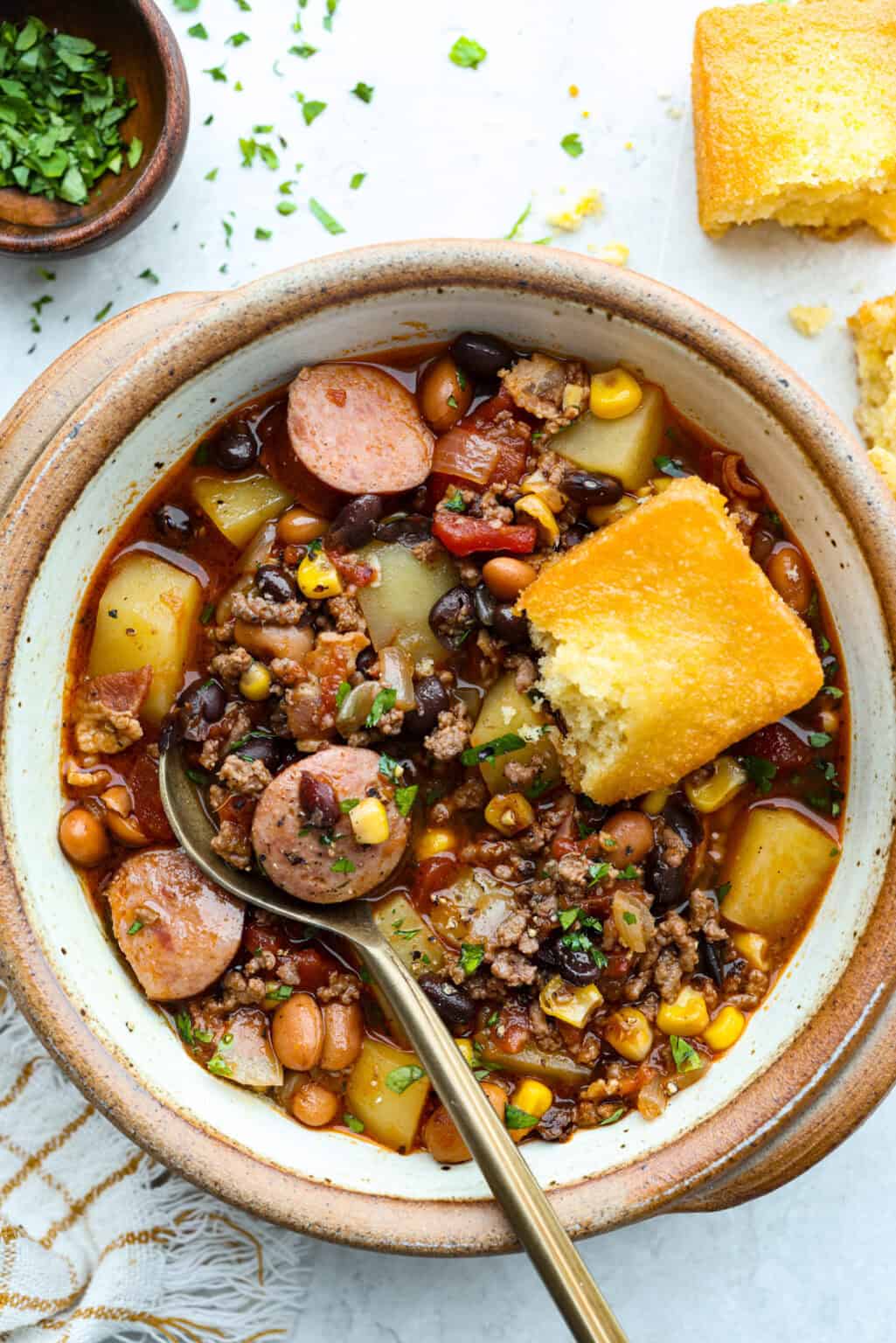
Most Cowboy Stew recipes start with browning bacon and smoked sausage to lay down a smoky, savory base, then cooking ground beef, onions, and garlic in the drippings. Chili powder, cumin, and sometimes smoked paprika or garlic powder are stirred in to toast briefly before beans, corn, tomatoes (often Rotel with green chilies), potatoes, and broth are added.
The stew simmers until the potatoes are tender and the flavors meld into a thick, robust, cowboy‑style pot of comfort that’s great with cornbread or biscuits.
Equipment
- Large Dutch oven or heavy soup pot (5–7 quarts).
- Wooden spoon or spatula for browning meats and stirring.
- Cutting board and knife for chopping onion, potatoes, and sausage.
Ingredients
- 4–6 slices bacon, chopped.
- 1 pound smoked sausage or kielbasa, sliced into ½‑inch pieces.
- 1–1½ pounds ground beef (80/20 or 85/15).
- 1 large onion, diced.
- 2–4 cloves garlic, minced (or ½–1 teaspoon garlic powder).
- 3–4 medium potatoes, diced into ½‑inch cubes (Yukon Gold or russets).
- 1 can (14–15 oz) diced tomatoes or Rotel tomatoes with green chiles, undrained.
- 1–2 cans (14–15 oz each) beans, drained and rinsed (kidney, pinto, or black beans, or a mix).
- 1 can (14–15 oz) corn, drained (or 1–2 cups frozen corn).
- 4 cups beef broth or stock (or a mix of broth and water), plus more as needed.
- 1–2 tablespoons chili powder.
- 1–2 teaspoons ground cumin.
- ½–1 teaspoon smoked paprika (optional, for extra smokiness).
- 1–1½ teaspoons kosher salt, plus more to taste.
- ½–1 teaspoon black pepper.
Instructions And Steps
Begin by cooking the bacon and sausage to build the flavor base. Place your Dutch oven or large pot over medium‑high heat and add the chopped bacon. Cook, stirring occasionally, until the bacon is browned and has rendered much of its fat.
Using a slotted spoon, transfer the bacon to a plate lined with paper towels, leaving the drippings in the pot. Add the sliced smoked sausage to the hot bacon fat and cook until the edges are browned and some of the fat has rendered, giving the sausage a nice sear. Remove the sausage with the slotted spoon and set it aside with the bacon.
In the same pot, brown the ground beef and cook the aromatics. If there is an excessive amount of grease, spoon off some, leaving a couple of tablespoons of fat to cook in. Add the ground beef and diced onion to the pot and cook over medium to medium‑high heat, breaking up the meat with a spoon as it browns, until the beef is no longer pink and the onions have softened and turned translucent.
Drain off any excess fat if needed. Stir in the minced garlic and cook for another 30–60 seconds until fragrant, being careful not to burn it.
Season the meat mixture and build the stew base. Sprinkle the chili powder, cumin, smoked paprika if using, salt, and black pepper over the browned meat and onions. Stir well and let the spices toast in the hot fat for a minute or two, which helps bloom their flavors and gives the stew a richer, more complex taste.
Add the diced potatoes and stir to coat them in the seasonings and meat juices. Pour in the diced tomatoes (with their juices) and the drained corn, along with the drained and rinsed beans. Return the browned bacon and sausage to the pot and stir everything together.
Add the broth and bring the stew to a simmer. Pour in the beef broth, starting with about 4 cups, and stir to combine. The liquid should cover most of the ingredients; if the stew looks too thick at this stage, you can add a little more broth or water.
Bring the mixture up to a boil over medium‑high heat, then reduce the heat to low, cover the pot, and let the stew simmer. Most cowboy stew recipes simmer for around 20–30 minutes if the potatoes are diced small, or up to 45–60 minutes if you want deeper flavor, stirring occasionally so nothing sticks to the bottom and adding a splash more liquid if it gets too thick.
Simmer until the potatoes are tender and the flavors have melded. The stew is done when the potatoes can be easily pierced with a fork and the broth has thickened slightly from the starches in the potatoes and beans.
Taste and adjust seasoning with additional salt, pepper, or chili powder if you want more kick. Some recipes finish the stew with a handful of shredded cheddar stirred in or melted on top for extra richness, while others garnish each bowl with chopped fresh parsley or green onions for a fresh contrast.
Serve the cowboy stew hot, ladled into bowls with plenty of meat, potatoes, beans, and broth. It’s hearty enough to stand alone but is especially good with cornbread, biscuits, or tortilla chips on the side for dunking or scooping.
The stew also reheats well, making it a great make‑ahead option for busy nights, game day, or camping trips.
Tips And Tricks
The combination of bacon, smoked sausage, and ground beef is what gives cowboy stew its signature smoky, meaty depth; most recipes stress using a good, smoky sausage and not skipping the bacon if you want that classic flavor.
Browning each meat properly, rather than just simmering them raw in the stew, builds fond on the bottom of the pot and creates layers of flavor that carry through the whole dish.
You can adjust the heat level by changing the type of tomatoes and chilies you use. Rotel or similar tomatoes with green chiles add a mild to medium kick, while plain diced tomatoes keep things more kid‑friendly; adding extra chili powder, cayenne, or chipotle powder can take it up to true campfire‑spicy levels for those who like more heat.
Using different beans—such as pinto, kidney, black beans, or even baked beans—also lets you tailor the stew’s sweetness and heartiness.
Cowboy stew is very forgiving and adaptable. Many versions are scaled up in campfire Dutch ovens or smokers, and it holds well on low heat, making it ideal for feeding groups. Leftovers thicken even more and can be repurposed as a filling for baked potatoes, nachos, or burritos the next day.
Whichever way you serve it, Cowboy Stew delivers a big, bold, stick‑to‑your‑ribs bowl of comfort with that unmistakable smoky, Southwestern flare.