
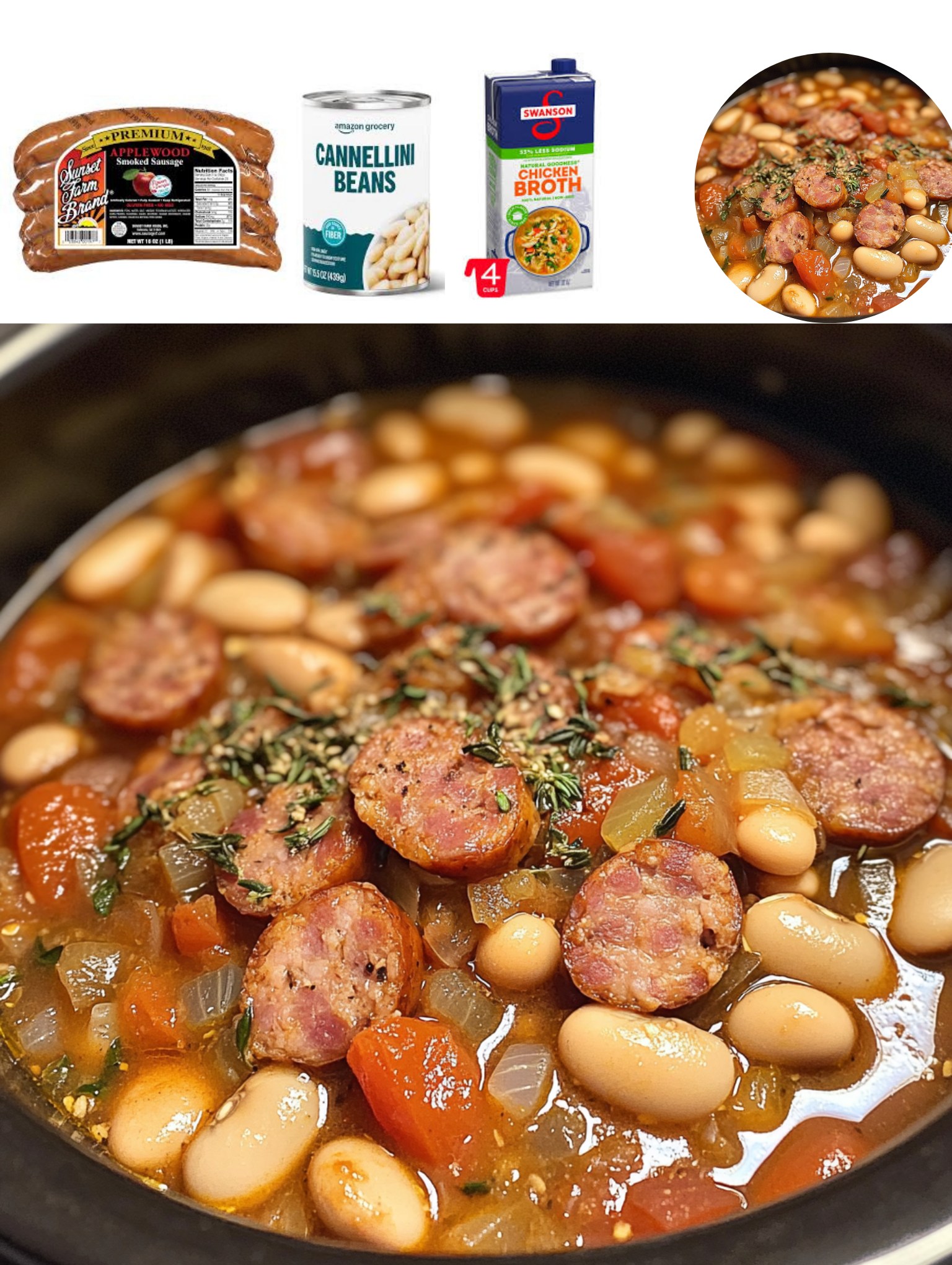
Place the lid on your slow cooker and set it to cook. For the best texture where the beans are creamy but not mushy and the vegetables are tender but not disintegrated, I cook it on LOW for 7-8 hours. If you’re short on time, you can cook it on HIGH for 3-4 hours. About 30 minutes before serving, if using kale, stir in the chopped leaves so they have time to wilt and become tender. Before serving, remove the bay leaf, season with salt and plenty of freshly cracked black pepper to your taste. The stew will be thick, hearty, and fragrant.
Pro Tips for Best Results
I tested the sausage preparation three different ways: added raw, browned, and boiled. Browning won decisively. Adding it raw made the stew taste greasy and one-dimensional. Boiling it first removed too much flavor. Taking those few minutes to get a good sear on the sausage slices creates fond (those tasty browned bits) in the pan and gives the stew a richer, deeper base note that permeates every spoonful.
Here’s what I learned the hard way about bean texture: not all beans are created equal in the slow cooker. I once used great northern beans and they turned to complete mush by the 8-hour mark. Cannellini and kidney beans hold their shape beautifully. Also, always drain and rinse your canned beans. The starchy liquid they’re packed in can make the entire stew cloudy and thick in an unappealing way. Rinsing gives you a cleaner, clearer broth.
For an incredible flavor boost, try this trick I picked up: about 15 minutes before serving, stir in one tablespoon of apple cider vinegar or a squeeze of fresh lemon juice. It sounds strange, but it brightens the entire stew, cutting through the richness and making all the other flavors pop. It’s the secret ingredient that makes people say, “Wow, what’s in this?” Don’t skip this step; it makes a huge difference.
Common Mistakes to Avoid
My first batch was a salt-laden disaster because I used regular-sodium chicken broth and didn’t rinse my beans. The smoked sausage released its salt, the broth added more, and the bean liquid sealed the deal. It was nearly inedible. Now, I always use low-sodium broth, rinse my beans thoroughly, and only add salt at the very end, after tasting. You can always add salt, but you can’t take it away.(See the next page below to continue…)