
Now, for the “glue” that holds this masterpiece together: the custard. In my large mixing bowl, I whisk the eggs vigorously until they’re well beaten and uniform. To them, I add the milk, sour cream, garlic powder, onion powder, dry mustard, smoked paprika, salt, and pepper. I whisk it all until the mixture is completely smooth and emulsified—it should be a pale yellow, creamy liquid. I carefully pour this custard evenly over the entire layered dish in the pan, shaking the pan gently to help it seep into all the nooks and crannies.
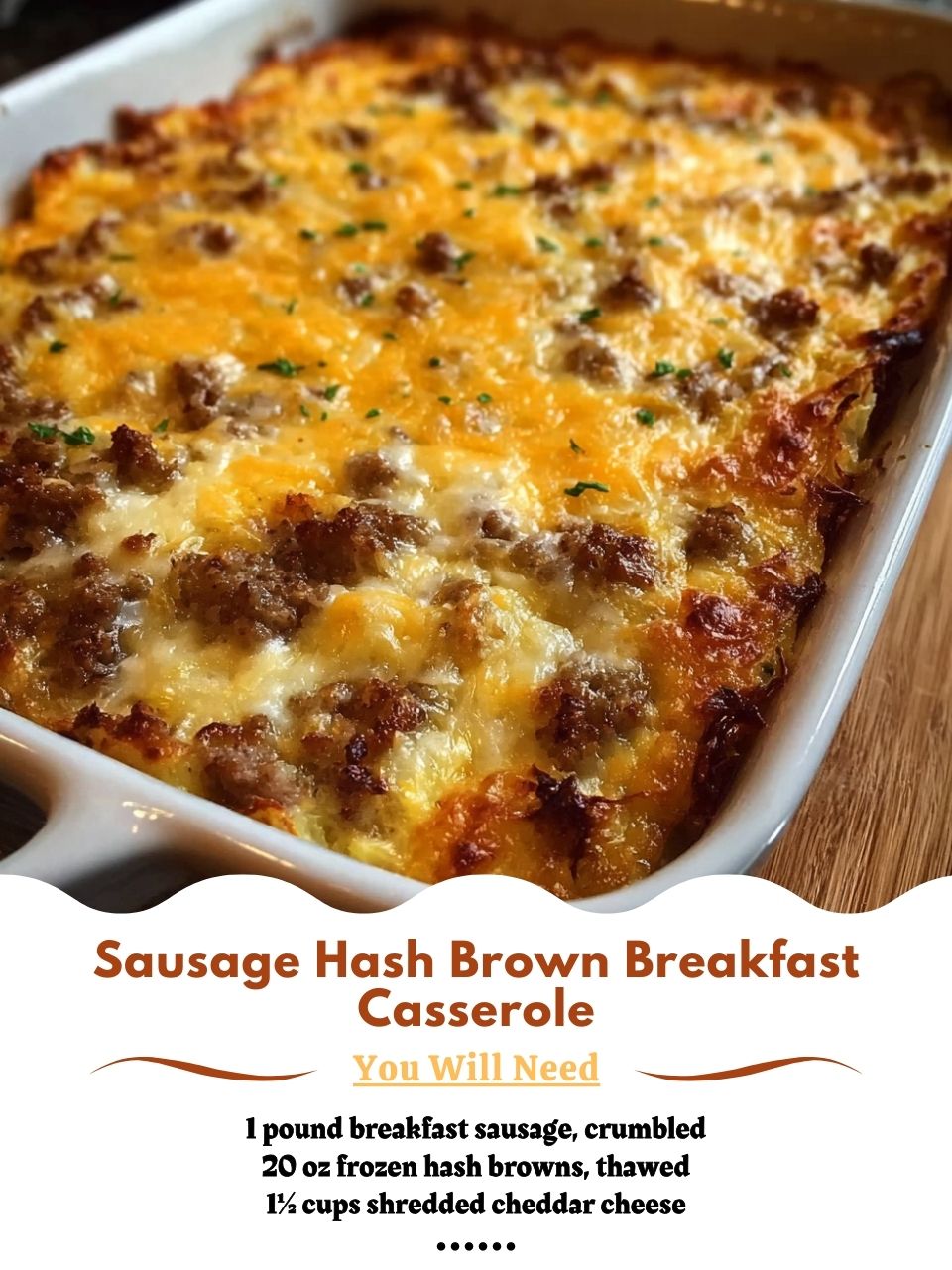
The final touch is a sprinkle of the remaining cheddar cheese over the top. I then cover the dish tightly with aluminum foil. This is the key to a tender, not rubbery, egg texture. I bake it covered for 40 minutes. Then, I remove the foil, increase the oven temperature to 400°F, and bake for another 15-20 minutes, until the top is puffed, beautifully golden brown, and the center is set (a knife inserted should come out clean). The smell as it finishes baking is absolutely irresistible. I let it rest for 10 minutes before cutting—this allows it to set perfectly for clean slices.
Pro Tips for Best Results
Thaw your hash browns completely. This is my number one tip. If you use frozen hash browns straight from the bag, they’ll release a ton of water as they bake, creating a watery, soggy casserole. I spread them on a baking sheet at room temperature for 30-45 minutes or, better yet, thaw them overnight in the fridge. Dry potatoes are the secret to a casserole with perfect texture, not a soupy one.
Season your egg mixture aggressively. The hash browns, sausage, and cheese absorb a lot of flavor. That egg and milk custard needs to be well-seasoned to penetrate the whole dish. I always taste a tiny drop of the mixture (before adding raw eggs, of course, I whisk a spoonful with the spices and a splash of milk) to check the salt and seasoning. Underseasoned custard leads to a bland casserole. Trust your taste buds here.
Use the foil technique. Baking covered for the majority of the time steams the eggs gently, ensuring they cook through evenly without drying out or turning rubbery. The final uncovered bake at a higher temperature is what gives you that gorgeous, golden, crispy-cheesy top layer. I’ve tried baking it uncovered the whole time, and the top browned too quickly while the center was still liquid. The two-stage method is foolproof.
Let it rest! I know it’s hard when it smells so good, but those 10 minutes after baking are non-negotiable. The casserole continues to cook from residual heat, and the structure sets. If you cut into it immediately, it will be runny and fall apart. Letting it rest ensures you get picture-perfect, sturdy squares that hold their shape on the plate.
Common Mistakes to Avoid
The biggest mistake is not draining the sausage grease. After browning, tilt the skillet and spoon out the excess fat or drain the sausage in a colander. Leaving all that grease in will make the entire casserole overly rich and oily, and it can prevent the bottom hash brown layer from crisping up. I made this mistake on a rushed morning once, and while still edible, it was definitely a heavier, greasier meal.
Using frozen hash browns straight from the freezer is a recipe for disappointment. The ice crystals melt and create a layer of water at the bottom of your dish, steaming the potatoes and eggs instead of letting them bake. You’ll end up with a separated, watery texture. Plan ahead for that simple thaw—it’s the difference between a breakfast bake and a breakfast soup.
Underseasoning the egg mixture is a common pitfall. Eggs and potatoes are bland on their own. Relying solely on the sausage and cheese for flavor means the bites in between can taste like nothing. Be generous with your spices, especially that dry mustard and smoked paprika. They build layers of flavor that make every single forkful delicious.(See the next page below to continue…)