
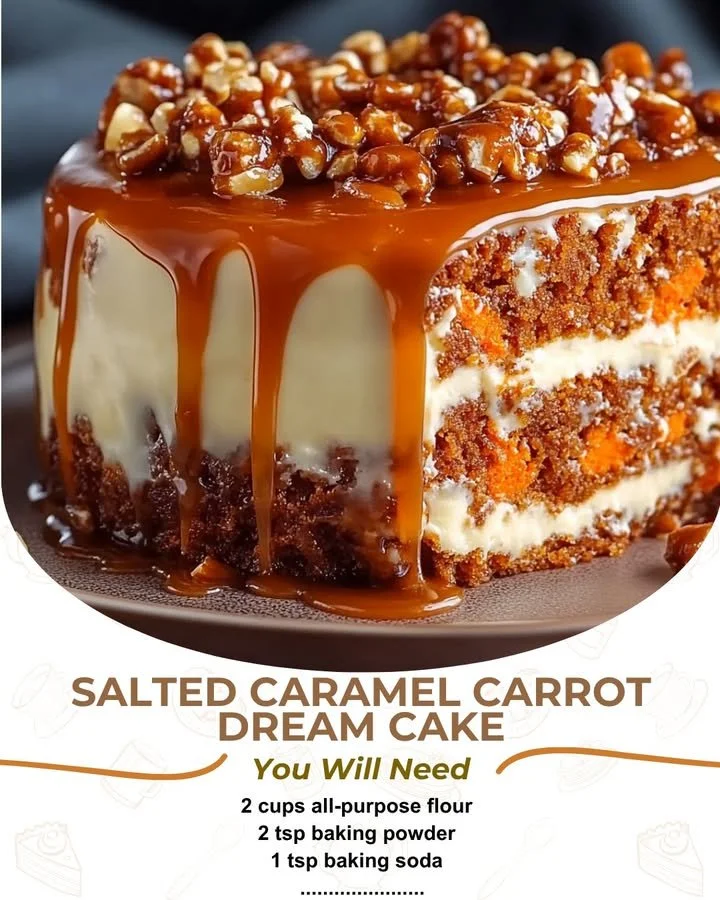
Next, pour the batter into your lined baking pan and smooth out the top with a spatula. Bake for about 35-40 minutes, or until a toothpick poked in the center comes out clean. In the meantime, as your cake bakes, let’s make that salted caramel! In a medium saucepan over medium heat, combine the unsalted butter and brown sugar, stirring constantly until the sugar has dissolved. Gradually pour in the heavy cream, continuing to stir until the mixture thickens slightly. Don’t forget to take a moment to breathe in the aroma, because it’s heavenly!
Once the cake is done, let it cool in the pan for about 10 minutes before transferring it to a cooling rack. This allows the moisture to set, ensuring that when you slice it later, it’ll be perfectly tender and moist—just the way I love it! Once the cake has completely cooled, drizzle the warm salted caramel over the top, and for the grand finale, sprinkle a pinch of sea salt for that perfect sweet-and-salty balance.
Pro Tips for Best Results
I tested this recipe three ways before landing on the perfect blend of spices and sweetness. Start with fresh, high-quality carrots. I find that the fresher the carrots, the more intense the flavor and moisture in the cake. Also, make sure your butter is at room temperature before making the caramel; it helps with a smooth texture. My last tip? Don’t rush the cooling process; patience truly pays off in flavor and moistness.
I also experimented with different types of oils and found that vegetable oil gives the best texture. If you’re looking for a slightly healthier alternative, you could use applesauce in place of some oil to make it even moister without all the calories. Just remember to adjust the sweetness accordingly!
Lastly, don’t forget about the salted caramel drizzle! It’s a game-changer, adding rich flavors and a beautiful gloss to the cake. I’ve learned to make extra caramel on the side because my family can never get enough of that gorgeous topping.
Common Mistakes to Avoid
One common mistake I used to make was not properly measuring the flour. I learned that spooning the flour into the measuring cup instead of scooping it directly could save you from a dense cake. Overmixing the batter is another pitfall you’ll want to avoid; remember, mixing until just combined leads to the softest cake. (See the next page below to continue…)

