
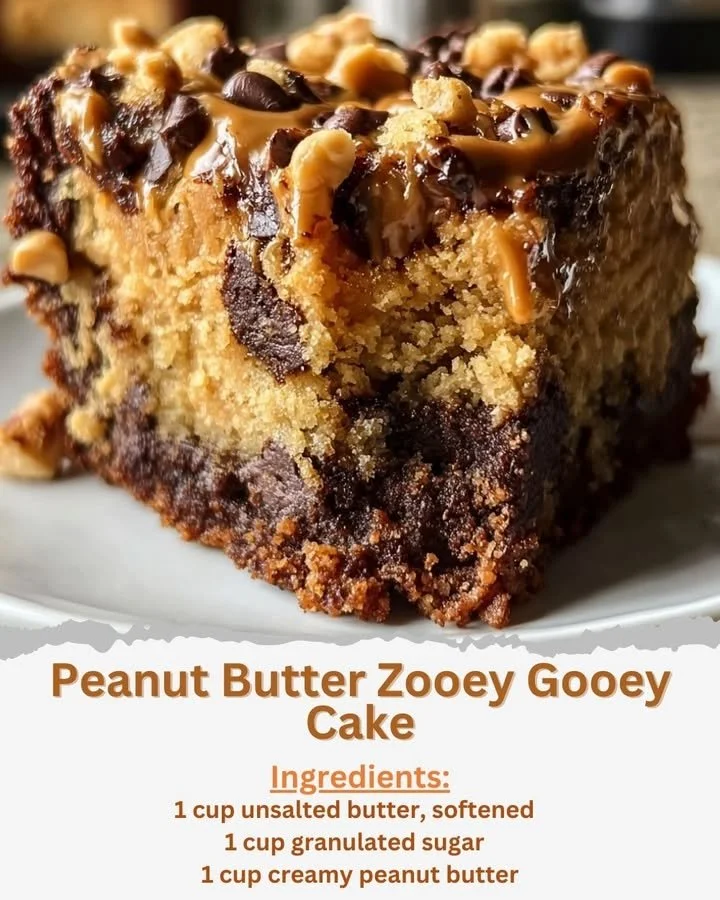
Next, I press that dough evenly into the bottom of the pan. I usually use my hands or the back of a spoon to flatten it out, making sure it reaches the corners. This layer becomes the soft, buttery base of the cake. When I first tried this recipe, I didn’t press it evenly and ended up with uneven baking, so now I take an extra minute to smooth it out properly.
In another bowl, I beat the cream cheese and peanut butter together until completely smooth. Then I add the eggs and vanilla extract, mixing again until creamy. Finally, I slowly beat in the powdered sugar and salt until everything becomes thick and glossy. The filling should look silky and rich, and honestly, at this point I’m always tempted to taste a spoonful.
I pour this peanut butter mixture over the crust and spread it gently so it covers everything. Then it goes into the oven for about 35–40 minutes. The edges should look set while the center stays slightly soft. I’ve learned not to overbake it because the gooey texture is what makes this cake so special. Once baked, I let it cool completely before slicing.
Pro Tips for Best Results
After making this cake several times, I realized that room-temperature cream cheese makes a huge difference. The first time I made it, I used cream cheese straight from the fridge and ended up with tiny lumps in the batter. Letting it sit out for about 30 minutes makes the filling much smoother.
Another thing I discovered while testing this recipe is that creamy peanut butter works better than natural peanut butter. Natural peanut butter tends to separate and can make the filling oily. Trust me, the classic smooth peanut butter gives the best texture and flavor balance.
One final tip I learned the hard way: don’t overbake the cake. I tested this recipe a few times, and leaving it in the oven too long turns the gooey layer into something more like a firm cheesecake. Pull it out when the center still looks slightly soft—it will set as it cools.
Common Mistakes to Avoid
The first mistake I made when baking this cake was overmixing the filling. I kept beating it thinking smoother was better, but too much mixing can actually make the texture slightly dense. Now I mix just until everything is smooth and combined. (See the next page below to continue…)