
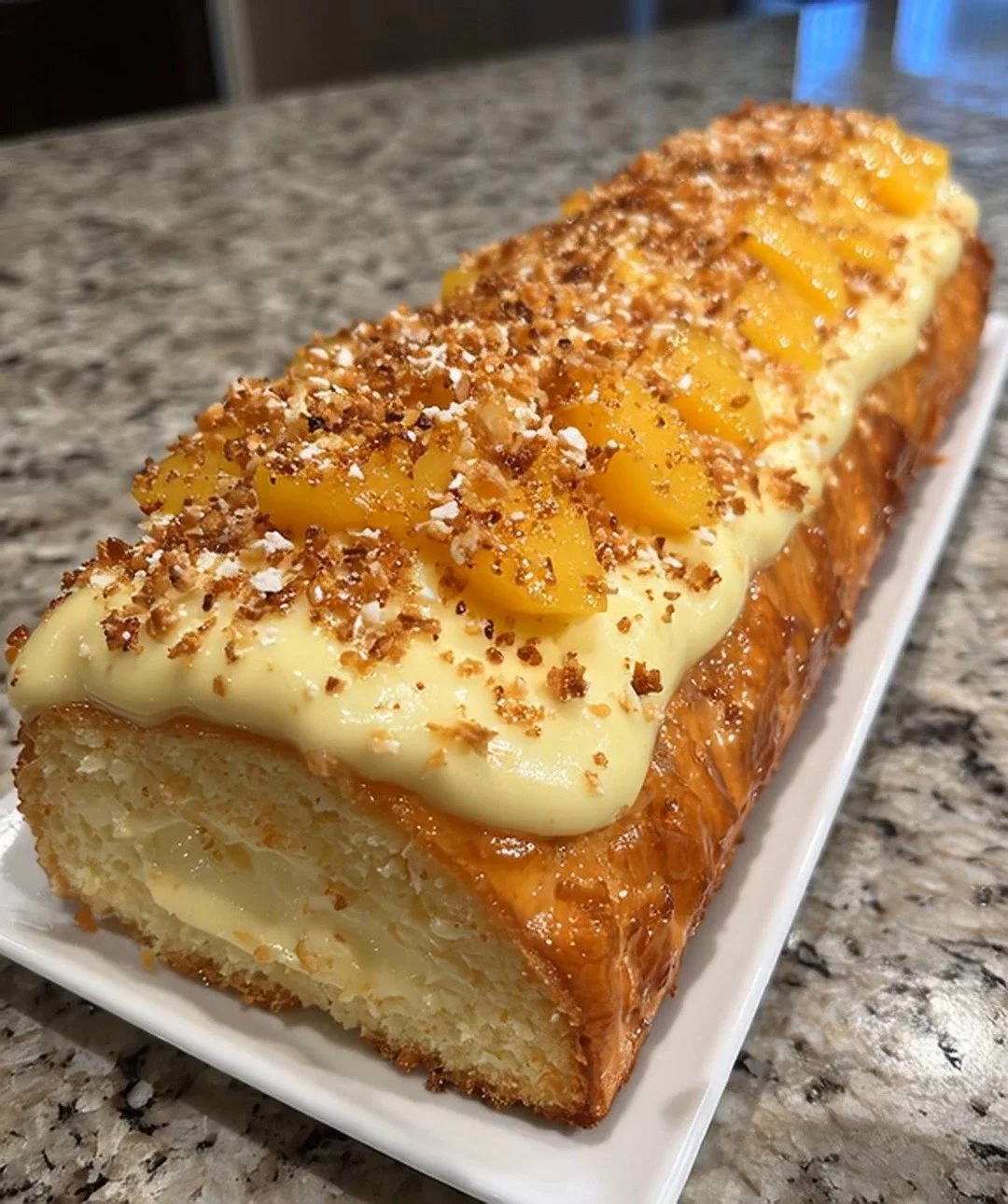
Next, place the pan in the oven and bake it for about 12-15 minutes. You’ll know it’s ready when it springs back when lightly touched and is a lovely golden color. While it’s baking, prepare a clean kitchen towel by dusting it with powdered sugar—this helps prevent sticking when you roll! Once the cake is done, promptly take it out and invert it onto the prepared towel. Peel off the parchment paper quickly, then roll the cake up with the towel starting from one of the shorter ends. Let it cool completely while rolled up, which helps maintain that lovely spiral shape later.
Once the cake is cool, it’s time to make the delectable filling! In a separate mixing bowl, beat the heavy whipping cream until soft peaks form. Then, gently fold in the cream of coconut and diced peaches until well combined. The mixture should be velvety and luscious—trust me, the smell is heavenly! Unroll the cooled cake and spread your peachy coconut mixture evenly across the surface. Roll the cake back up (without the towel this time), and wrap it in plastic wrap. Refrigerate it for at least an hour so everything sets nicely.
Pro Tips for Best Results
To get the fluffiest cake possible, I always separate the eggs and whip the whites until they’re just about stiff peaks before folding them into the batter. It adds an incredible lightness! I tested this three ways—whipping every ingredient together versus separating them—and the airy result is definitely worth it. Also, be sure to let the cake cool completely before adding the filling; I’ve made the mistake of not waiting before, leading to a soggy mess that didn’t hold its shape!
Another key point is to use fresh, ripe peaches. I find that the flavor and sweetness of fresh fruit elevate the entire dish. If peaches aren’t in season, frozen peaches work in a pinch, but you may need to adjust the sugar since they can vary in sweetness. Lastly, be gentle while rolling your cake; a soft touch will help keep it from cracking!
Common Mistakes to Avoid
One common mistake I’ve made in the past is not preparing my jelly roll pan properly. Make sure to line it with parchment paper and spray it lightly with non-stick cooking spray. I once had a roll stick to the pan, and it was such a disappointment trying to salvage it! Another tip is to watch your baking time closely. When testing, make sure you don’t overbake; a dry cake won’t roll well and will crack when you try to handle it.
Another issue you want to avoid is overwhipping your cream. Be cautious, as minute differences in timing can lead from perfect soft peaks to grainy butter. I’ve had my fair share of sad whipped cream, and trust me, it’s not a fun experience! Lastly, when adding the filling, don’t be tempted to pile it too high—there’s a balance between flavor and making sure it rolls smoothly.