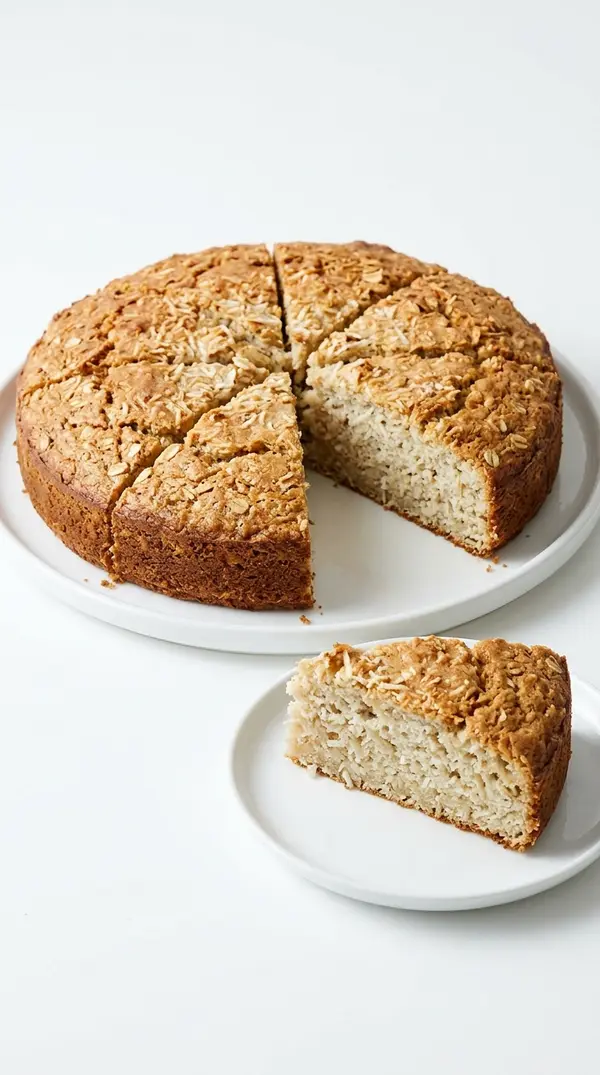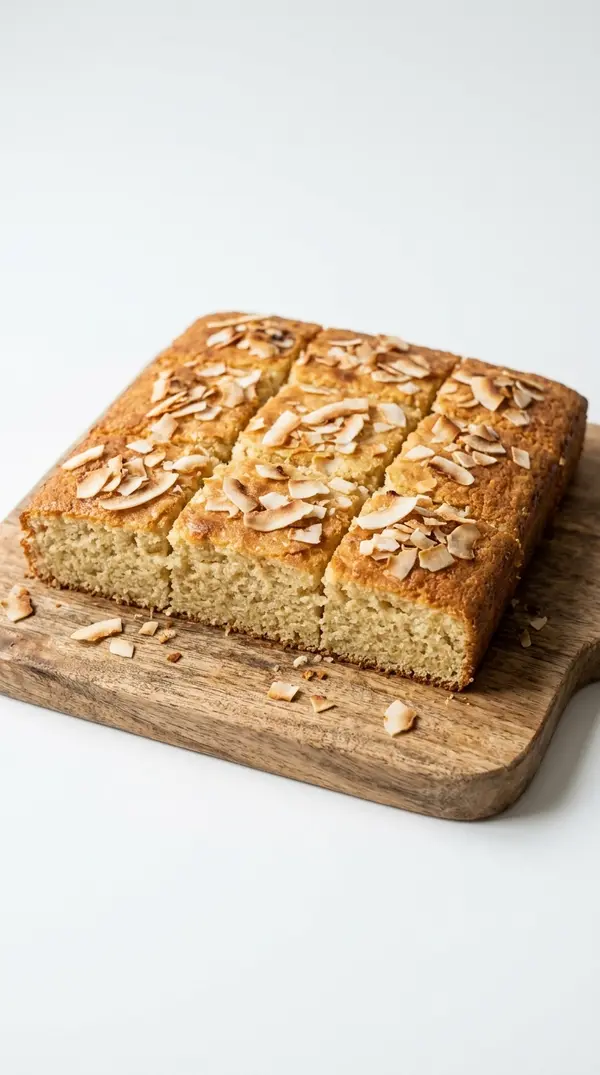
Key Tips for This Orange Coconut Oat Cake
The blender creates a uniform batter without whisking by hand.
Baking in a single pan reduces cleanup to a single sheet.
The cake stays moist for days, making it ideal for make‑ahead breakfasts.
Mixing and Baking the Orange Coconut Oat Cake
Step 1: Step 1: Place the rolled oats in a blender. Pulse for about two minutes, or until the oats become a fine powder. The fine texture ensures a smooth crumb.
Step 2: Step 2: Add the eggs, orange juice, honey, shredded coconut, and baking powder to the oat flour. Blend on low for five seconds, then increase speed.
Step 3: Step 3: Continue blending on high for roughly one minute, until the batter is completely smooth and no oat particles remain. A glossy surface signals readiness.
Step 4: Step 4: Line an 8‑inch square baking pan with parchment paper, allowing the paper to overhang for easy removal. Pour the batter into the pan, spreading it evenly with a spatula.
Step 5: Step 5: Preheat the oven to 350°F (175°C). Once the oven reaches temperature, place the pan on the middle rack. Bake for 30 minutes, rotating the pan halfway through for even browning.
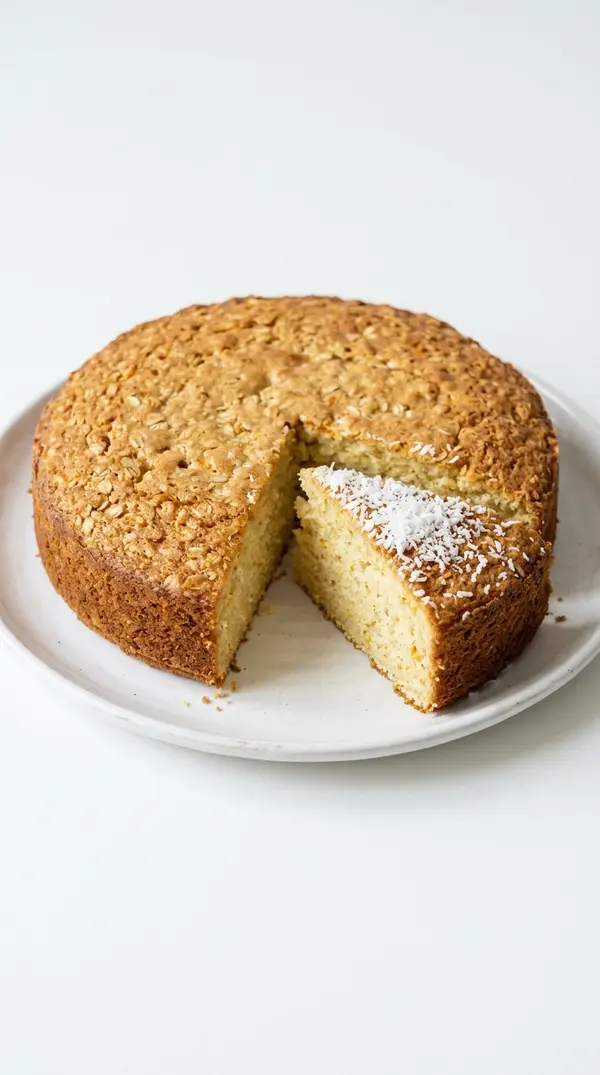
Step 6: Step 6: After 30 minutes, test the center with a toothpick; it should come out clean or with just a few crumbs. The top will be lightly golden and may spring back slightly when pressed.
Step 7: Step 7: Remove the pan from the oven and let the cake cool in the pan for 10 minutes. This resting period helps the cake set and makes slicing easier.
Step 8: Step 8: Lift the parchment paper and transfer the cake to a cutting board. Slice the loaf into wedges of your desired size.
Step 9: Step 9: Place each slice on a serving plate and sprinkle a small handful of shredded coconut over the top for added texture and visual appeal.
Step 10: Step 10: Serve warm or at room temperature. The cake pairs nicely with a cup of tea or coffee.
Avoiding Cracks and Dry Spots in This Cake
Over‑blending the batter can cause a dense crumb; blend just until smooth and stop.
Using cold eggs leads to uneven mixing; let eggs sit out for 15 minutes before blending.
Skipping the parchment lining often results in a stuck cake; always line the pan for easy release.
Baking at too high a temperature browns the edges before the center sets; keep the oven at 350°F (175°C).
Opening the oven door early drops temperature and may cause a sunken center; wait until the timer signals the full 30 minutes.
Not letting the cake rest before slicing makes it crumble; a 10‑minute cool in the pan is essential.
Swaps and Add‑Ins That Still Work
Replace orange juice with pineapple juice for a tropical twist; keep the same volume.
Substitute honey with maple syrup for a milder sweetness; the flavor will shift slightly.
Use almond flour in place of half the oats for a lighter crumb; maintain total dry weight.
Add a teaspoon of finely grated ginger for a warm spice note that complements citrus.
Keeping the Cake Fresh for a Week
The cake stays fresh at room temperature for up to three days if covered loosely with foil. For longer storage, wrap slices tightly in plastic wrap and freeze for up to two months. To thaw, leave a slice on the counter for 30 minutes or microwave for 15 seconds. Reheat in a 300°F (150°C) oven for five minutes to revive the crust.
Pairing the Cake with Tea or Yogurt
Serve each wedge with a dollop of plain yogurt for a creamy contrast, or drizzle a little extra honey for added shine. The cake works well as a brunch centerpiece, a snack after school, or a light dessert after a hearty dinner. Pair it with fresh berries for a burst of color and acidity.
Orange Coconut Oat Cake Questions
How do I know when the cake is fully baked?
Look for a lightly golden top and a springy feel when you press the center lightly. Insert a toothpick; it should emerge clean or with just a few moist crumbs.
Can I use a different pan size?
Yes, a 9‑inch round pan works, but the batter will spread thinner and bake a few minutes faster. Adjust baking time by checking at the 25‑minute mark.
What if I don’t have shredded coconut?
You can substitute with sweetened toasted coconut flakes or omit the topping entirely. The cake’s interior still retains coconut flavor from the blended oats.
Is this cake gluten‑free?
Rolled oats are naturally gluten‑free, but cross‑contamination can occur during processing. Choose certified gluten‑free oats if you need a strict gluten‑free version.
Can I make this cake ahead of time for a party?
Absolutely. Bake the cake a day before, keep it covered, and add the fresh coconut topping just before serving. The cake retains moisture and flavor when stored properly.