
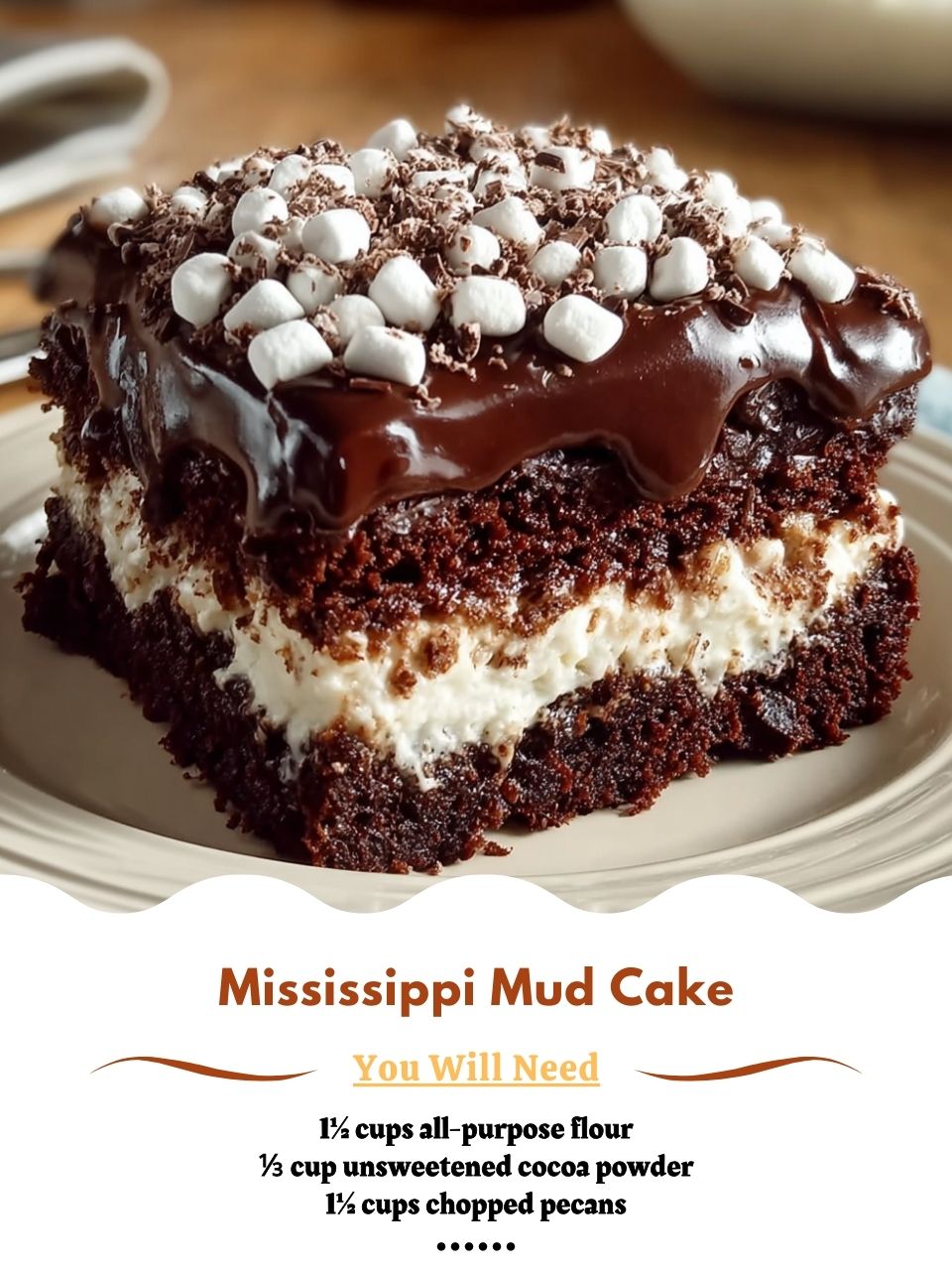
The cake bakes for 25-30 minutes. This is the most critical timing in the whole recipe. You want to pull it out when the center is just set, but still a bit soft. A toothpick inserted will come out with a few moist crumbs, not completely clean. I set my timer for 25 minutes and check. Overbaking is the enemy of fudginess! The moment it comes out of the oven, I immediately and evenly scatter the entire bag of mini marshmallows over the hot surface. I let it sit for 2-3 minutes—the residual heat softens them perfectly. Then, I gently press them down with the back of a spoon to create an even, gooey layer.
While the marshmallows are setting, I make the frosting. In the same saucepan (no need to wash it!), I melt the stick of butter with the 1/3 cup cocoa powder and milk over medium-low heat, whisking constantly until it just begins to simmer. I immediately remove it from the heat and whisk in the sifted powdered sugar and vanilla until it’s completely smooth and pourable. I work quickly and pour this warm frosting directly over the marshmallow layer, using my spatula to spread it to the edges. The warmth helps it flow and seal everything into a gorgeous, glossy, crackly top. I sprinkle on the reserved pecans and let the whole glorious mess cool completely before cutting.
Pro Tips for Best Results
Toast your pecans. I’ve made this cake with raw pecans and with toasted ones, and trust me, this one works better. Toasting unlocks their oils and gives them a deeper, nuttier flavor that stands up to all the chocolate and sweetness. It adds a sophisticated note and much better crunch. I do this on a sheet pan in the preheating oven for 5-7 minutes, watching closely so they don’t burn.
Undercook the cake base slightly. This is not a dry, cakey dessert. It’s meant to be dense and fudgy. Pull it from the oven when the edges are pulling away from the pan and the center still has a slight, gentle jiggle. It will continue to cook from residual heat. I overbaked my first attempt by just five minutes, and while still tasty, it was more brownie-like than the intended mud-cake texture.
Add the marshmallows immediately after baking. The heat of the cake is what melts them into that perfect, sticky layer. If you wait for the cake to cool, the marshmallows won’t melt and adhere properly. I sprinkle them on straight from the oven, let them sit for a few minutes to soften, and then give them a gentle press with a spoon to flatten them slightly into a more even layer.
Make the frosting while the marshmallows set. The frosting must be warm and pourable to create that signature smooth, crackly shell. If it cools too much in the pan, it will thicken and be difficult to spread. Pouring it over the slightly softened marshmallows allows it to seep into the crevices and create a unified top layer. Work efficiently for the best texture.
Common Mistakes to Avoid
The biggest mistake is overbaking the cake layer. This cake is supposed to be dense, moist, and rich—almost like a cross between a brownie and a cake. If you bake it until a toothpick comes out clean, you’ve gone too far. I made this mistake the first time, and while still good, it lacked the luxurious, fudgy heart that makes Mississippi Mud Cake so special. Err on the side of underdone.
Using a glass baking dish can lead to over-browned edges and an undercooked center. Glass heats and cools differently than metal. I stubbornly used my glass pan the second time I made this, and the edges were almost crispy while the middle was too soft. A metal pan provides the even, consistent heat needed for perfect results. It’s worth digging one out.(See the next page below to continue…)