
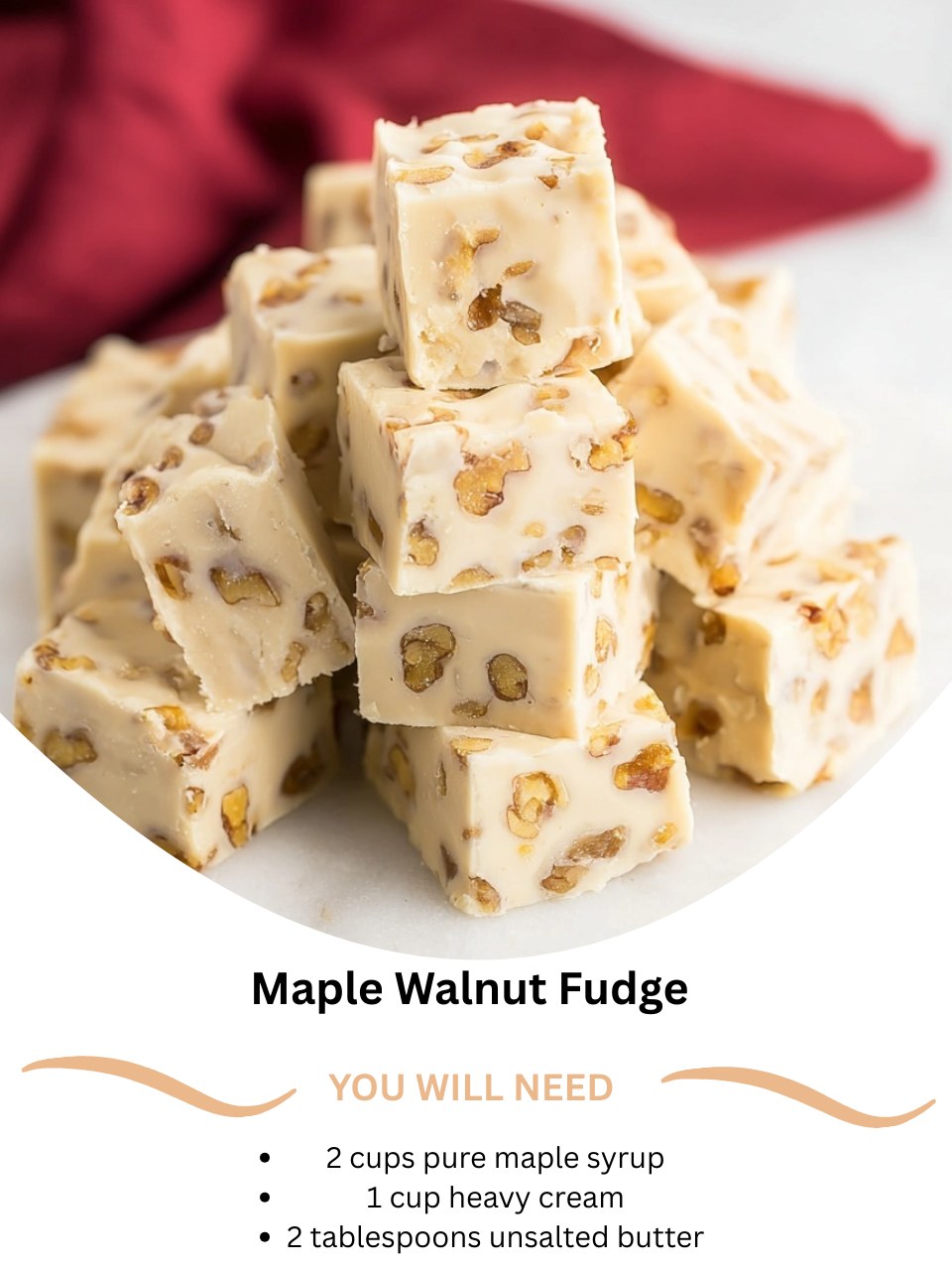
Once properly cooled, it’s time for the workout! I beat the mixture vigorously with my wooden spoon. You’ll see it transform before your eyes: it will go from glossy and thin to thick, opaque, and lighter in color, and it will start to lose its gloss. This is the sign. I then quickly fold in the toasted walnuts until they’re evenly distributed. The mixture will be very thick. I immediately pour and press it into the prepared pan, smoothing the top. It sets up fast. I let it cool completely at room temperature before slicing—no refrigeration needed at this stage.
Pro Tips for Best Results
I tested the maple syrup grade three different ways: with Grade A Amber, Grade A Dark, and Grade B. For a fudge with deep, complex, almost smoky maple flavor, Grade A Dark or Grade B is the winner. The lighter Amber grade is lovely but produces a milder, sweeter fudge that lacks the robust character I was after. Don’t use pancake syrup—it must be 100% pure maple syrup. Trust me, it makes a huge difference.
Here’s what I learned the hard way about temperature and stirring: precision and patience are everything. My first batch, I stirred during cooking and poured it at 235°F, thinking “close enough.” The result was a soft, sticky mess that never set. You must not stir during cooking, and you must hit exactly 238°F. Then, you must not stir during cooling until it reaches 110°F. Rushing either of these steps is the most common reason for failure. I’ve tried this step both ways, and trust me, this one works better.
For the smoothest texture, the beating stage is critical. Beat by hand with a strong wooden spoon until the fudge truly loses its gloss and thickens significantly. If you stop too soon, it will be soft. If you beat too long, it can become crumbly and hard to press into the pan. The moment it thickens, becomes matte, and holds its shape on the spoon, stop beating and fold in the nuts. This visual cue is more reliable than timing.
Common Mistakes to Avoid
The biggest mistake is stirring the mixture while it’s cooking or during the initial cool-down. This encourages sugar crystals to form too early, leading to a grainy, crumbly texture. I made this mistake the first time—don’t do what I did! Once it’s simmering, put the spoon down until it has cooled to 110°F. Let the thermometer and time do the work for you.(See the next page below to continue…)