
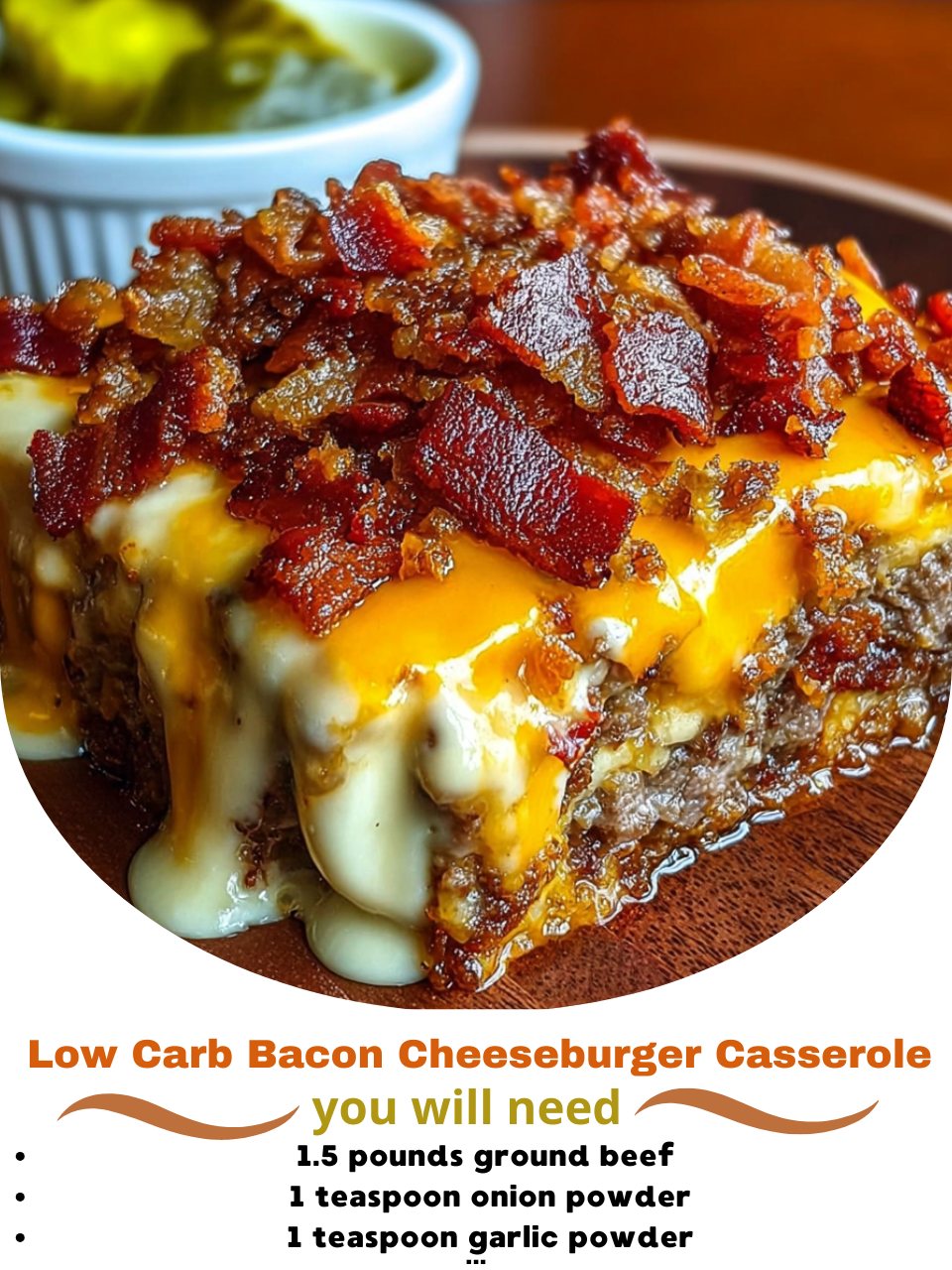
The sizzle of bacon hitting a hot pan, followed by the rich, savory aroma of browning beef and onions, filled my kitchen with the unmistakable promise of a cheeseburger—but without the bun. I created this Low Carb Bacon Cheeseburger Casserole on a busy weeknight, craving that classic comfort food flavor but needing something that fit a healthier routine. As I layered the ingredients and watched the cheese bubble into a golden blanket, I knew I’d struck gold. That first forkful, loaded with juicy beef, crispy bacon, and gooey cheese, was a revelation: all the joy of a burger, transformed into a hearty, satisfying bake that left everyone at the table happily full. It’s become my ultimate weeknight hero.
Why You’ll Love This Recipe
You’ll love this recipe because it delivers all the indulgent, crave-worthy flavor of a loaded bacon cheeseburger in a comforting, fork-friendly casserole that’s naturally low in carbs and high in satisfaction. It’s incredibly simple to throw together, uses familiar ingredients, and is a guaranteed crowd-pleaser for both keto dieters and hungry families alike. It makes for unbeatable leftovers, freeing you from the “what’s for dinner” dilemma. From my oven to yours, I promise this casserole will become a reliable staple that feels like a treat, not a compromise.
Ingredients
- 6 slices bacon, chopped
- 1.5 pounds ground beef (I use 85/15)
- 1 small yellow onion, finely diced
- 1 teaspoon garlic powder
- 1 teaspoon onion powder
- 1 teaspoon paprika (optional, for smokiness)
- Salt and black pepper to taste
- 1 (14.5 oz) can diced tomatoes, drained
- 1/4 cup sugar-free burger-style dill pickle slices, chopped (plus more for topping)
- 2 tablespoons yellow mustard
- 1/4 cup sugar-free ketchup or burger sauce
- 3 large eggs
- 1/2 cup heavy cream or full-fat sour cream
- 2 cups shredded cheddar cheese, divided
- 1 cup shredded Monterey Jack cheese
Let’s talk ingredients. The bacon fat is your flavor gold—we’ll cook everything in it. I like a leaner ground beef (85/15) because the bacon adds plenty of fat, but 80/20 works too. Don’t skip the fresh onion; the little cooked bits add a sweet moisture that powder alone can’t replicate. The pickles are the secret ingredient that makes it truly taste like a burger; trust me, they make a huge difference. For the sauce, using a combo of mustard and a sugar-free ketchup or a branded “burger sauce” replicates that iconic fast-food flavor perfectly. The eggs and cream bind it all into a cohesive, sliceable dish.(See the next page below to continue…)
Equipment Needed
- Large, oven-safe skillet (like cast iron) or a frying pan and a 9×13 baking dish
- Slotted spoon
- Mixing bowl
- Whisk
Step-by-Step Instructions
I always start by preheating my oven to 350°F (175°C). Then, in my large cast iron skillet, I cook the chopped bacon over medium heat until it’s perfectly crispy. Using a slotted spoon, I transfer the bacon to a paper towel-lined plate, leaving every last drop of that glorious rendered fat in the pan. This is where the magic starts. To the hot bacon fat, I add the diced onion and cook it for 3-4 minutes until it’s soft and translucent. The smell is absolutely heavenly—smoky, sweet, and savory all at once.
Next, I add the ground beef to the skillet with the onions, breaking it up with my spoon. As it browns, I season it generously with the garlic powder, onion powder, paprika (if using), salt, and pepper. I let it cook until there’s no more pink, stirring occasionally. Once the beef is cooked, I take the skillet off the heat for a moment. Here’s a crucial step I learned the hard way: I carefully tilt the skillet and spoon out most of the excess grease. Leaving too much can make the final casserole oily. I leave about a tablespoon for flavor.
In a separate mixing bowl, I make the binding sauce. I whisk together the three eggs and heavy cream (or sour cream) until smooth. Then, I stir in the mustard and sugar-free ketchup. To the slightly cooled meat mixture in the skillet, I stir in the drained diced tomatoes, chopped pickles, crispy bacon (reserving a handful for topping), and one cup of the shredded cheddar cheese. I pour the egg and cream mixture over everything in the skillet and stir until it’s well combined. The mixture will look wet, which is correct.(See the next page below to continue…)
Finally, I smooth the top with my spoon and blanket it with the remaining cup of cheddar and the Monterey Jack cheese. I sprinkle the reserved bacon bits right over the cheese. I then transfer the skillet to the preheated oven (if it’s oven-safe; if not, I pour it into a greased 9×13 dish first). I bake it for 25-30 minutes, until the casserole is set at the center—no jiggle—and the cheese is melted, bubbly, and beautifully golden brown on top. The wait is torture because it smells so good!
Pro Tips for Best Results
I tested the binding mixture three different ways: with just eggs, with eggs and mayo, and with eggs and heavy cream. The eggs and heavy cream combination won. The cream adds a rich moisture and helps the casserole set up with a creamy, tender texture, not a dry, eggy one. Sour cream is a great tangy alternative, but heavy cream gives it that luxurious, burger-sauce feel.
Here’s what I learned the hard way about the tomatoes: you must drain them thoroughly. The first time, I just dumped the whole can in, juice and all. The extra liquid prevented the casserole from setting properly, and it turned out a bit soupy. Now, I press the diced tomatoes in a sieve or colander to remove as much liquid as possible. This ensures a perfect, sliceable texture.
Don’t skip the step of removing excess grease after browning the beef. It might seem like you’re removing flavor, but you’re really just preventing a greasy mouthfeel and a puddle of fat at the bottom of your baking dish. The bacon fat and beef juices have already done their job seasoning the meat and onions. Draining the excess is the key to a clean, hearty finish.
Common Mistakes to Avoid
My biggest first-time mistake was not letting the meat mixture cool slightly before adding the eggs. I poured the cold egg mixture directly into the piping hot skillet, and I ended up with little bits of scrambled egg throughout the casserole instead of a smooth, unified binder. Now, I take the skillet off the heat and let it sit for 5-7 minutes before stirring in the egg and cream mixture. This simple pause makes all the difference.(See the next page below to continue…)
Another pitfall is over-baking. This casserole is done when the center is just set. Because the cheese on top browns quickly, it’s tempting to think it needs more time. If you over-bake it, the eggs can become rubbery and the dish can dry out. I set a timer for 25 minutes and check. A slight jiggle in the very center is okay, as it will set while resting. Let it sit for 10 minutes after baking—this is crucial for clean slicing.
Don’t use pre-shredded cheese if you can help it. Those bags contain anti-caking agents like potato starch, which can prevent the cheese from melting as smoothly and can make the sauce slightly grainy. Taking two minutes to shred a block of cheddar and Monterey Jack yourself results in a velvety, perfectly melted cheese blanket that’s worth the extra effort.
Finally, avoid skipping the pickles. I know it might seem odd to bake pickles, but they are the ingredient that tricks your brain into thinking you’re eating a cheeseburger. They add a necessary tang and moisture. If you’re not a fan of big pickle pieces, you can use 2 tablespoons of sugar-free pickle relish instead, stirred right into the sauce.
Serving Suggestions
I like serving this casserole right from the skillet, topped with a few extra pickle chips and a sprinkle of fresh chopped lettuce or tomato for a cool, crunchy contrast. A dollop of sour cream or a drizzle of sugar-free ranch dressing on the side is also fantastic, mimicking those classic burger toppings.
For a complete low-carb meal, I’ll serve it with a simple side salad dressed in a tangy vinaigrette. The freshness of the greens balances the rich, cheesy casserole perfectly. Sometimes, I’ll even make a quick side of cauliflower mash to go with it, pretending it’s my burger’s “fries.”
When I’m serving a crowd, I’ll set up a “burger bar” with bowls of diced red onion, sliced jalapeños, avocado, and different sauces. Letting people customize their own scoop of casserole makes dinner fun and interactive, and it feels like a much bigger production than it actually was.
Variations & Customizations
This recipe is wonderfully adaptable. My favorite variation is a “Western Burger” style. I add a finely chopped green bell pepper to the skillet with the onions, and after baking, I top the casserole with crispy fried onion strings (store-bought or homemade from low-carb coatings).
For a spicy kick, I use Pepper Jack cheese instead of Monterey Jack and add a diced jalapeño (seeds and all) to the beef as it browns. A few dashes of hot sauce in the egg mixture also does the trick. You could even use a spicy pork sausage in place of half the beef for a different flavor profile.
If you want to sneak in more veggies, try stirring in a cup of chopped mushrooms or spinach with the beef as it cooks—they’ll blend right in. For a “Pizza Burger” twist, swap the mustard and kick up for a no-sugar-added pizza sauce and use a blend of mozzarella and cheddar cheeses. Top with pepperoni before baking.
How to Store, Freeze & Reheat
This casserole stores beautifully. Let it cool completely, then cover tightly or portion into airtight containers. It will keep in the refrigerator for 3-4 days. The flavors actually meld and improve, making the leftovers something to look forward to.
It freezes very well for meal prep. Cut into individual portions, wrap tightly in plastic wrap and then foil, and freeze for up to 2 months. You can also freeze the whole baked casserole, covered, for 1 month. Thaw overnight in the refrigerator before reheating.
To reheat, the oven or toaster oven is best to keep the texture right. Reheat individual portions at 350°F for 15-20 minutes until heated through. The microwave is convenient but can make the eggs a bit rubbery and the topping soggy. If using the microwave, reheat on medium power in 60-second intervals.
Conclusion
This Low Carb Bacon Cheeseburger Casserole is the delicious proof that eating healthier doesn’t mean giving up the deep, comforting flavors you love. It’s a hearty, happy dish that brings everyone to the table with a smile. I hope it brings as much ease and satisfaction to your kitchen as it has to mine. Give it a try on your next busy night—you might just find your new favorite dinner. Happy cooking, friends.