
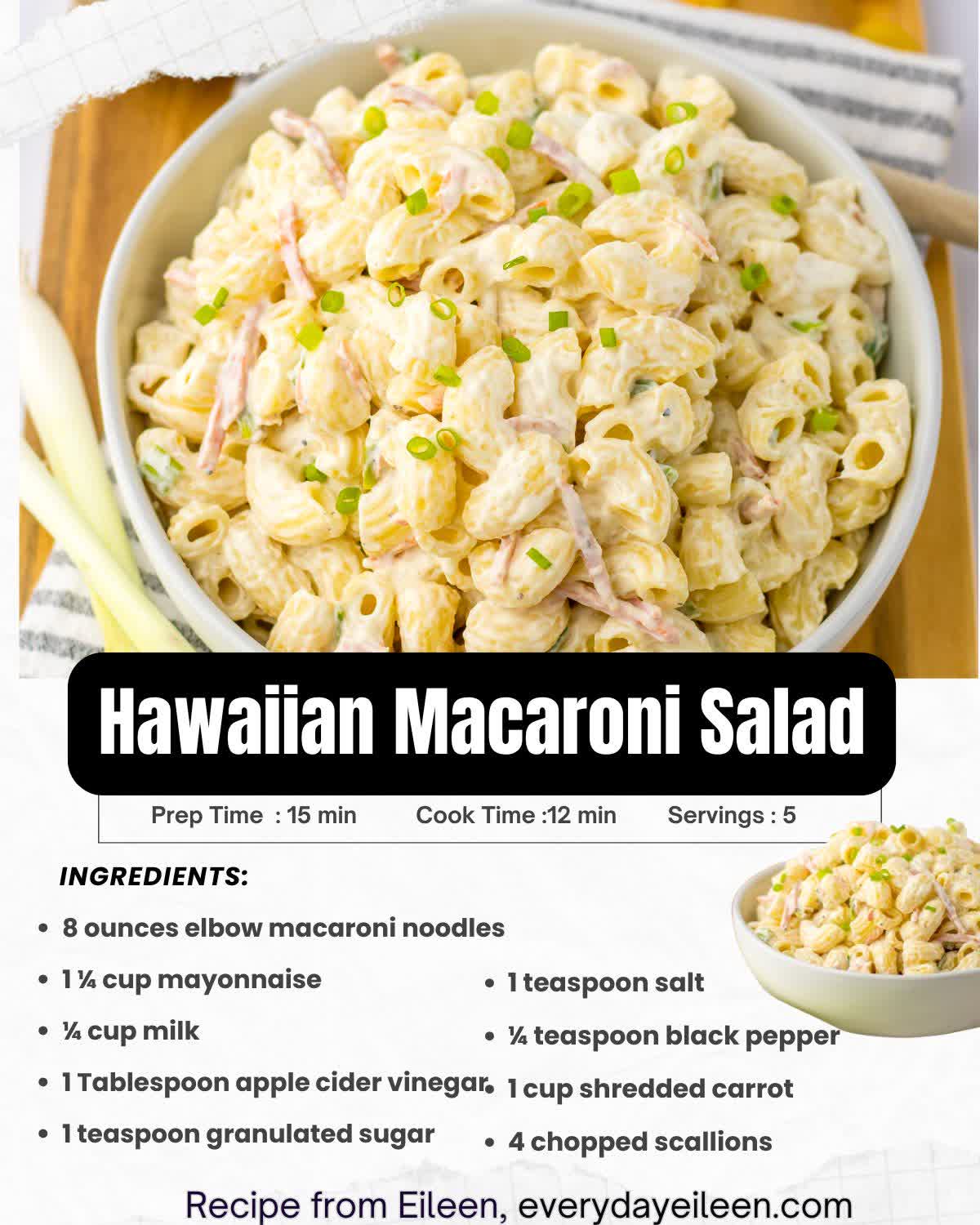
I first tasted authentic Hawaiian Macaroni Salad at a backyard luau, piled next to a mountain of Kalua pork, and it was a revelation. Unlike any other macaroni salad I’d had, it was incredibly creamy, subtly tangy, and somehow tasted like pure comfort. Determined to recreate it at home, I remember the trial and error in my kitchen—the scent of cooking pasta, the sharp tang of apple cider vinegar cutting through the rich mayonnaise. When I finally nailed that perfect, almost saucy consistency and balanced the sweetness just right, I felt like I’d brought a little piece of island aloha to my table. It’s been the star of every summer potluck since.
Why You’ll Love This Recipe
You are going to fall in love with this recipe because it is the ultimate creamy, comforting, and crowd-pleasing side dish that is deceptively simple to master. It’s the perfect complement to grilled meats, a staple for any picnic, and it delivers that iconic, craveable flavor you get from the best Hawaiian plate lunch spots. The magic is in the texture and the balance of flavors—creamy, not gloppy; tangy, not sour; with little pops of sweetness and crunch. It’s the side dish that people always ask me to bring, and I’m sure it’ll become your secret weapon, too.
Ingredients
- 8 ounces elbow macaroni noodles
- 1 ¼ cups mayonnaise (I use full-fat, best quality you can)
- ½ cup milk (whole or 2%)
- 1 tablespoon apple cider vinegar
- 1 teaspoon granulated sugar
- 1 teaspoon salt, plus more for pasta water
- ¼ teaspoon black pepper
- 1 cup shredded carrot
- 4 scallions (green onions), finely chopped (See the next page below to continue…)
Equipment Needed
- Large pot for boiling pasta
- Colander
- Large mixing bowl
- Whisk
- Box grater or food processor with shredding disc
- Measuring cups and spoons
Step-by-Step Instructions
The journey to perfect Hawaiian Macaroni Salad begins with the pasta, and this is where most people (myself included, at first) go wrong. You want to cook the elbow macaroni until it is very soft—much softer than you would for an Italian pasta dish. I aim for about 12-14 minutes, until the elbows are plump and tender with no firm bite at all. This is crucial because the soft pasta will better absorb the creamy dressing. I learned this the hard way when I cooked it al dente; the salad was good, but it wasn’t that authentic, melt-in-your-mouth texture. While the pasta cooks, generously salt the boiling water—it’s your only chance to season the noodles themselves.
While the pasta is working, I make the dressing. In my large mixing bowl, I whisk together the mayonnaise, milk, apple cider vinegar, sugar, salt, and black pepper. Don’t be shy with the whisking; you want this completely smooth and emulsified. The sugar and vinegar are the secret agents here. They create that signature sweet-and-tangy background note that sets Hawaiian salad apart from all others. I taste the dressing at this point—it should be rich, tangy, and slightly sweet. If it tastes too sharp, I add another pinch of sugar. This is your flavor base, so get it right.
Once the pasta is very soft, I drain it in a colander and then do something that feels counterintuitive but is absolutely essential: I rinse it under cold water. Yes, you read that right. Rinsing stops the cooking process and washes away the excess surface starch that would otherwise make the salad gummy. I shake the colander well to get rid of as much water as possible. Then, while the pasta is still slightly warm (not hot), I add it directly to the bowl with the dressing. The slight warmth helps the pasta start to drink in that creamy goodness immediately. I stir it well so every noodle is coated. (See the next page below to continue…)
Now, I fold in the shredded carrot and most of the chopped scallions, reserving a handful of the green tops for a fresh garnish. I stir everything together until it’s uniformly creamy and colorful. Here comes the most important step of all: the chill time. I cover the bowl tightly with plastic wrap and place it in the refrigerator for at least 4 hours, but honestly, overnight is magic. This is not a salad to eat right away. As it chills, the pasta absorbs the dressing, transforming from a saucy mixture into a creamy, cohesive, and perfectly textured salad. The flavors mellow and marry into something truly special.
Pro Tips for Best Results
My number one tip is about the pasta texture and dressing absorption. I’ve tested this three different ways: with al dente pasta, with very soft pasta, and with very soft pasta that I let cool completely before dressing. The winner is very soft pasta, rinsed and added to the dressing while still slightly warm. The warm pasta acts like a sponge, soaking up the dressing deeply so it’s flavorful all the way through, not just on the surface. Letting it cool first creates a barrier that the dressing can’t penetrate as well.
The second tip is all about the mayonnaise and milk ratio. The dressing should be loose and almost soupy when you first mix it. Trust the process. It will seem like too much liquid, but the pasta will absorb it all as it chills. I once tried to reduce the milk, worried it would be too wet, and ended up with a dry, pasty salad. The ½ cup of milk is what gives it that characteristic creamy, almost pudding-like consistency that is the hallmark of a great Hawaiian Macaroni Salad.
Finally, don’t skip the garnishes or the full chilling time. The raw, shredded carrot adds a necessary sweetness and texture, and the scallions give a mild, fresh onion bite. They brighten the rich base. And that overnight chill in the fridge is non-negotiable. It’s the difference between a good pasta salad and an unforgettable one. I always plan to make this the day before I need it. The flavors settle, the texture perfects itself, and it becomes the star of the show with zero last-minute effort.
Common Mistakes to Avoid
The first mistake I made was undercooking the pasta. I was so trained to cook pasta al dente that I couldn’t bring myself to let it go soft. The result was a salad with noodles that were too firm and chewy, and they refused to absorb the dressing properly. For this specific salad, you must let go of Italian pasta rules. Cook it until it’s tender all the way through, even if it feels wrong. Your final texture depends on it. (See the next page below to continue…)
Another error is not rinsing the pasta after cooking. I thought rinsing was a culinary sin, but in this case, it’s a necessity. If you don’t rinse, the sticky starch left on the noodles will thicken the dressing too much as it chills, creating a gummy, gluey texture instead of a creamy one. A quick rinse under cool water stops the cooking and washes that starch away, ensuring your salad stays light and creamy.
Using low-fat or Miracle Whip instead of full-fat, real mayonnaise will also lead to disappointment. The rich, eggy flavor and unctuous texture of real mayo is the soul of this salad. Low-fat versions are often sweeter and have a different mouthfeel that just doesn’t work here. And Miracle Whip has a distinct tang that will overpower the delicate balance of vinegar and sugar. For authentic flavor, stick with a good quality, full-fat mayonnaise.
Finally, skimping on the chill time is the ultimate pitfall. This is not a “toss and serve” salad. If you serve it immediately, it will be runny, the flavors will be separate and sharp, and it will just taste like dressed pasta. The magic happens in the fridge. The pasta absorbs the dressing, the sharp edges of the vinegar mellow, and everything comes together in creamy harmony. Impatience here robs you of the true experience.
Serving Suggestions
This salad is the quintessential partner to grilled or barbecued meats. I love serving it as part of a Hawaiian-style plate lunch with grilled teriyaki chicken or shrimp, a scoop of rice, and maybe a slice of fresh pineapple. It’s also phenomenal next to juicy burgers, smoky ribs, or even fried chicken. The cool, creamy salad is the perfect counterpoint to hot, savory, and charred flavors from the grill.
For a traditional luau spread, I’ll serve it alongside Kalua pork (or a slow-cooker pulled pork version), steamed rice, and a fresh tropical fruit salad. It completes the plate perfectly. I always garnish the top with the reserved chopped green scallion tops right before serving for a pop of color and freshness. Sometimes, I’ll even add a sprinkle of paprika or a few sesame seeds for visual appeal.
It’s also a fantastic potluck or picnic dish because it travels so well and actually improves after sitting. I transport it in a large, sealed container with the garnish in a separate baggie to add on site. It’s sturdy, doesn’t wilt, and is always a huge hit. For a lighter meal, I’ll sometimes add a can of drained tuna or shredded rotisserie chicken directly to the salad to turn it into a hearty main course.
Variations & Customizations
While the classic is perfect, this salad is wonderfully adaptable. For extra crunch and flavor, I sometimes add ½ cup of finely chopped celery or a diced red bell pepper. A handful of thawed frozen peas adds a sweet pop of color. If I want a bit more protein, I’ll fold in a cup of diced ham or crumbled hard-boiled eggs just before serving.
For a different twist, you can play with the acid in the dressing. While apple cider vinegar is classic, a tablespoon of rice vinegar gives it a milder, sweeter tang. A teaspoon of grated fresh ginger added to the dressing can give it a wonderful zing. For a richer version, some people like to add a tablespoon or two of sour cream to the mayo mixture.
If you need a gluten-free version, simply use your favorite gluten-free elbow pasta and cook it until very soft. The method remains exactly the same. You can also easily adjust the vegetables based on what you have—shredded zucchini or julienned jicama can be fun, crunchy additions. The creamy, sweet-tangy base is so good it can carry a variety of mix-ins.
How to Store, Freeze & Reheat
This salad stores beautifully in the refrigerator. Kept in an airtight container, it will stay fresh and delicious for 3-4 days. In fact, I think it tastes best on day two. The flavors continue to meld and the texture remains creamy. If it seems a little dry after a couple of days, you can stir in a tiny splash of milk to loosen it up.
I do not recommend freezing this salad. Mayonnaise-based dressings separate and become grainy when frozen and thawed, and the pasta turns mushy and watery. The texture is completely ruined. This is a make-ahead-in-the-fridge recipe, not a make-ahead-in-the-freezer one. Its fridge life is plenty long for most planning needs.
There is no need to reheat this salad—it is meant to be served cold. Take it out of the fridge about 15-20 minutes before serving to take the deep chill off, which allows the flavors to be more pronounced. Stir it well before transferring to a serving bowl. That’s it! No fuss, just cool, creamy, ready-to-eat perfection.
Conclusion
This Hawaiian Macaroni Salad is more than just a side dish; it’s a passport to a flavor vacation and a guaranteed way to bring a taste of island comfort to any meal. Its simple method and incredible payoff have made it one of my most cherished and shared recipes. I hope it becomes a beloved staple in your home, bringing smiles and satisfied sighs with every creamy, dreamy bite. Now, go cook that pasta soft, whisk that dressing, and get ready for your new favorite potluck superstar.