
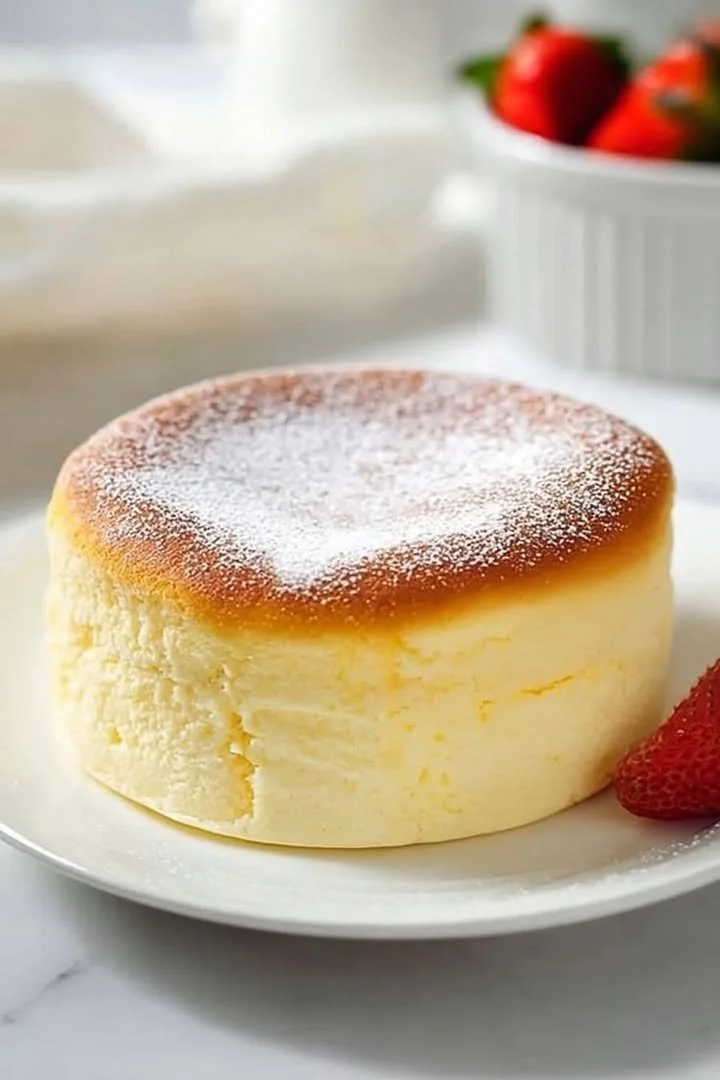
Next, I add the egg yolks one at a time, ensuring each one is incorporated thoroughly before adding the next. Then, I sift in the cake flour and salt, folding it gently until just combined. The batter will be thick, so don’t worry if it doesn’t look smooth at this point; it will all come together in the end. In a separate bowl, I whip the egg whites with cream of tartar until soft peaks form, and this is where the magic happens.
Once the egg whites are ready, I gently fold them into the cream cheese mixture in three additions. The goal is to keep as much air in the batter as possible so that the cake rises proudly in the oven! I pour the batter into my prepared cake pan lined with parchment paper and then place it in a larger roasting pan filled with hot water, which creates a steamy environment—this is key for that lovely fluffy texture I crave.
With everything set, I pop my cheesecake into the preheated oven. The very first time I made it, I was so anxious, but watching it rise through the oven window was pure joy. After about 60 minutes, I turn off the oven and leave the cheesecake inside for an additional 30 minutes to prevent it from cracking. It’s essential to let it cool down gradually; this step ensures the perfect texture!
Pro Tips for Best Results
I tested this cheesecake three ways: with regular sugar, with less sugar, and with a sugar substitute. What I found is that the original amount gives it the balance of sweetness that complements the cream cheese without overwhelming it. Remember, baking is all about precision, so stick with the original measurements when you’re starting!
Another tip: let your eggs come to room temperature before using them. I usually take my eggs out of the fridge about an hour before I start baking. This small step helps them whisk up to fluffy perfection and ensures a more even batter.
Finally, I highly recommend using a digital scale for measuring the cake flour and sugar. It takes out the guesswork and makes a considerable difference in the texture. If you don’t have one, consider investing in one—it’s a game changer for baking!
Common Mistakes to Avoid
One mistake I’ve made in the past was overmixing the batter after adding the egg whites. This can cause your cake to deflate or result in a denser texture that may not rise as beautifully. I learned the hard way that gentle folding is key to maintaining that lightness we all adore. (See the next page below to continue…)