
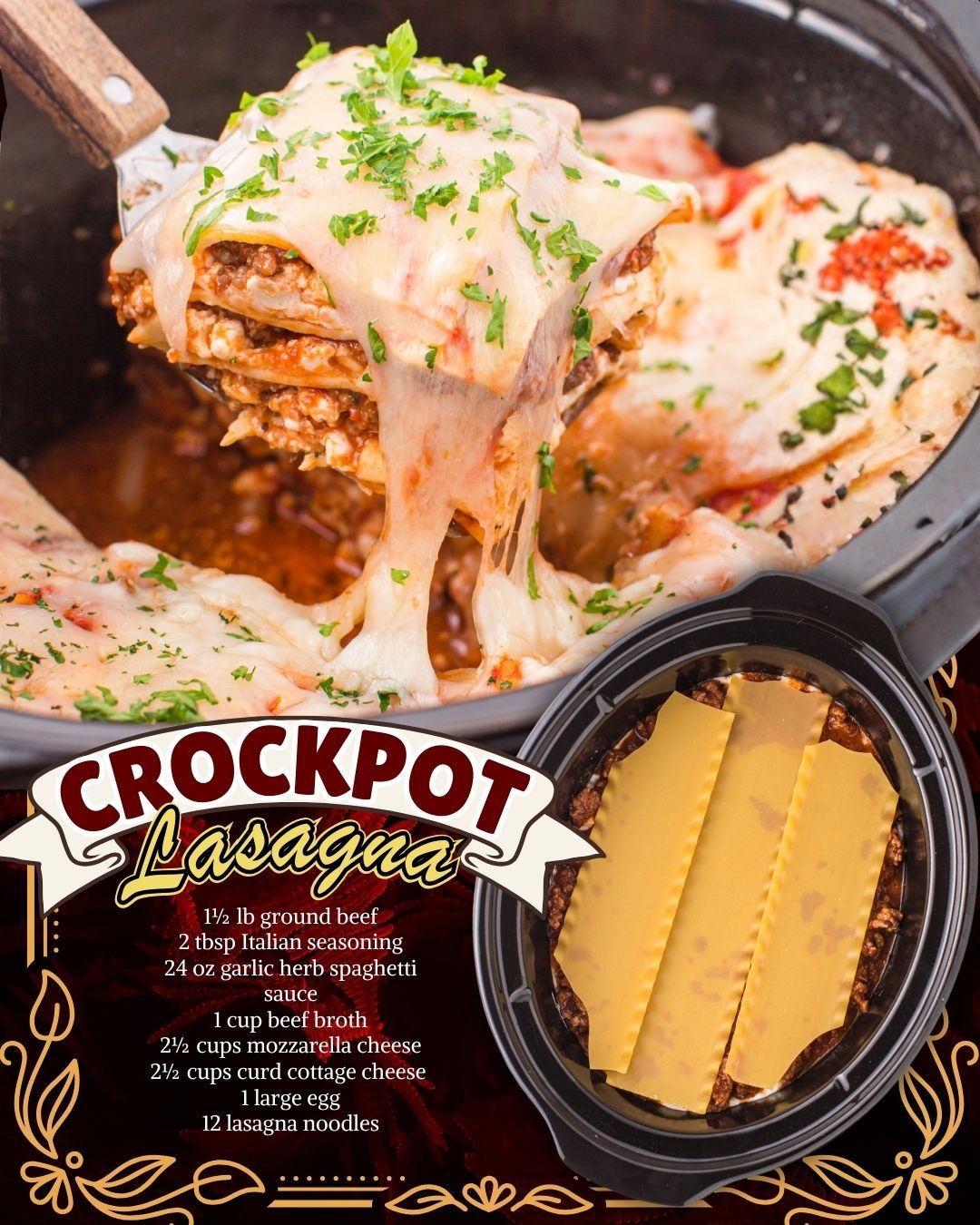
For the grand finale, I sprinkle the remaining 1 ½ cups of shredded mozzarella cheese evenly over the very top. I place the lid on the slow cooker and cook it on LOW for 4 to 5 hours. I do not recommend the HIGH setting, as it can cook the edges too quickly while the center remains underdone. The lasagna is ready when the noodles are tender (test with a fork in the center) and the cheese on top is melted and bubbly. I let it sit, with the lid off and the crockpot turned off, for about 20-30 minutes before serving. This rest time is non-negotiable—it allows the layers to set firmly so you can cut beautiful squares instead of serving a delicious but soupy mess.
Pro Tips for Best Results
I tested the noodle type three different ways: boiling them first, using no-boil/oven-ready noodles, and using regular uncooked noodles. Regular uncooked noodles, broken to fit, were the clear winner. Pre-boiled noodles turned mushy. Oven-ready noodles stayed too firm and absorbed liquid unevenly. The regular noodles, soaked in the saucy broth, cooked to perfect al dente tenderness. Don’t be afraid to break them to fit your slow cooker’s shape—it’s part of the charm.
Here’s what I learned the hard way about liquid: you must have enough. The first time, I didn’t add the beef broth, thinking the sauce from the jar would be enough. The noodles on top never softened. The beef broth is essential. It creates the steam and liquid the noodles need to hydrate and cook through. If your sauce is particularly thick, you could even add an extra 1/4 cup of broth. A loose sauce at the beginning means perfectly cooked noodles at the end.
For the most even cook and to prevent burnt edges, especially if your slow cooker runs hot, you can create a “buffer.” I sometimes place a sheet of parchment paper over the lasagna before putting the lid on, or I’ll lay two paper towels under the lid (making sure they don’t touch the food) to catch condensation and prevent it from dripping back onto the cheese and making it watery. I’ve tried this both ways, and it really helps keep the top cheese layer picture-perfect.
Common Mistakes to Avoid
My biggest first-time mistake was not letting the lasagna rest after cooking. I dug right in, and while it tasted amazing, it served more like a lasagna soup or casserole—delicious but not sliceable. Those 20-30 minutes of resting time allow the starches in the noodles to set and the cheeses to firm up slightly, transforming it from a loose assembly into cohesive, beautiful layers you can cut with a spatula. Patience here is the difference between a mess and a masterpiece.(See the next page below to continue…)