
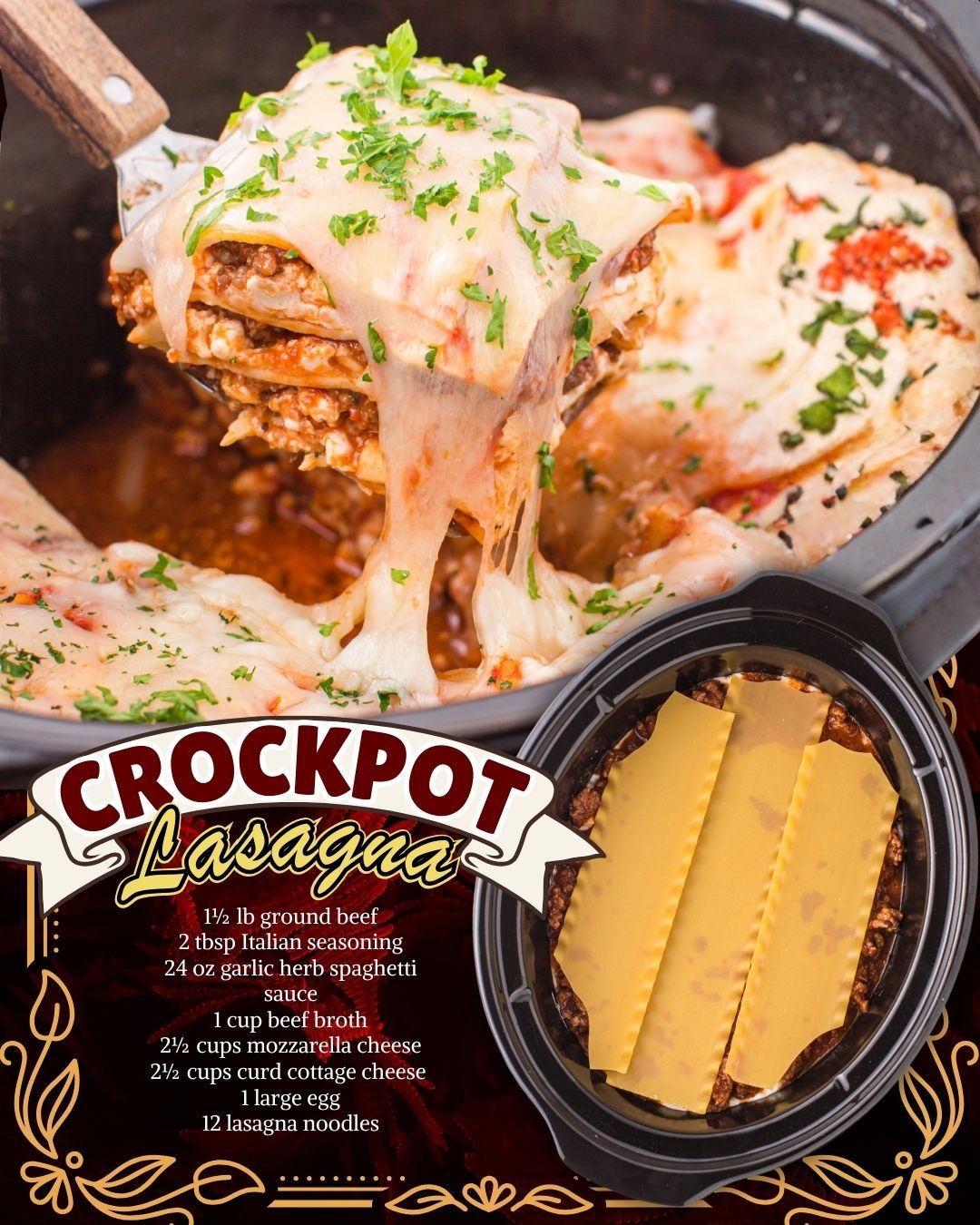
I was a complete skeptic the first time I made Crockpot Lasagna. The idea of building a classic Italian dish in a slow cooker, with no boiling noodles or oven preheating, felt like a delicious gamble. As I browned the beef with Italian seasoning, my kitchen filled with a savory, herby promise. Layering the uncooked noodles, rich meat sauce, and creamy cheese mixture into the stoneware felt like constructing a cozy, edible puzzle. The moment I put the lid on and walked away, I felt a wave of liberation. Hours later, lifting that lid released an aroma so deeply comforting—rich tomato, melted cheese, and herbs—it could rival any Sunday supper. That first spoonful, with its perfectly tender noodles and bubbly, golden cheese top, was a revelation. It’s been my ultimate busy-day lifesaver ever since.
Why You’ll Love This Recipe
You are going to love this recipe because it hands you all the rich, cheesy, soul-satisfying comfort of a traditional lasagna without any of the traditional fuss. There’s no need to boil noodles, no juggling multiple pots, and no worrying about the oven timing. You simply brown the meat, mix the cheeses, and layer everything right in the crock. Then, you walk away for a few hours while your kitchen fills with the most incredible smell. It’s forgiving, feeds a crowd (or provides amazing leftovers), and is perfect for days when you want a hearty, homemade meal without being tied to the stove. It’s the ultimate set-it-and-forget-it family dinner.
Ingredients
- 1 ½ lb lean ground beef (85/15 or 90/10)
- 1 small yellow onion, finely diced
- 2 tablespoons Italian seasoning
- 3 cloves garlic, minced
- 1 (24 oz) jar garlic herb spaghetti sauce
- 1 cup beef broth
- 2 ½ cups shredded mozzarella cheese, divided
- 2 ½ cups cottage cheese (small curd, 4% milkfat recommended)
- 1 large egg
- ¼ cup grated Parmesan cheese
- ¼ teaspoon black pepper
- 12 regular, uncooked lasagna noodles (NOT “oven-ready”)
- Cooking spray or olive oil
- Optional garnish: fresh basil or parsley
(See the next page below to continue…)
Equipment Needed
- 6-quart or larger oval slow cooker
- Large skillet
- Mixing bowls (medium and large)
- Spoon or spatula
- Measuring cups and spoons
Step-by-Step Instructions
My process always starts with the meat sauce, which builds our foundational flavor. In my large skillet over medium-high heat, I brown the ground beef with the diced onion. I break it up into small crumbles as it cooks. When the meat is no longer pink, I drain off any excess grease—this is important to prevent a greasy final dish. I then stir in the minced garlic and Italian seasoning, cooking for just one more minute until fragrant. I transfer this savory meat mixture back to the skillet (or a bowl) and stir in the entire jar of spaghetti sauce and the one cup of beef broth. This creates a loose, saucy mixture that the noodles will cook in.
While the meat sauce simmers for a minute, I prepare the creamy cheese layer. In a medium bowl, I combine the cottage cheese, one cup of the shredded mozzarella (reserving the rest for the top), the grated Parmesan, the egg, and the black pepper. I mix it all together until it’s well blended. This mixture will be thick and hold together, which is perfect. The egg acts as a binder, helping this layer set up nicely during the slow cook instead of turning watery.
Now, for the fun layering part. I lightly spray the inside of my slow cooker with cooking spray for easy cleanup. I spread about 1 ½ cups of the meat sauce mixture evenly over the bottom. This first layer of sauce prevents the noodles from sticking directly to the hot ceramic. Then, I place a layer of uncooked lasagna noodles over the sauce, breaking them as needed to fit in a single layer and cover the sauce completely. It’s okay if they overlap slightly. Over the noodles, I spread half of the cottage cheese mixture, then a third of the remaining meat sauce. I repeat these layers: noodles, the rest of the cottage cheese mixture, another third of the meat sauce. I finish with a final layer of noodles and pour the remaining meat sauce over the top, making sure to cover the noodles completely. Exposed noodles will stay hard and crunchy.(See the next page below to continue…)
For the grand finale, I sprinkle the remaining 1 ½ cups of shredded mozzarella cheese evenly over the very top. I place the lid on the slow cooker and cook it on LOW for 4 to 5 hours. I do not recommend the HIGH setting, as it can cook the edges too quickly while the center remains underdone. The lasagna is ready when the noodles are tender (test with a fork in the center) and the cheese on top is melted and bubbly. I let it sit, with the lid off and the crockpot turned off, for about 20-30 minutes before serving. This rest time is non-negotiable—it allows the layers to set firmly so you can cut beautiful squares instead of serving a delicious but soupy mess.
Pro Tips for Best Results
I tested the noodle type three different ways: boiling them first, using no-boil/oven-ready noodles, and using regular uncooked noodles. Regular uncooked noodles, broken to fit, were the clear winner. Pre-boiled noodles turned mushy. Oven-ready noodles stayed too firm and absorbed liquid unevenly. The regular noodles, soaked in the saucy broth, cooked to perfect al dente tenderness. Don’t be afraid to break them to fit your slow cooker’s shape—it’s part of the charm.
Here’s what I learned the hard way about liquid: you must have enough. The first time, I didn’t add the beef broth, thinking the sauce from the jar would be enough. The noodles on top never softened. The beef broth is essential. It creates the steam and liquid the noodles need to hydrate and cook through. If your sauce is particularly thick, you could even add an extra 1/4 cup of broth. A loose sauce at the beginning means perfectly cooked noodles at the end.
For the most even cook and to prevent burnt edges, especially if your slow cooker runs hot, you can create a “buffer.” I sometimes place a sheet of parchment paper over the lasagna before putting the lid on, or I’ll lay two paper towels under the lid (making sure they don’t touch the food) to catch condensation and prevent it from dripping back onto the cheese and making it watery. I’ve tried this both ways, and it really helps keep the top cheese layer picture-perfect.
Common Mistakes to Avoid
My biggest first-time mistake was not letting the lasagna rest after cooking. I dug right in, and while it tasted amazing, it served more like a lasagna soup or casserole—delicious but not sliceable. Those 20-30 minutes of resting time allow the starches in the noodles to set and the cheeses to firm up slightly, transforming it from a loose assembly into cohesive, beautiful layers you can cut with a spatula. Patience here is the difference between a mess and a masterpiece.(See the next page below to continue…)
Another error is using the wrong size slow cooker. This recipe is designed for a 6-quart or larger oval cooker. If you use a smaller, round one, the layers will be too deep and the center might not cook through before the edges burn. If you only have a 4-quart round, I’d recommend halving the recipe. The right vessel ensures even cooking from edge to center.
Do not skip the step of spraying the crock with cooking oil or lining it with a slow cooker liner. The melted cheese and sauce bake onto the ceramic, and cleaning can be an absolute nightmare without this simple precaution. A quick spray saves you from a soaking and scrubbing session later.
Finally, avoid overloading the cheese layer. It’s tempting to add more, but if your cheese layers are too thick, they can create a barrier that prevents heat and steam from penetrating to the lower noodles, resulting in undercooked spots. Stick to the measured amounts for each layer to ensure everything cooks through evenly.
Serving Suggestions
I love serving this lasagna right from the slow cooker crock, garnished with a little fresh chopped basil or parsley for a pop of color and freshness. The contrast of the cool, bright herbs with the hot, rich pasta is wonderful. A side of garlic bread or a simple, buttery loaf is mandatory for sopping up every last bit of sauce.
For a complete Italian feast, I’ll pair it with a crisp Caesar salad or a simple arugula salad with lemon vinaigrette. The acidity and crunch of the salad cut through the richness of the lasagna perfectly. It also makes the meal feel more balanced and special.
Leftovers are arguably even better the next day, as the flavors have more time to meld. I reheat individual portions in the microwave for a quick lunch, or I’ll cover the whole crock insert with foil and reheat it in a 350°F oven for about 30 minutes if I’m feeding the family again. It holds up beautifully.
Variations & Customizations
This recipe is wonderfully adaptable. For a lighter version, use ground turkey or chicken. For a vegetarian twist, replace the meat with a mixture of sautéed mushrooms, zucchini, and spinach, and use vegetable broth. You can also swap the cottage cheese for an equal amount of ricotta cheese if you prefer a more traditional texture.
Feel free to play with the sauce and cheese. Use a spicy arrabbiata sauce and add a layer of sliced pepperoni. Mix some cooked Italian sausage into the beef. For a “white” lasagna, replace the red sauce with a creamy Alfredo sauce and use shredded chicken. The layering method remains the same.
If you want to add more vegetables, finely chopped spinach (thawed and squeezed dry) or shredded carrots can be mixed right into the meat sauce or the cheese layer. Just be sure any added veggies are cooked or very finely chopped so they soften during the long cook.
How to Store, Freeze & Reheat
To store leftovers, let the lasagna cool completely, then transfer portions to airtight containers. It will keep in the refrigerator for up to 4 days. The noodles will continue to absorb liquid, so it becomes even firmer and sliceable.
This lasagna freezes exceptionally well—a fantastic make-ahead meal. Cool completely, then cut into portions. Wrap each portion tightly in plastic wrap and then foil, or place in a freezer-safe container. It will keep for up to 3 months. Thaw overnight in the refrigerator before reheating.
The best way to reheat is in the oven. Place the portion in an oven-safe dish, cover with foil, and bake at 350°F until heated through (about 20-30 minutes if thawed). You can also reheat single portions in the microwave, but the texture of the noodles will be softer. The slow cooker can also be used to reheat the whole batch on LOW for 1-2 hours.
Conclusion
This Crockpot Lasagna is more than just a convenient recipe to me; it’s a symbol of smart, easy cooking that doesn’t sacrifice an ounce of flavor or comfort. It’s freed up countless busy evenings, filled my home with welcoming aromas, and delivered that precious “wow” factor with minimal effort. I hope this recipe becomes a trusted favorite in your home, proving that sometimes the easiest path leads to the most delicious destination. Now, go grab that slow cooker—your new favorite lasagna is just a few layers away.