
Equipment Needed
- 6-quart or larger oval slow cooker
- Large skillet
- Mixing bowls (medium and large)
- Spoon or spatula
- Measuring cups and spoons
Step-by-Step Instructions
My process always starts with the meat sauce, which builds our foundational flavor. In my large skillet over medium-high heat, I brown the ground beef with the diced onion. I break it up into small crumbles as it cooks. When the meat is no longer pink, I drain off any excess grease—this is important to prevent a greasy final dish. I then stir in the minced garlic and Italian seasoning, cooking for just one more minute until fragrant. I transfer this savory meat mixture back to the skillet (or a bowl) and stir in the entire jar of spaghetti sauce and the one cup of beef broth. This creates a loose, saucy mixture that the noodles will cook in.
While the meat sauce simmers for a minute, I prepare the creamy cheese layer. In a medium bowl, I combine the cottage cheese, one cup of the shredded mozzarella (reserving the rest for the top), the grated Parmesan, the egg, and the black pepper. I mix it all together until it’s well blended. This mixture will be thick and hold together, which is perfect. The egg acts as a binder, helping this layer set up nicely during the slow cook instead of turning watery.
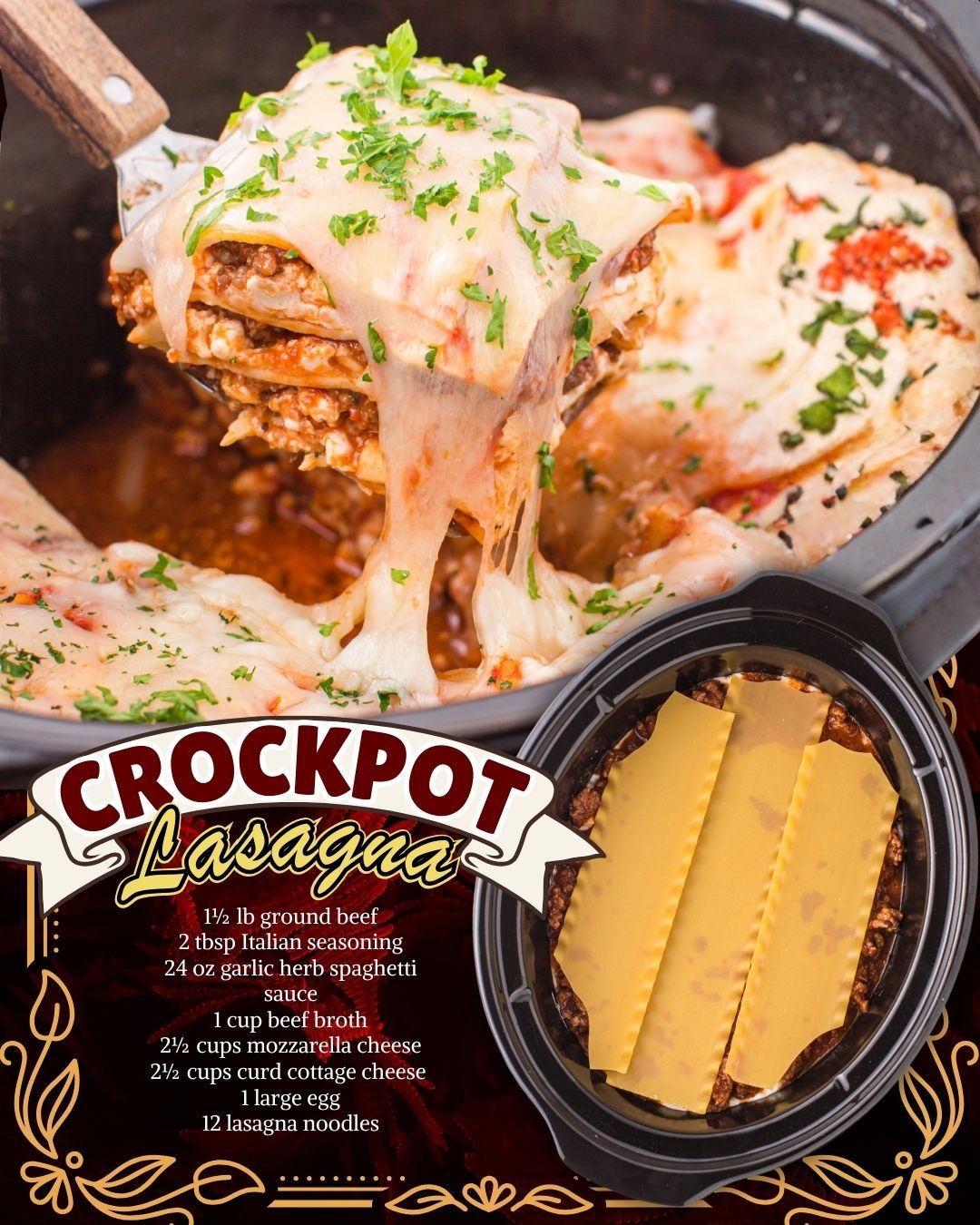
Now, for the fun layering part. I lightly spray the inside of my slow cooker with cooking spray for easy cleanup. I spread about 1 ½ cups of the meat sauce mixture evenly over the bottom. This first layer of sauce prevents the noodles from sticking directly to the hot ceramic. Then, I place a layer of uncooked lasagna noodles over the sauce, breaking them as needed to fit in a single layer and cover the sauce completely. It’s okay if they overlap slightly. Over the noodles, I spread half of the cottage cheese mixture, then a third of the remaining meat sauce. I repeat these layers: noodles, the rest of the cottage cheese mixture, another third of the meat sauce. I finish with a final layer of noodles and pour the remaining meat sauce over the top, making sure to cover the noodles completely. Exposed noodles will stay hard and crunchy.(See the next page below to continue…)