
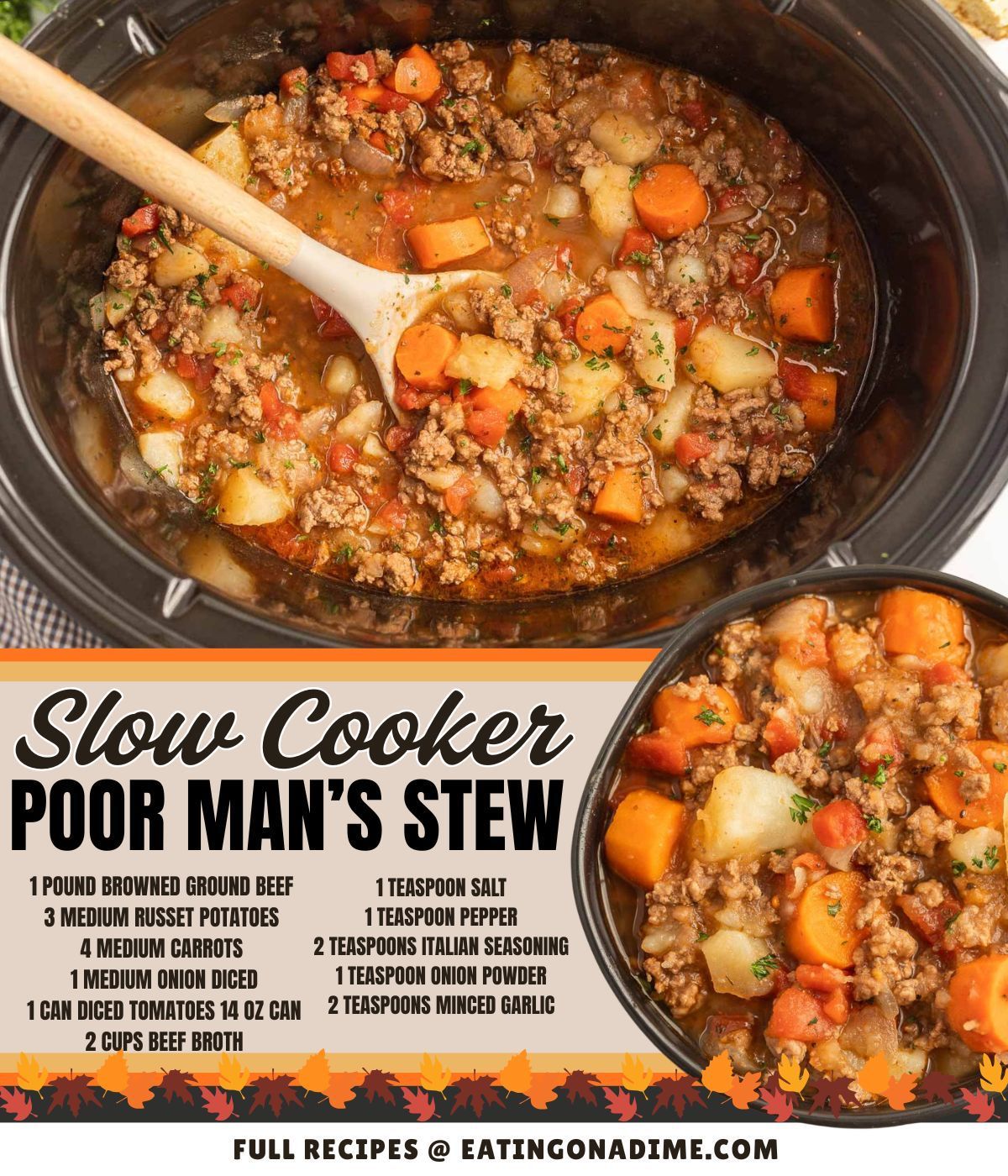
I first made this Crock Pot Poor Man’s Stew on a blustery Wednesday when the grocery budget was tight and my energy was lower than the temperature outside. The name spoke to me—honest, humble, and promising comfort. As I browned the ground beef and onions, that savory, hearty aroma began to build the foundation. I simply dumped the rest of the ingredients into the slow cooker, gave it a stir, and walked away for hours. When I lifted the lid that evening, the smell that wafted out was incredible: rich beef broth, sweet carrots, earthy potatoes, and tangy tomatoes all melted together into the coziest fragrance. That first bowlful, with tender vegetables and savory broth, was more than a meal; it was a warm hug in a bowl, proving that simple ingredients can create something deeply satisfying.
Why You’ll Love This Recipe
You will love this recipe because it is the very definition of easy, economical, and deeply comforting. It requires minimal hands-on effort, uses affordable pantry staples, and your slow cooker does all the heavy lifting. It’s the perfect solution for a busy day when you still want a wholesome, homemade dinner waiting for you. The stew simmers into a rich, brothy, and flavorful dish where the potatoes and carrots become melt-in-your-mouth tender, and the ground beef stretches to feed a crowd. It’s reliable, nourishing, and the kind of meal that makes everyone ask for seconds.
Ingredients
- 1 pound ground beef (I use 80/20 for flavor)
- 1 medium onion, diced
- 2 teaspoons minced garlic
- 3 medium russet potatoes, peeled and cut into 1-inch chunks
- 4 medium carrots, peeled and cut into 1-inch chunks
- 1 (14 oz) can diced tomatoes, undrained
- 2 cups beef broth
- 1 teaspoon salt
- 1 teaspoon black pepper
- 2 teaspoons Italian seasoning
- 1 teaspoon onion powder
Let’s talk about these simple, sturdy ingredients. Using russet potatoes is key—they hold their shape but also break down a little at the edges to thicken the broth beautifully. Don’t skip browning the ground beef and onions first; this isn’t just about cooking the meat, it’s about building a deep, savory flavor base (called the Maillard reaction, if you want to get fancy) that you simply can’t get by adding raw beef to the pot. The Italian seasoning is the secret flavor hero here, adding that perfect blend of herbs. And for the beef broth, using a good quality broth or bouillon makes a noticeable difference in the depth of your stew. Trust me, it’s worth it.(See the next page below to continue…)
Equipment Needed
- A large skillet
- A 6-quart or larger slow cooker
- A sharp knife and cutting board
- A slotted spoon
- Measuring spoons and cups
Step-by-Step Instructions
We start on the stovetop, and this step is non-negotiable for the best flavor. In your large skillet over medium-high heat, add the ground beef and the diced onion. Cook, breaking up the beef with your spoon, until the meat is fully browned and the onions are soft and translucent. In the last minute, add the minced garlic and stir until fragrant—you’ll smell it instantly. This isn’t just about cooking; it’s about creating fond, those delicious browned bits stuck to the pan. I’ve tried skipping this and adding raw beef directly to the crock pot, and the stew tastes bland and greasy in comparison. Once browned, I use a slotted spoon to transfer the mixture to the slow cooker, leaving any excess grease behind.
Now, for the effortless part. To the slow cooker with the beef, add your chopped potatoes and carrots. I like to cut them into similar-sized chunks so they cook evenly. Then, pour in the entire can of diced tomatoes with their juices—this adds a wonderful tang and body. Next, add the beef broth and all the seasonings: salt, pepper, Italian seasoning, and onion powder. The broth should come up to nearly cover the vegetables and meat; if it doesn’t, you can add a splash more water or broth. Give everything a good, gentle stir to distribute the seasonings.
Place the lid on your slow cooker. Here’s where you choose your day: you can cook it on LOW for 7-8 hours or on HIGH for 4-5 hours. I almost always choose low and slow. It fills the house with an anticipatory aroma all day and gives the flavors maximum time to meld. The first time I made this, I was impatient and used the high setting. While it was cooked, the vegetables weren’t quite as tender and the broth wasn’t as rich. Low and slow is the way to go for the most comforting result.(See the next page below to continue…)
When the time is up, lift the lid carefully—steam will billow out carrying that incredible, hearty scent. The potatoes and carrots should be fork-tender. Give the stew a gentle stir. You’ll see the broth has thickened slightly from the starches of the potatoes, and the tomatoes have broken down. Taste it! This is the moment to adjust the seasoning. I often add another pinch of salt or a crack of pepper right here. The stew is ready to ladle into deep bowls, steaming hot and deeply comforting.
Pro Tips for Best Results
For a richer, thicker broth, I have a little trick. About 30 minutes before serving, I’ll take a ladleful of the hot broth and mix it with one tablespoon of cornstarch in a small bowl until smooth. Then, I stir this slurry back into the simmering stew and replace the lid. The last half hour of cooking allows it to thicken nicely without turning gloopy. This is perfect if you prefer your stew a bit less brothy and more like a gravy.
Don’t underestimate the power of layering your seasonings. I’ve started adding a bay leaf or two along with the Italian seasoning. I also sometimes add a tablespoon of Worcestershire sauce or a dash of soy sauce to the broth for an extra hit of umami depth. These tiny additions don’t change the character of the stew but amplify all the savory notes in a way that makes people wonder what your secret is.
If you have the time, take an extra five minutes to sauté your carrots and onions with the beef. I tested this three different ways: all raw in the pot, just the beef browned, and browning the beef with the onions and carrots. The third method, where the carrots and onions get a little caramelization, added a subtle sweetness and complexity that elevated the whole pot. It’s a small extra step for a big flavor payoff.
Common Mistakes to Avoid
The biggest mistake is not browning the ground beef first. I made this error the first time I was in a extreme hurry, thinking the slow cooker would cook it through anyway. It does, but the stew lacked that deep, roasted, savory flavor and had a paler, greasier broth. The browning step is what transforms this from a boiled dinner into a proper stew. Don’t skip it.(See the next page below to continue…)
Avoid cutting your vegetables too small. One-inch chunks are ideal. If you dice them finely, they will disintegrate into mush over the long cooking time. You want them to hold their shape and provide a satisfying bite. I once made the mistake of thinly slicing my carrots, and they practically vanished into the broth by dinner time.
Don’t over-stir during cooking. Every time you lift the lid, you release heat and steam, which can significantly extend the cooking time. I used to be a peek-aboo cook, constantly checking. Now, I trust the process and only stir once, maybe twice, if at all. Let the slow cooker work its magic undisturbed for the most consistent results.
Finally, be cautious with salt early on. The beef broth and canned tomatoes already contain sodium. I always start with the recommended teaspoon of salt and then adjust at the end after tasting. It’s much easier to add salt than to fix an over-salted stew. I learned this the hard way with a different soup, and now I season conservatively at the beginning.
Serving Suggestions
I love serving this stew in deep, wide bowls with a big piece of crusty bread for dipping. A rustic loaf, a dinner roll, or even a slice of thick buttered toast is perfect for sopping up every last drop of the flavorful broth. It’s a non-negotiable part of the experience in my house.
For a heartier meal, I’ll sometimes serve it over a scoop of warm, buttery egg noodles or a bed of simple mashed potatoes. This turns it into an even more filling dish and stretches it further. The creamy potatoes with the savory stew is a classic comfort food combination that’s hard to beat.
A simple side salad with a bright vinaigrette is the perfect accompaniment. The fresh, crisp, and acidic greens cut through the richness of the stew and balance the meal beautifully. It’s my go-to for making this a well-rounded dinner that still feels cozy and complete.
Variations & Customizations
This stew is incredibly forgiving. If you don’t have ground beef, ground turkey or pork work great. For a vegetarian version, I’ve swapped the beef for an extra can of beans (like kidney or cannellini) and used vegetable broth. It’s a completely different but equally delicious and hearty meal.
Feel free to play with the vegetables based on what’s in your fridge. Diced celery added with the onions is wonderful. In the summer, I’ve added fresh green beans or corn in the last hour of cooking. Frozen peas stirred in at the very end add a pop of color and sweetness. The base recipe is your canvas.
For a different flavor profile, swap the Italian seasoning for a teaspoon of smoked paprika and a pinch of thyme. You can also add a parmesan cheese rind to the pot as it simmers—it melts into the broth, adding a subtle, salty richness that is absolutely divine. Just remember to fish out the tough rind before serving.
How to Store, Freeze & Reheat
Leftovers store beautifully. Let the stew cool completely, then transfer it to an airtight container. It will keep in the refrigerator for 3-4 days. In fact, like many stews, it often tastes even better the next day as the flavors continue to develop. Reheat gently on the stovetop over medium-low heat or in the microwave, stirring occasionally.
This stew freezes exceptionally well—it’s a fantastic make-ahead meal. Portion the completely cooled stew into freezer-safe bags or containers. It will keep for up to 3 months. To serve, thaw overnight in the refrigerator and reheat on the stovetop. You may need to add a splash of broth or water when reheating if it has thickened up in the freezer.
I do not recommend freezing the stew with the potatoes if you plan to keep it frozen for a long time (over a month), as potatoes can sometimes become grainy or watery upon thawing. For long-term freezer meals, you could consider adding fresh potato chunks when you reheat it instead.
Conclusion
This Crock Pot Poor Man’s Stew is a testament to how humble ingredients, treated with a little care, can become a deeply nourishing and beloved meal. It has saved my dinner routine on countless busy days and provided warmth on cold nights. I hope this recipe finds a regular spot in your kitchen, offering you the same reliable comfort and simplicity it has given mine. So brown that beef, chop those veggies, and let your slow cooker fill your home with the promise of a delicious, hassle-free dinner. You’ve got this