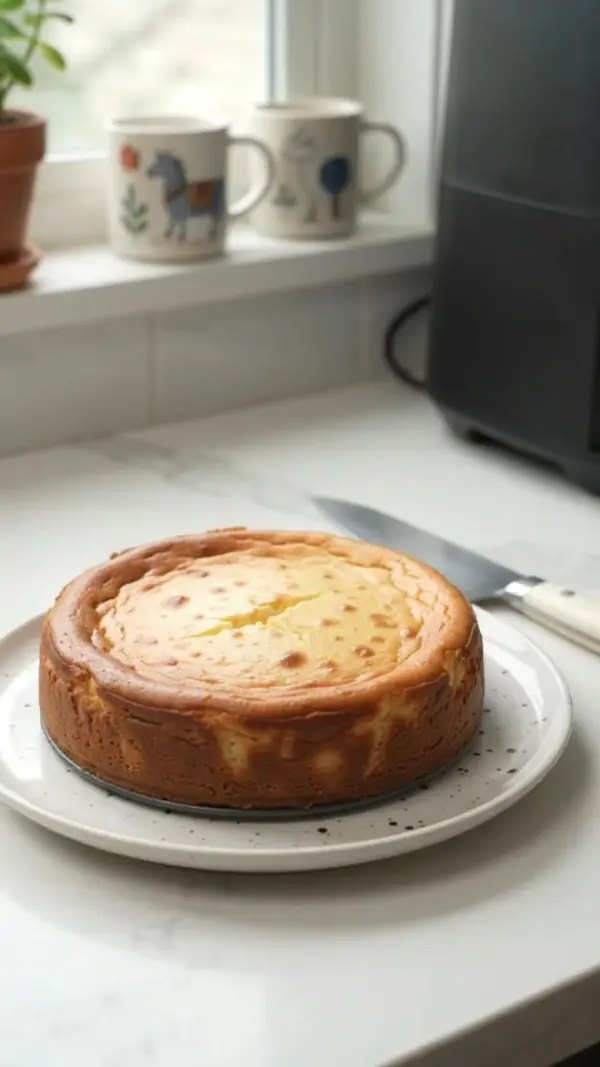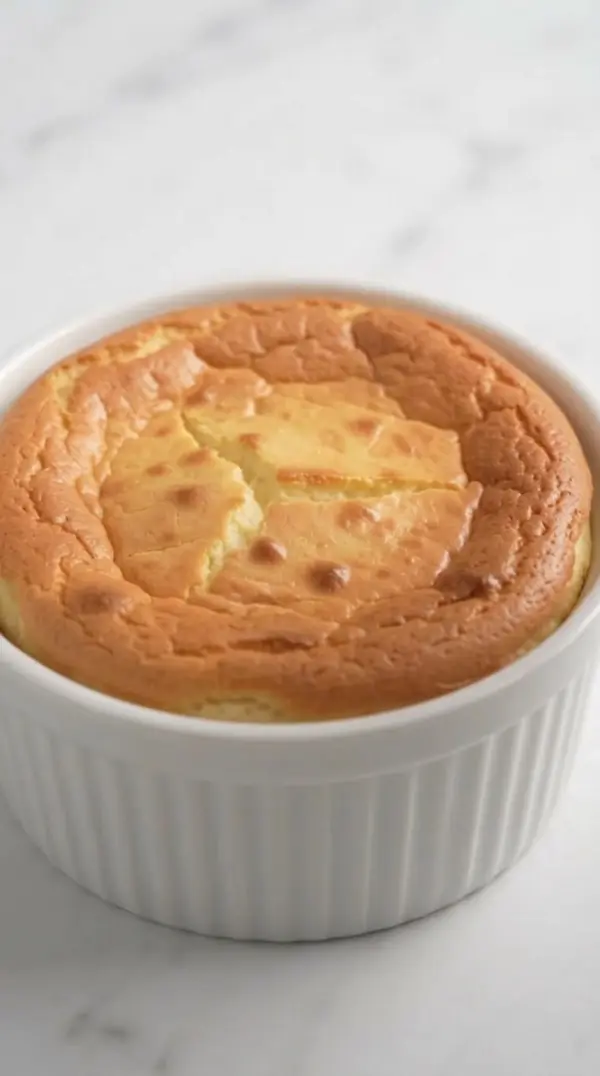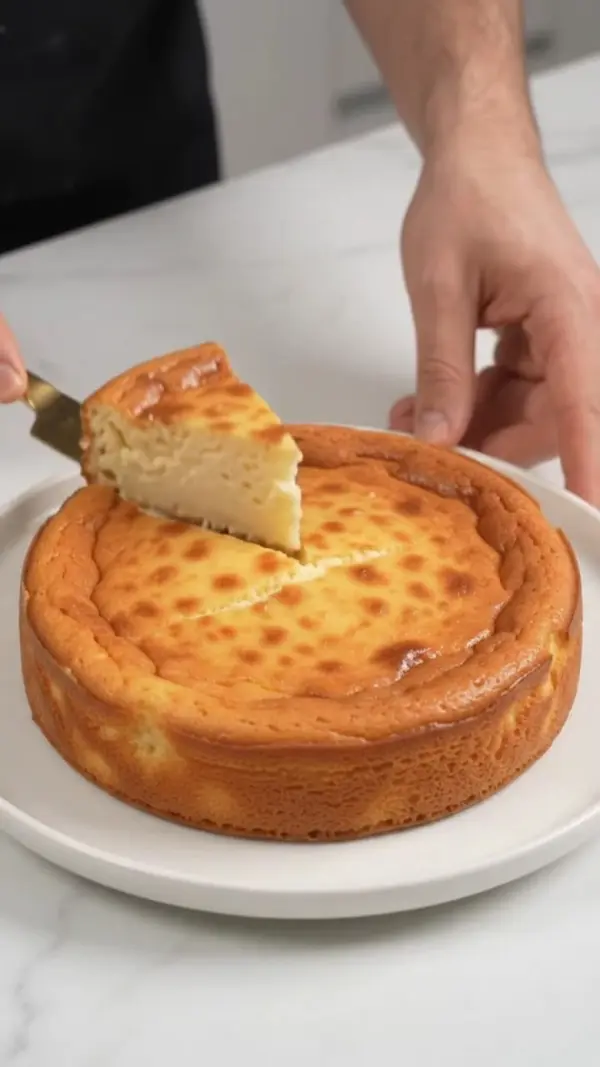
Step‑by‑Step Method
Step 1: Step 1: Preheat your oven to 350°F (175°C) and line a 9‑inch round baking pan with parchment paper, allowing excess to hang over the sides for easy removal.
Step 2: Step 2: Pour the Greek yogurt into a glass mixing bowl, letting it settle for a few seconds to release any air bubbles.
Step 3: Step 3: Crack the two eggs directly over the yogurt, keeping the yolks intact until you whisk.
Step 4: Step 4: Sprinkle the brown sugar over the mixture, then whisk vigorously for about 30 seconds until the batter is smooth, glossy, and free of lumps.
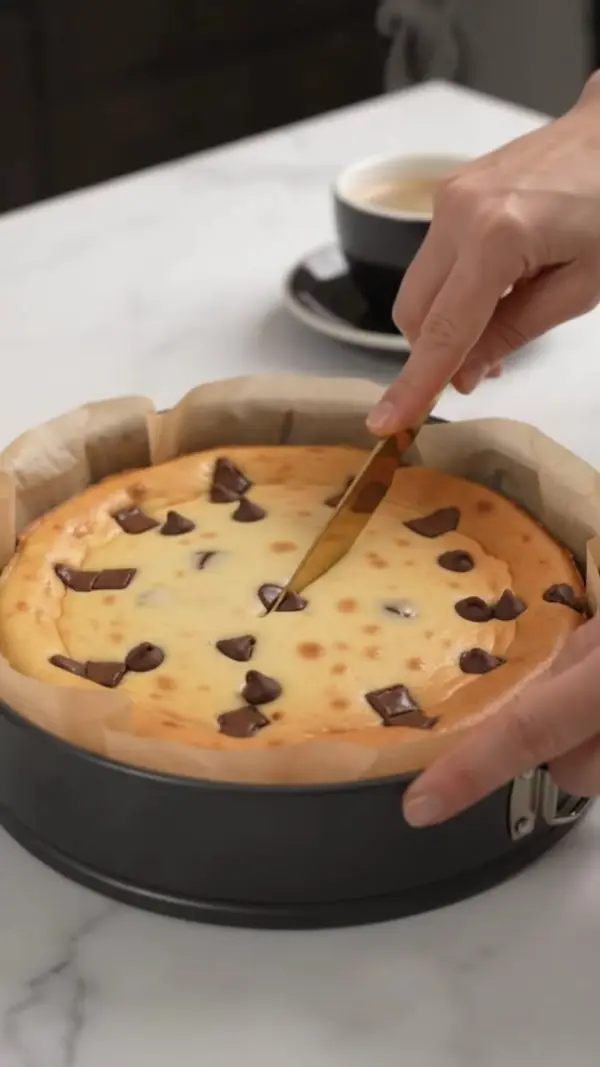
Step 5: Step 5: Transfer the batter to the prepared pan, spreading it evenly with a spatula. The parchment overhang will help lift the cheesecake later.
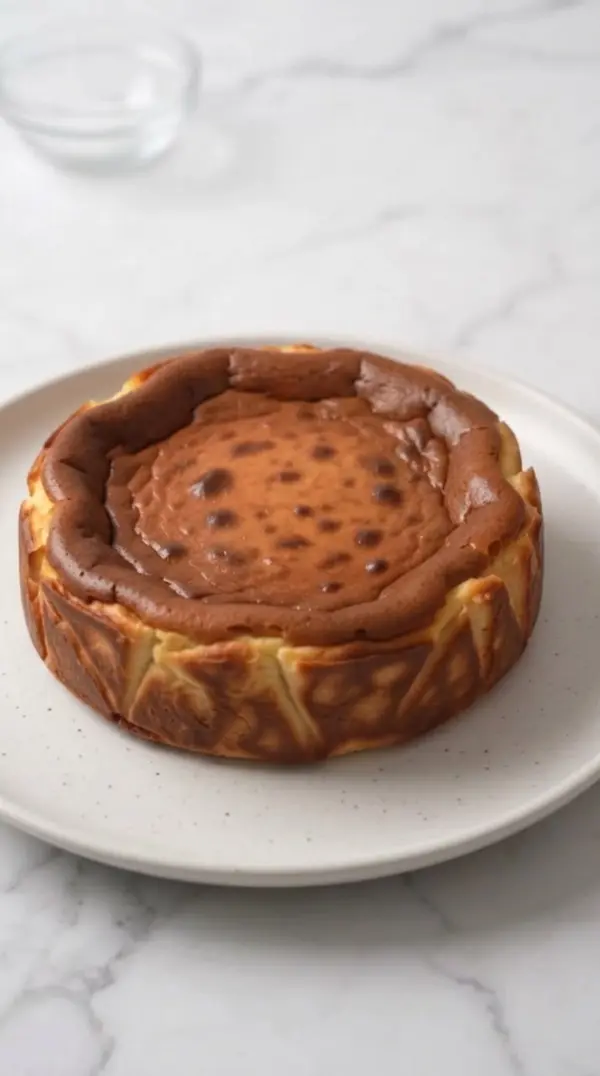
Step 6: Step 6: Place the pan in the preheated oven and bake for 10‑12 minutes, or until the edges are lightly golden and the center feels set but still slightly jiggles when the pan is gently shaken.
Step 7: Step 7: Remove the pan and let the cheesecake cool on a wire rack for 5 minutes; this short rest firms the interior without over‑cooking.
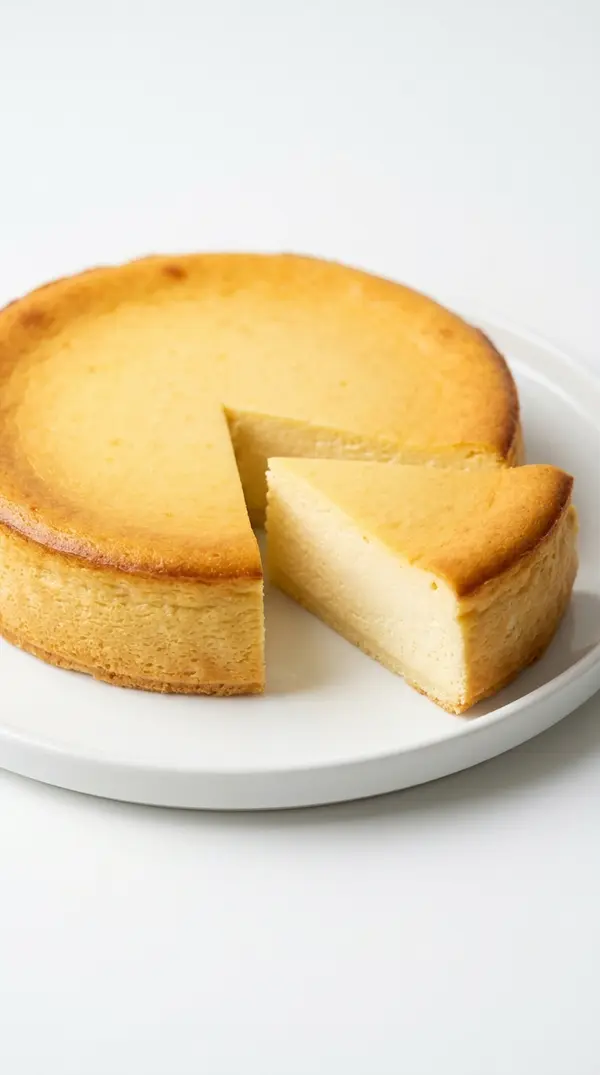
Step 8: Step 8: Using the parchment overhang, lift the cheesecake onto a cutting board, slice into wedges, and serve warm or at room temperature.
Common Mistakes and How to Fix Them
Over‑baking: The cake will dry out and lose its creamy center. Keep a close eye on the 10‑minute mark and test with a light shake.
Undermixed batter: Small yogurt pockets create grainy spots. Whisk until the mixture is completely uniform before pouring.
Cold eggs: They can cause the batter to separate. Warm the eggs briefly in a bowl of warm water before adding.
No parchment: The cake may stick to the pan, making removal messy. Always line the pan to ensure a clean lift.
Opening the oven early: A sudden temperature drop can cause cracks. Keep the oven door closed until the timer signals.
Using low‑fat yogurt without added fat: The texture becomes rubbery. Add a tablespoon of melted butter or use full‑fat yogurt.
Swaps That Still Work
Honey instead of brown sugar: Use 2 tablespoons honey for a milder sweetness and a glossy finish.
Plain kefir for yogurt: Substitute 1 cup kefir; it adds a tangier flavor but may need a tablespoon of flour to stabilize.
Egg substitute: Replace each egg with ¼ cup unsweetened applesauce for a vegan-friendly version, though the crumb will be softer.
Vanilla extract: Add ½ teaspoon for a subtle aromatic note without altering the texture.
Keeping Your Cheesecake Fresh and Warm
Once cooled, cover the cheesecake with plastic wrap and refrigerate for up to three days. The slice will stay creamy, and the flavors meld nicely. For a quick warm serving, microwave a single wedge for 15‑20 seconds; the center will soften back to its original silkiness. The cake also freezes well—wrap tightly and store for up to a month, then thaw in the fridge before reheating.
Ways to Plate and Pair This Cheesecake
Serve each wedge with a drizzle of caramel sauce or a spoonful of fresh berries for contrast. A dollop of whipped cream adds extra richness, while a dusting of cinnamon highlights the brown sugar’s caramel notes. Pair the cheesecake with a cup of black coffee for a balanced finish.
Creamy Eggs: 2 Whole Eggs Cheesecake Questions
How do I know when the cheesecake is fully set?
Look for lightly golden edges and a gentle wobble in the center when you shake the pan. The surface should appear smooth, not wet, and a toothpick inserted near the edge should come out clean.
Can I use a different pan size?
A 9‑inch round pan gives the ideal thickness. If you use a larger pan, the cake will be thinner and may bake faster, so reduce the time by a couple of minutes. A smaller pan will need a longer bake, watch for a golden top.
Is it okay to add a crust?
Yes, press a thin layer of crushed graham crackers mixed with melted butter into the bottom before adding the batter. The crust adds texture but will increase prep time slightly.
What if I don’t have parchment paper?
Grease the pan well with butter or non‑stick spray, then dust lightly with flour. This method works but may make removal a bit trickier, so run a thin knife around the edge before lifting.
Can I make this cheesecake ahead of time for a party?
Absolutely. Bake the cheesecake a day before, let it cool, then cover and refrigerate. Slice just before serving to keep the edges from drying out.