
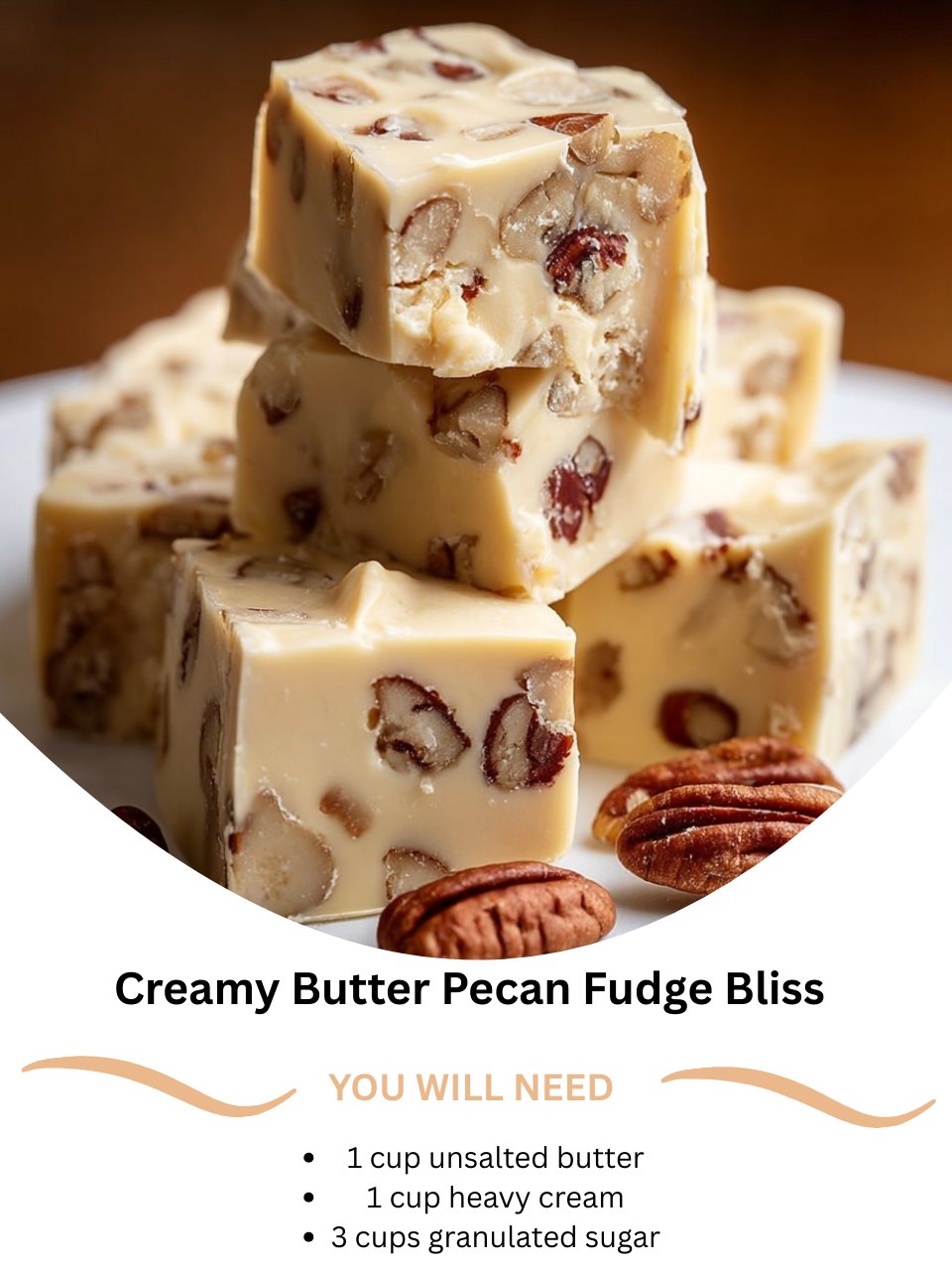
The first time I attempted this Creamy Butter Pecan Fudge Bliss, I was chasing the memory of a confection from a childhood candy shop—a fudge so rich, so smooth, it felt like velvet on the tongue. As the butter melted with sugar and cream in my heavy pot, my kitchen transformed. The air grew thick with the scent of caramelizing sugar, a sweet, buttery perfume that promised pure decadence. When I finally poured the glossy, pecan-studded mixture into the pan, I held my breath. The result, after hours of chilling, was a fudge of such profound creaminess and deep, toasted flavor, it brought an instant smile. It was more than candy; it was a masterpiece of simple ingredients.
Why You’ll Love This Recipe
You are going to fall completely in love with this recipe because it creates a classic, old-fashioned fudge with that perfect, melt-in-your-mouth texture that’s becoming harder and harder to find. It’s not just sweet; it’s complex, with the deep, nutty richness of browned butter and toasted pecans in every single bite. While it requires a candy thermometer and a bit of patience, the process is a joyful, aromatic ritual that results in a fudge so spectacularly creamy and luxurious, it’s worth every minute. This is the fudge that will make you feel like a master confectioner and earn you rave reviews from everyone lucky enough to try it.
Ingredients
- 1 cup (2 sticks) high-quality unsalted butter
- 1 cup heavy whipping cream
- 3 cups granulated sugar
- 1 (7 oz) jar marshmallow creme
- 1 teaspoon pure vanilla extract
- 1/8 teaspoon fine sea salt
- 2 cups chopped pecans, toasted
(See the next page below to continue…)
Equipment Needed
- Heavy-bottomed, deep 4-quart saucepan (this is crucial to prevent boil-overs)
- Candy thermometer
- 9×13 inch baking pan
- Parchment paper or aluminum foil
- Heatproof spatula or wooden spoon
- Measuring cups and spoons
Step-by-Step Instructions
My journey with this fudge always begins with the most important step: browning the butter. I melt the two sticks of unsalted butter in my heavy saucepan over medium heat. Once melted, I keep cooking, swirling the pan often, until the butter foams, turns a deep golden amber, and releases a profoundly nutty, intoxicating aroma. This takes about 5-7 minutes, and I watch it like a hawk—it can go from perfect to burnt in seconds. I immediately pour this glorious brown butter into a heatproof bowl to stop the cooking. This step isn’t just for flavor; it’s the soul of the entire recipe. Don’t skip it.
After wiping out my saucepan (to remove any dark butter solids), I combine the heavy cream, granulated sugar, and that beautiful brown butter. I clip my candy thermometer to the side, ensuring it doesn’t touch the bottom. Over medium heat, I stir constantly until the sugar dissolves and the mixture comes to a boil. This is where patience is key. Once boiling, I stop stirring and let the mixture cook, undisturbed, until it reaches the soft-ball stage, 234°F to 240°F on the thermometer. This can take 10-15 minutes of gentle boiling. I learned the hard way that stirring during this phase can cause the sugar to crystallize, giving me grainy fudge instead of creamy bliss.
The moment the syrup hits 238°F, I remove the pot from the heat. Working quickly but carefully, I stir in the marshmallow creme and the fine sea salt. The mixture will bubble and froth. Once incorporated, I let it sit, untouched, for exactly 10 minutes. This cool-down period is non-negotiable; I tested skipping it once and ended up with a runny mess that never set. After 10 minutes, I add the vanilla extract and begin beating the fudge with my wooden spoon. I beat, and beat, and beat—for a solid 5 to 7 minutes—until it loses its glossy sheen, thickens significantly, and starts to hold its shape when drizzled from the spoon.(See the next page below to continue…)
Just as the fudge thickens and becomes matte, I fold in the toasted pecans. I make sure they’re well-toasted for maximum flavor—a quick 8 minutes in a 350°F oven does the trick. I stir them in thoroughly but gently, then immediately pour the thick, nutty mass into my parchment-lined pan. I use a spatula greased with a tiny bit of butter to press it into an even layer. Then, the final test of willpower: I let it cool at room temperature for about 2 hours before transferring it to the refrigerator to chill completely and become firm enough to slice.
Pro Tips for Best Results
My first pro tip is all about the thermometer. Do not guess the temperature. I’ve tried the “soft-ball test” in ice water, and it’s too easy to misjudge. A reliable candy thermometer is your best friend and the only guarantee of perfect texture. Before you start, test your thermometer in boiling water; it should read 212°F. If it’s off, you’ll know to adjust your target temperature accordingly.
Second, toast your pecans properly. This is not an optional step for garnish. Toasting transforms them from bland and soft to fragrant, crunchy, and deeply flavorful. I spread them on a baking sheet and toast at 350°F for 7-9 minutes, watching closely, until they’re fragrant. Let them cool completely before adding them to the fudge, or they’ll melt the mixture and make it oily.
Finally, beat with conviction. When you start beating the cooled syrup, it will feel thin and hopeless for the first few minutes. Don’t give up! Keep beating vigorously. You’ll see it transform from a thin, glossy syrup to a thick, matte, and creamy fudge right before your eyes. This beating stage incorporates air and encourages the sugar to form tiny crystals, which is what gives old-fashioned fudge its signature smooth, creamy (not grainy) texture.
Common Mistakes to Avoid
The most common mistake is scraping the sides of the pot with your spoon after the mixture starts boiling. Any sugar crystals stuck to the side can fall back in and seed crystallization throughout the entire batch, resulting in grainy fudge. To prevent this, I use a wet pastry brush to wash down the sides of the pan just as the syrup comes to a boil, dissolving any stray sugar crystals.(See the next page below to continue…)
Don’t rush the cooling stage before beating. I made this mistake the first time, excited to get to the next step. I started beating when the syrup was still too hot, and it never thickened properly, setting into a soft, sticky paste instead of firm fudge. Letting it cool off the heat for a full 10 minutes allows it to reach the perfect temperature for crystallization.
Avoid substituting ingredients. This is not the time for margarine or low-fat cream. The rich, specific fats in real butter and heavy cream are essential for both the chemical reaction and the luxurious mouthfeel. I tested it once with light cream, and the fudge was greasy and never fully set. Use the real deal for real results.
Finally, don’t refrigerate it immediately. Letting it cool to room temperature first prevents condensation from forming on the surface, which can make the top of your fudge sticky and wet. A couple of hours on the counter allows it to set its structure gently before the final chill firms it up for perfect slicing.
Serving Suggestions
I love presenting this fudge on a marble slab or a vintage crystal plate. Its rich, tan color studded with pecans looks elegantly rustic. I cut it into small, one-inch squares—it’s incredibly rich, so a little goes a long way. For a holiday tray, it’s the sophisticated star among cookies and brownies.
This fudge makes a breathtakingly beautiful homemade gift. I stack squares in a cellophane bag tied with a gold ribbon, or layer them in a decorative holiday tin with parchment paper between layers. It feels incredibly special and personal, a true labor of love that people can taste.
For a truly over-the-top dessert experience, I’ll sometimes crumble a square over a scoop of vanilla bean or butter pecan ice cream. The combination of temperatures and textures—cold, creamy ice cream with the rich, firm, room-temperature fudge—is absolutely divine. A drizzle of caramel sauce makes it a restaurant-worthy treat.
Variations & Customizations
For a “Sea Salt Caramel Butter Pecan” version, I’ll sprinkle a few flakes of flaky sea salt over the fudge right after pressing it into the pan. The salty crunch against the sweet, buttery base is phenomenal. You could also swirl in 1/4 cup of thick caramel sauce just before adding the pecans for a marbled effect.
You can play with the nuts. While pecans are classic, I’ve made this with toasted walnuts for a similar texture and a slightly more bitter note. For a nut-free version, you can omit them entirely for a pure, creamy brown butter fudge, or substitute with toasted coconut flakes for a different kind of crunch and flavor.
To infuse even more flavor, try steeping a cinnamon stick or a few strips of orange zest in the cream as you warm it with the sugar and butter. Remove them before the mixture comes to a boil. This adds a subtle, warm background note that makes the fudge taste even more complex and special.
How to Store, Freeze & Reheat
This fudge stores beautifully at cool room temperature. I keep it in an airtight container, with layers separated by parchment paper, for up to two weeks. The high sugar content acts as a preservative. If your kitchen is very warm, you can store it in the refrigerator, but let it come to room temperature for 30 minutes before serving for the best creamy texture.
It freezes perfectly for long-term storage. I wrap the whole slab or individual squares tightly in plastic wrap, then place them in a freezer bag or airtight container. It will keep for up to 3 months. To thaw, I transfer it to the refrigerator overnight, then let it come to room temperature on the counter before serving.
There is no need to reheat this fudge. Its magic is in its firm yet melt-in-your-mouth texture, which is best enjoyed at room temperature. If it’s been in the fridge, simply let it sit out until it softens slightly. Microwaving will melt it into a puddle, so patience is key.
Conclusion
This Creamy Butter Pecan Fudge Bliss is more than just a recipe to me; it’s a cherished edible heirloom, a testament to the magic that happens when butter, sugar, and cream are treated with care and respect. The process is a delightful ritual, and the result is pure, unadulterated joy in every bite. I hope this recipe brings a sense of accomplishment and a whole lot of deliciousness to your kitchen, creating sweet memories for years to come. Now, go find your candy thermometer—a batch of creamy bliss is waiting.