
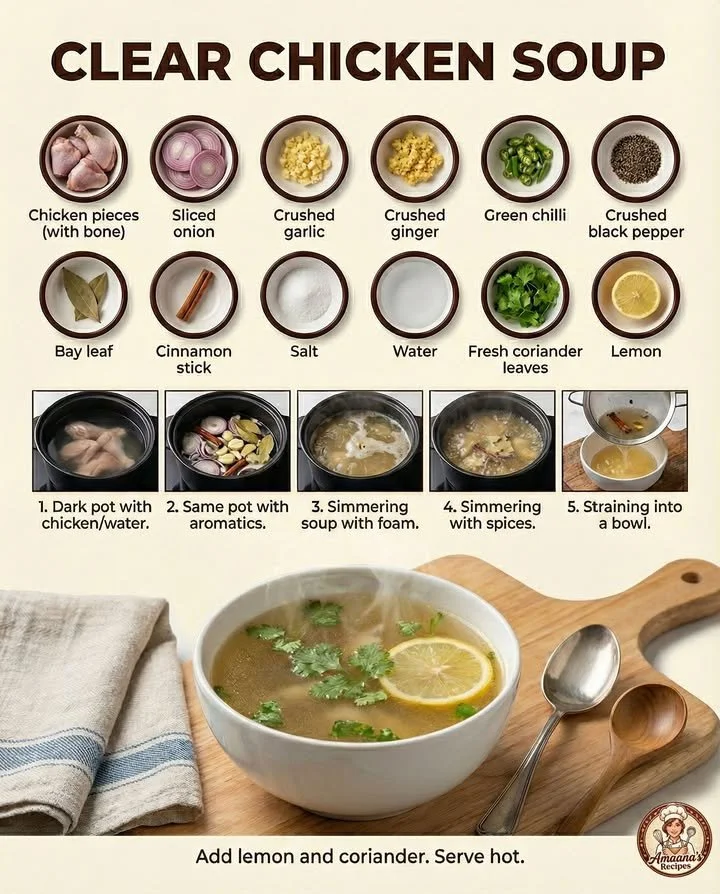
After skimming, I add in the quartered onions, sliced carrots, chopped celery, smashed garlic, bay leaf, and thyme. I then let the pot simmer for about 1.5 to 2 hours, allowing all those beautiful flavors to meld together. It’s during this time that I find myself peek into the pot—it’s like an aromatic treasure brewing. Occasionally, I check to make sure the chicken is cooking evenly. Once the chicken is fully cooked, I carefully remove it from the pot and let it cool.
While the chicken cools, I strain the broth through a fine-mesh strainer or cheesecloth into another pot, discarding the vegetables and bay leaf. I then return the strained broth to the heat and season it with salt and pepper to taste. Once the chicken has cooled enough to handle, I shred the meat off the bones, discarding the skin and bones. I love adding back a few chunks of chicken to the soup for texture, leaving the rest for sandwiches or salads later.
Finally, the moment of truth arrives as I ladle the clear chicken soup into bowls and sprinkle just a bit of fresh parsley on top for a pop of color. The steam rising from the bowls is simply irresistible, and I often find myself savoring the first spoonful a moment longer, appreciating both the flavors and the soothing warmth.
Pro Tips for Best Results
Over the years, I’ve experimented with this recipe in multiple ways. One key tip is to use a pasture-raised chicken whenever possible. The flavor difference is remarkable, and the broth turns out more flavorful and nourishing. I’ve also tested different herbs, and I find that a touch of fresh dill added at the end gives the soup a lovely brightness.
Another thing I’ve learned is the importance of letting the broth simmer gently. A rapid boil can make the soup cloudy, so I keep my heat low. This patience really pays off, as the resulting clear broth is a treat for both the eyes and the palate.
Finally, I’ve found that letting the soup rest for a bit before serving enhances the flavors even more! If you have time, let it cool, refrigerate it, and reheat it just before serving. The broth will taste even more soulful after resting.
Common Mistakes to Avoid
One of the most common mistakes I see people make is not skimming the foam that forms on top when the chicken is boiled. I used to skip this step, thinking it wasn’t that critical, but it resulted in a murky broth that just didn’t have the same appeal. Trust me, taking the time to skim it makes all the difference in achieving that clear, vibrant soup. (See the next page below to continue…)