
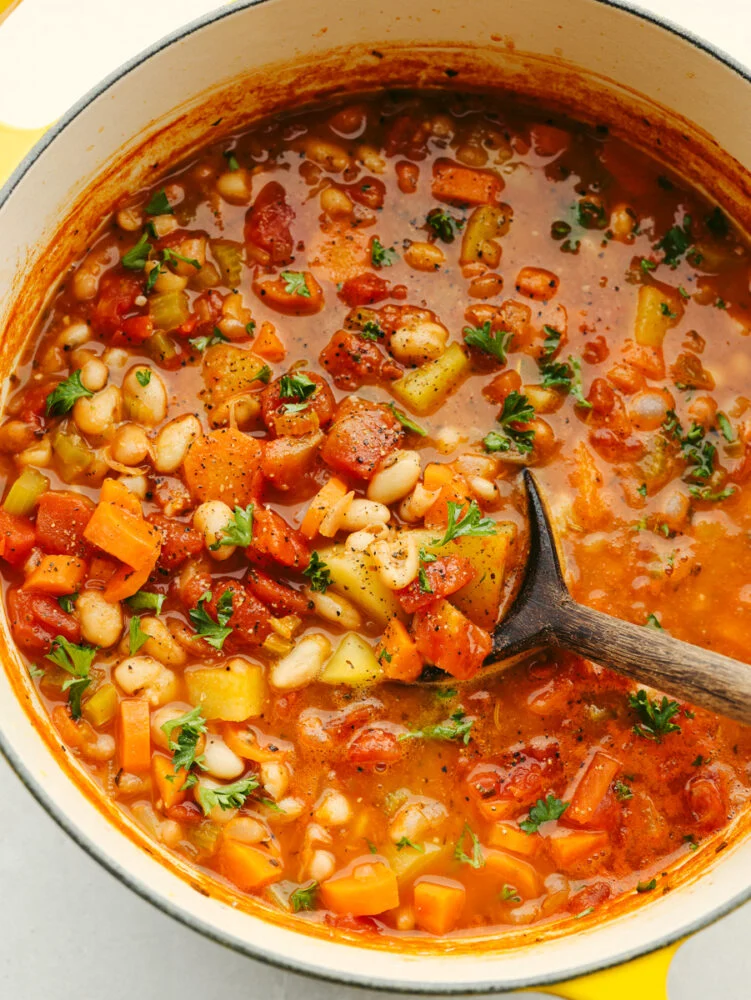
Most classic bean stews start by sautéing onions, carrots, and celery in olive oil until they’re soft and sweet, then layering in garlic, tomato paste, and dried herbs or spices to build flavor. Canned or cooked beans (often a mix of cannellini, kidney, and pinto or other varieties) are added along with broth and tomatoes, and everything simmers until the beans are infused with the seasoned broth and the liquid thickens slightly.
Some versions enrich the stew with a splash of red wine or a spoonful of flour and tomato paste to make a glossy, almost gravylike broth, while others finish with leafy greens, lemon, or fresh herbs for brightness.
Equipment
- Large pot or Dutch oven (about 5–7 quarts).
- Wooden spoon or heat‑safe spatula for sautéing and stirring.
- Cutting board and sharp knife for chopping vegetables and herbs.
Ingredients
- 2–3 tablespoons olive oil.
- 1 onion, diced (any color).
- 2 medium carrots, diced.
- 1–2 celery ribs, diced.
- 3–4 garlic cloves, minced.
- 2 tablespoons tomato paste.
- ½–1 tablespoon paprika (sweet or smoked, depending on the flavor profile you want).
- 1–2 teaspoons dried herbs, such as rosemary, thyme, oregano, or Italian seasoning.
- 1–2 bay leaves (optional).
- ½ cup red wine (optional, for richer flavor).
- 4 cups vegetable or chicken broth.
- 1 can (14–15 oz) diced tomatoes, undrained, or crushed tomatoes for a thicker, saucier stew.
- 2–3 cans (14–15 oz each) beans, drained and rinsed (white beans, cannellini, kidney, pinto, or a medley).
- Salt and black pepper to taste (starting with about ½–1 teaspoon salt and ⅛–¼ teaspoon pepper).
- Optional: 1–2 tablespoons flour to help thicken the broth slightly.
- Optional: chopped fresh parsley, basil, or other herbs for finishing.
Instructions And Steps
Start by building the flavor base with aromatics. In a large pot or Dutch oven, warm 1–2 tablespoons of the olive oil over medium heat until it shimmers. Add the diced onion, carrots, and celery and cook, stirring occasionally, until the vegetables have softened and the onion is translucent, usually around 8–10 minutes.
Take your time here: lightly browning the edges of the vegetables adds sweetness and depth to the stew. When the vegetables are soft, stir in the minced garlic and cook for another minute or two until fragrant, being careful not to let the garlic brown, which can turn it bitter.
Once the aromatics are softened, layer in the spices and tomato paste. Sprinkle the paprika and your chosen dried herbs over the vegetables. Stir them through and let them cook for about a minute so their flavors bloom in the hot oil.
Add the tomato paste to the pot, along with another tablespoon of olive oil if the pot looks dry, and stir until the paste coats the vegetables and darkens slightly in color. This step caramelizes the tomato paste and creates a richer, more complex base for the stew.
If you’re using flour to thicken the broth, sprinkle it over now and cook, stirring constantly, for 1–2 minutes; the flour should absorb the fat and form a loose paste with the vegetables and tomato paste.
Deglaze the pot and add the liquids. If you are using red wine, pour it into the pot and stir, scraping up any browned bits stuck to the bottom with your spoon; those browned bits are concentrated flavor that will dissolve into the liquid.
Let the wine simmer for a couple of minutes until it reduces slightly and the scent of alcohol softens. Then add the broth and the canned tomatoes with their juices. Stir well to combine everything, making sure any bits of flour or tomato paste are incorporated into a smooth, reddish broth. If you’re using bay leaves, add them now.
Bring the stew up to a gentle boil over medium‑high heat, then reduce the heat to low or medium‑low to maintain a steady simmer. Let the broth and vegetables simmer for about 10–15 minutes before adding the beans; this gives the flavors from the aromatics, herbs, and wine or tomatoes time to blend and the broth to start thickening slightly.
Next, add the beans and continue simmering. Stir in the drained and rinsed beans—this can be all the same type, such as cannellini or navy beans, or a mix of several varieties for different textures and colors. Add more broth if the stew looks too thick; the liquid should cover the beans and vegetables but not look watery.
Bring the stew back to a simmer, then cover the pot partially with a lid and let it cook for another 20–30 minutes. Stir occasionally to prevent sticking and to help the beans soak up the seasoned broth. As it simmers, the beans will become very tender and the starches from the beans and flour (if used) will thicken the stew to a comforting, spoon‑coating consistency.
Near the end of the simmering time, taste the stew and adjust the seasoning. Start with a little more salt and pepper if needed, and add an extra pinch of paprika or herbs if the flavor needs a boost. If you’d like some brightness, you can squeeze in a bit of lemon juice or add a splash of red wine vinegar to lift the flavors, a technique used in several bean stew styles.
For a heartier texture, let the stew simmer uncovered for the last 5–10 minutes to reduce the liquid; for a soupier stew, keep it covered and add a splash more broth as needed.
Once the stew has reached your desired consistency and the beans and vegetables are very tender, remove the bay leaves if you used them. Stir in a handful of chopped fresh herbs like parsley or basil right before serving to add freshness and color.
Ladle the bean stew into bowls and serve hot with crusty bread, toasted baguette slices, or over a bed of rice, quinoa, or soft polenta. The stew will continue to thicken slightly as it cools, and like most bean dishes, it often tastes even better the next day after the flavors have had more time to meld.
Tips And Tricks
Using a mix of beans can make the stew more interesting, both visually and texturally. Many recipes use two or three types—such as cannellini, kidney, and pinto beans—or even up to seven different legumes for a “seven bean stew,” giving a variety of shapes and creaminess levels.
If you start with dried beans instead of canned, cook them separately until tender before adding them to the stew, since the acidic tomatoes and wine in the stew can toughen uncooked beans and prevent them from softening properly.
Sautéing the vegetables long enough upfront is key to a flavorful base. Recipes consistently call for 8–10 minutes of cooking the onion, carrot, and celery until the onion is translucent and the edges start to brown; rushing this step can result in a flatter tasting stew.
Toasting the spices and cooking the tomato paste until darker in color are also highlighted by multiple sources as important small steps that make the finished dish taste like it cooked much longer than it did.
Bean stew is naturally thick and hearty, but you can control the body of the broth. For a thicker, almost ragù‑style stew, adding a spoonful of flour with the tomato paste and letting the stew simmer uncovered for longer will concentrate the flavors and create a more clingy sauce.
For a lighter, brothier stew, skip the flour and keep the pot partially covered to retain more liquid. Finishing with something fresh—herbs, a squeeze of lemon, or even a dollop of vegan or dairy yogurt in some recipes—keeps the stew from feeling heavy and adds contrast to the earthy beans.
Bean Stew is a flexible template rather than a rigid recipe: once you master the basic sauté‑then‑simmer method, you can swap herbs for spices, change up the beans, enrich it with sausage or keep it vegan, and pair it with whatever starch or bread you have on hand, all while getting that deeply comforting, high‑protein bowl of food that’s perfect for cool evenings and make‑ahead meals.