
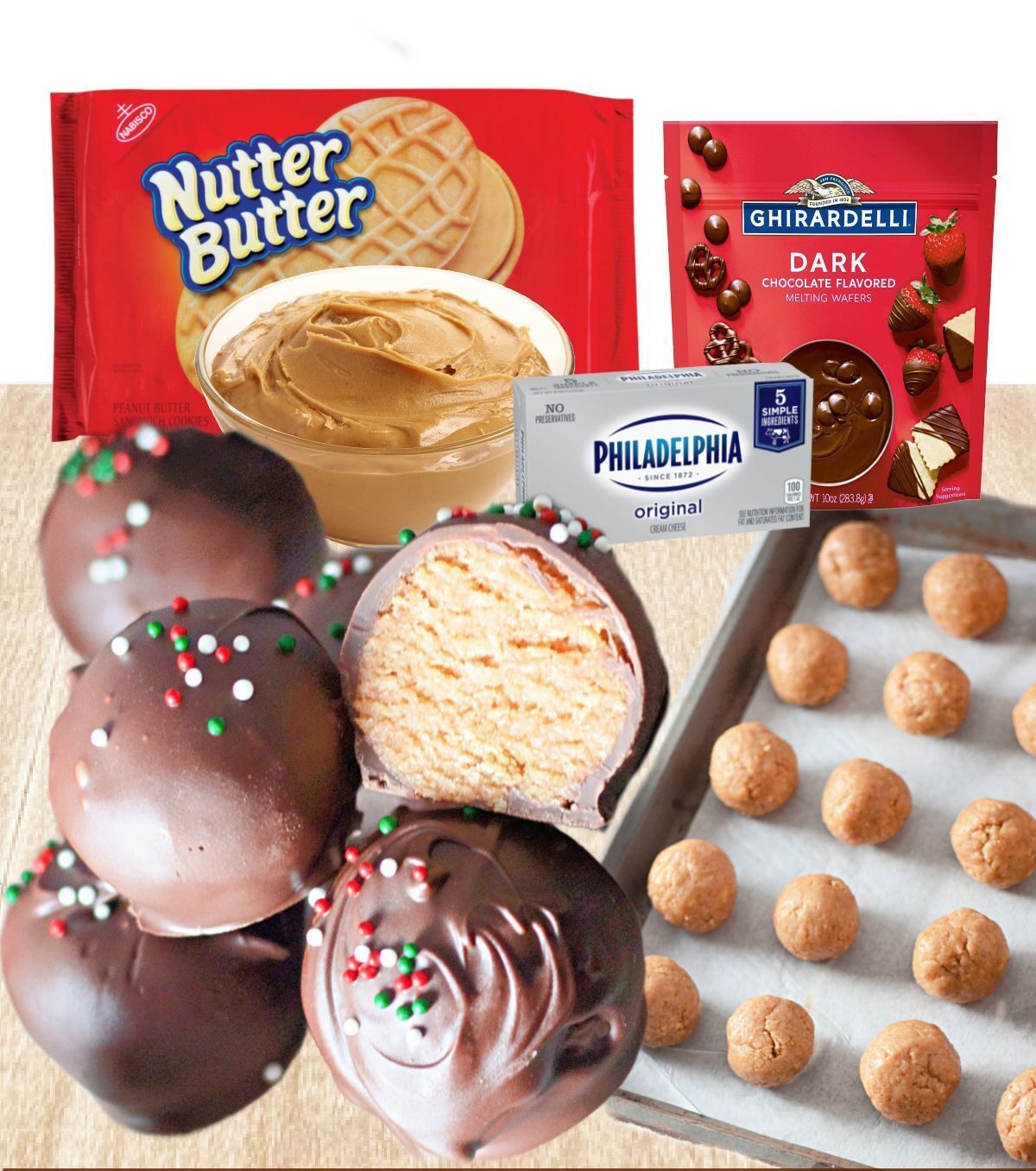
Instead of making a peanut butter truffle filling from scratch, Nutter Butter Truffles use the cookies themselves as the base: the Nutter Butters are crushed into fine crumbs, then blended with softened cream cheese, powdered sugar, and creamy peanut butter until the mixture forms a thick, scoopable dough.
That dough is rolled into bite‑size balls and chilled so it firms up, then each ball is dipped in melted chocolate or candy melts and topped with cookie crumbs, sprinkles, sea salt, or chopped peanuts before the coating sets. The result feels like a peanut butter cheesecake truffle wrapped in candy—a soft, creamy center with little bits of cookie crunch, all inside a snappy chocolate shell that makes them look polished enough for parties, holidays, or gifting.
Equipment
- Food processor or blender to crush Nutter Butter cookies into fine crumbs.
- Mixing bowl to combine cream cheese, peanut butter, sugar, and crumbs.
- Spoon, spatula, or mixer for blending the filling.
- Cookie scoop or tablespoon to portion even balls.
- Baking sheet lined with parchment or wax paper for chilling and setting.
- Microwave‑safe bowl or double boiler for melting chocolate.
- Fork, spoon, or dipping tool to coat the truffles in chocolate.
Ingredients
- 1 (16 oz) package Nutter Butter cookies, crushed into fine crumbs.
- 8 oz cream cheese, softened to room temperature.
- ¼–¾ cup creamy peanut butter (most recipes use about ¼–¾ cup depending on richness).
- ¼ cup powdered sugar (some versions use more for extra sweetness).
- 10–16 oz chocolate melting wafers, almond bark, or chocolate chips (milk, semi‑sweet, or white) for coating.
- Optional toppings: extra Nutter Butter crumbs, sprinkles, chopped peanuts, flaked sea salt, or crushed Butterfinger bars.
Instructions and steps
Making Nutter Butter Truffles is a three‑stage process: crush and mix, roll and chill, then dip and decorate. Each step is simple, but chilling and keeping the chocolate at a good dipping consistency are what make the truffles look neat and professional.
Start by crushing the Nutter Butters into fine crumbs. Add the cookies to a food processor and pulse until you get an even, sandy crumb with no big chunks left; if using a blender, you may need to work in batches so everything grinds evenly.
Several recipes suggest reserving a tablespoon or more of crumbs in a small bowl to sprinkle on top of the finished truffles as a garnish later. Fine crumbs are important because they blend smoothly into the cream cheese mixture and help the balls hold together without crumbling.
Mix the truffle filling in a separate bowl or directly in the processor. In a bowl, beat the softened cream cheese, peanut butter, and powdered sugar together until smooth and creamy with no lumps of cream cheese.
Then stir or pulse in the Nutter Butter crumbs until the mixture comes together into a thick, uniform dough that you can scoop and roll; it should feel similar to a cake‑pop or cookie‑ball mixture, soft but not wet. If it seems too sticky or loose to form balls, add a bit more cookie crumb; if it feels overly stiff and dry, a spoonful of peanut butter can loosen it slightly.
Chill the mixture briefly so it firms up before rolling. Cover the bowl or place it in the refrigerator for about 20–30 minutes to let the cream cheese and peanut butter set up.
This quick chill makes the dough less sticky and helps you form smoother, rounder truffles with fewer cracks. Some recipes note you can chill longer (even an hour or more) if your kitchen is warm or the filling still feels soft.
When the mixture is firm but workable, line a baking sheet with parchment or wax paper and begin shaping the truffles. Use a small or medium cookie scoop to portion out equal mounds, then roll each mound between your palms into a smooth ball.
Aim for about 1‑inch balls so they’re bite‑size and easy to coat; larger truffles will need a bit more chilling and chocolate. Place each ball on the lined baking sheet as you go, spacing them slightly apart so they don’t stick together.
Chill or freeze the shaped balls so they’re firm enough to dip. Most sources recommend at least 30 minutes in the freezer, or about 45–60 minutes in the refrigerator, until the centers feel solid to the touch. This step is crucial: cold truffles are less likely to fall apart or shed crumbs into the chocolate and will set faster once dipped.
While the truffles chill, melt the chocolate coating. Place chocolate melting wafers, chocolate chips, or chopped almond bark in a microwave‑safe bowl and heat in short 20–30 second bursts, stirring between each, until smooth and fully melted.
Alternatively, use a double boiler by setting a heatproof bowl over gently simmering water and stirring until melted. If the chocolate feels too thick, stir in a teaspoon or so of neutral oil or shortening at a time to thin it to a smooth, spoon‑coating consistency that flows easily off the fork.
To dip the truffles, work with a few chilled balls at a time, leaving the rest in the fridge or freezer so they stay cold. Drop one ball into the melted chocolate, use a fork or dipping tool to roll it around until fully coated, then lift it out and gently tap the fork on the edge of the bowl to shake off excess chocolate.
Transfer the coated truffle back to the parchment‑lined sheet by nudging it off with a toothpick or a second fork. Continue dipping, reheating and stirring the chocolate as needed to keep it smooth and fluid.
Before the chocolate sets, decorate the tops. Every few truffles, pause to sprinkle them with reserved Nutter Butter crumbs, colorful sprinkles, chopped peanuts, or a pinch of flaky sea salt so the toppings adhere to the wet coating.
This not only adds texture and flavor but also gives a visual clue about what’s inside—for example, peanut bits for extra crunch or cookie crumb for more Nutter Butter flavor. If you like, you can also drizzle a contrasting chocolate over the set truffles for a bakery‑style finish.
Let the coated truffles set until the chocolate is completely firm. They can set at room temperature in about 30 minutes or in the refrigerator in roughly 10–15 minutes. Once hardened, transfer them to an airtight container, layering parchment between layers to prevent sticking.
Stored in the fridge, Nutter Butter Truffles typically keep well for up to about two weeks and can also be frozen for longer storage; let them sit at room temperature for a few minutes before serving so the centers soften slightly.
Tips and tricks
Nutter Butter Truffles lean on the cookie’s built‑in flavor, so using fresh cookies with good peanut butter aroma gives the best result; stale cookies can make the filling taste flat.
Crushing them to fine, even crumbs helps the cream cheese mixture bind smoothly and keeps the centers from feeling gritty. Softened cream cheese is another key: if it’s too cold, it won’t blend cleanly with the peanut butter and sugar and may leave small lumps in the filling.
Chilling the dough and then the formed balls is emphasized in almost every recipe because cold, firm centers make dipping dramatically easier.
If the balls start to soften or slide off the fork during coating, pop that tray back into the fridge or freezer for a few minutes to re‑firm them before continuing. Keeping the chocolate at a warm but not scorching temperature—stirring often and reheating in short bursts—also prevents scorching or thickening.
Flavor balance matters in such a rich candy. The cream cheese adds tang that cuts through the sweetness and complements the peanut butter, and powdered sugar sweetens without leaving a grainy texture. If you prefer a less sweet truffle, you can reduce the powdered sugar slightly and rely more on the cookie’s sweetness, or choose darker chocolate for the coating to add a hint of bitterness.
For presentation, Nutter Butter Truffles look great nestled in mini paper candy cups on a platter or in a gift box. Their no‑bake nature makes them ideal for holiday trays, bake sales, or party dessert tables, and because they hold up well in the fridge and freezer, you can make them ahead and bring out a batch whenever you need that peanut‑butter‑and‑chocolate fix.
Variations
Once you’ve mastered the basic Nutter Butter Truffle, it’s easy to riff on the formula while keeping the crushed‑cookie base that makes these so distinctive. Several recipes add candy bars, different coatings, or small tweaks to the filling to create new flavors without changing the simple method.
Butterfinger Nutter Butter Truffles stir crushed Butterfinger bars into the Nutter Butter‑cream cheese mixture, adding a crunchy, toffee‑like texture and extra peanut‑butter‑toffee flavor.
The crushed bars replace some of the cookie crumbs, and the truffles are usually dipped in milk chocolate and topped with more Butterfinger pieces so the flavor reads clearly. These are especially popular as a four‑ingredient shortcut variation using just Nutter Butters, cream cheese, Butterfingers, and chocolate.
You can also play with the chocolate coating. White chocolate or peanut butter‑flavored coating, seen in some truffle recipes, leans into the peanut butter theme and gives a sweeter, fudge‑like exterior. Dark chocolate or high‑cacao semi‑sweet helps cut the sweetness and is a good match if you’ve added candy bars or extra sugar to the filling.
Swirling a bit of peanut butter into melted white chocolate before dipping creates a marbled shell that looks striking and echoes the Nutter Butter branding.
For a slightly saltier, snack‑like twist, chopped peanuts or crushed pretzels can be pressed onto the tops of the freshly dipped truffles instead of sprinkles. A pinch of flaky sea salt on dark‑chocolate‑coated truffles turns them into more grown‑up, sweet‑salty bites.
Colored sprinkles, meanwhile, make it easy to theme the truffles for different holidays—red and green for Christmas, pink and red for Valentine’s Day, team colors for game day, and so on.
Lighter variations reduce the amount of cream cheese and powdered sugar or swap some cream cheese for Greek yogurt, though these tend to be softer and need more chilling. For a gluten‑free direction, some bakers use gluten‑free peanut butter sandwich cookies instead of Nutter Butters but keep the same cream cheese and peanut butter filling logic.
However you customize them, Nutter Butter Truffles keep the core appeal the same: a crushed Nutter Butter center blended with cream cheese and peanut butter, chilled, and dipped in chocolate to create ultra‑creamy, peanut‑butter‑cookie truffles that are as easy to make as they are addictive to eat.