
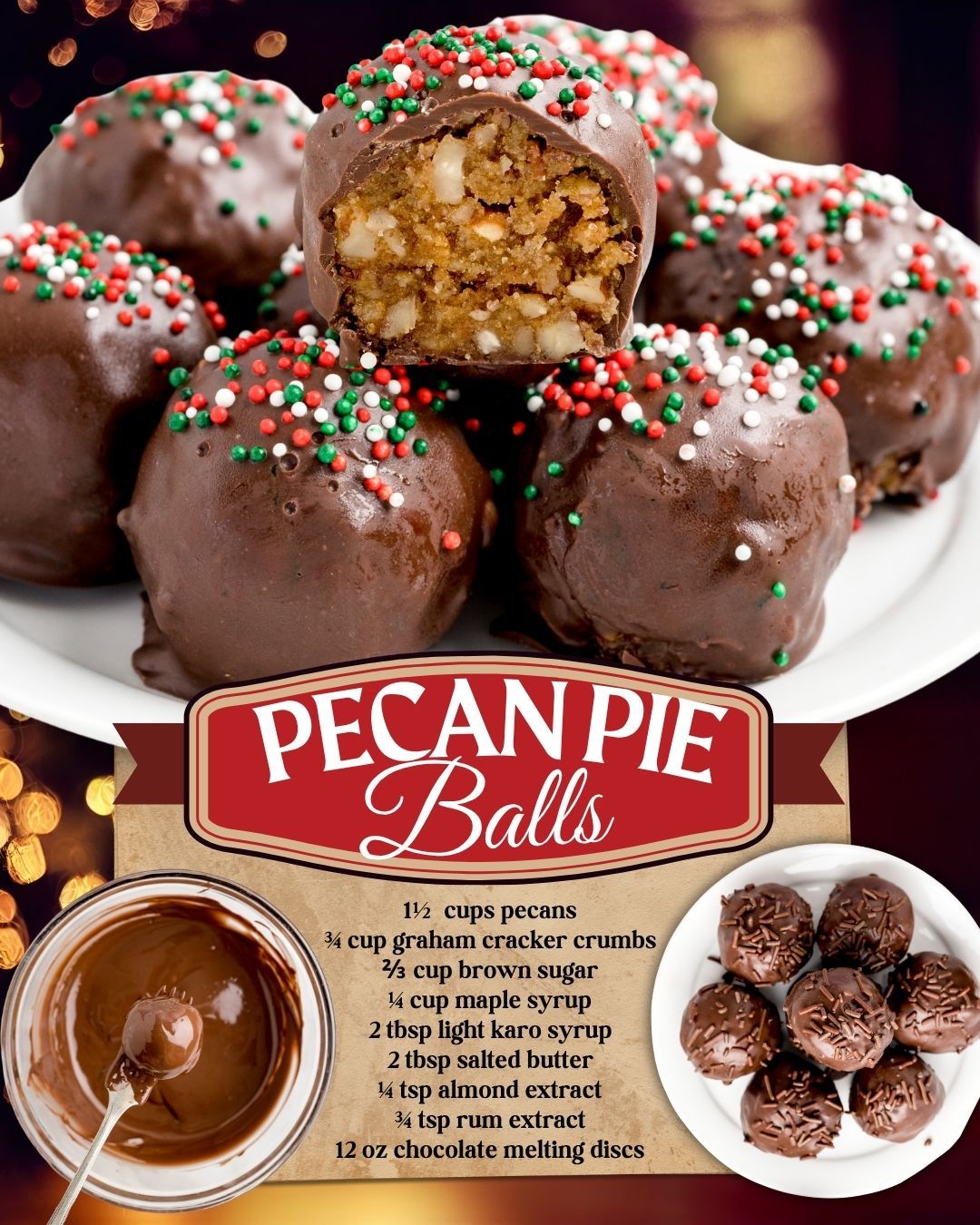
Instead of rolling out pie dough and baking a whole pie, pecan pie balls take the main flavor notes of the filling—pecans, brown sugar, syrup, butter, and vanilla—and compress them into a rich, scoopable “dough.” Finely chopped pecans and graham cracker crumbs provide structure and crunch, while melted butter and maple, honey, or corn syrup bind everything together into a mixture that feels like a cross between cookie dough and candy.
Once rolled into balls and chilled, they’re dipped in melted chocolate or almond bark to create a crisp shell that contrasts with the chewy, pecan‑studded center. The result is a small, intensely flavored bite that tastes like pecan pie filling and chocolate fudge had a baby—sweet, nutty, a bit caramel‑like, and very hard to stop at just one.
Equipment
- Mixing bowl for combining the pecan filling.
- Spoon or spatula for stirring the mixture together.
- Cookie scoop or tablespoon for portioning out even balls.
- Baking sheet lined with parchment paper or wax paper for chilling and setting.
- Microwave‑safe bowl or small saucepan for melting chocolate or almond bark.
- Fork or candy‑dipping tool to coat the balls in chocolate.
Ingredients
- 2–2½ cups pecans, toasted and finely chopped.
- 1 cup graham cracker crumbs (or similar cookie crumbs).
- ¾–1 cup packed brown sugar for that pecan‑pie caramel sweetness.
- ¼ teaspoon salt to balance the sweetness.
- ⅓–¾ cup melted butter, added gradually until the mixture holds together.
- 2–4 tablespoons maple syrup, honey, or corn syrup for moisture and extra pecan‑pie flavor.
- 1–2 teaspoons vanilla extract or rum/bourbon extract.
- 10–16 oz chocolate candy coating, almond bark, or melted chocolate chips (semi‑sweet, dark, or milk) for dipping.
- 1–2 teaspoons coconut oil or shortening, optional, to thin the chocolate for smoother coating.
Optional mix‑ins and toppings that appear in different recipes include a splash of bourbon or rum, coconut sugar instead of brown sugar, extra chopped pecans to sprinkle on top, and flaky sea salt for a sweet‑salty finish.
Instructions and steps
The process for making pecan pie balls is simple but benefits from chilling at a couple of points so the mixture stays easy to shape and dip. The recipe breaks down into three main phases: mix the filling, roll and chill the balls, and coat them in chocolate.
Start by preparing the pecan filling. In a large mixing bowl, combine the finely chopped pecans, graham cracker crumbs, brown sugar, and salt.
Stir until everything looks evenly distributed; this ensures that every bite has a good mix of nuts, crumbs, and sweetness rather than pockets of dry crumbs or sugar. At this stage, some bakers like to reserve a spoonful of finely chopped pecans to sprinkle over the tops later as decoration.
Next, add the flavor and moisture. Pour in the vanilla extract along with any rum or bourbon extract if you’re using it; these add depth and that subtle “pecan pie” warmth that tastes like the filling has been slow‑baked even though it hasn’t.
Drizzle in the maple syrup, honey, or corn syrup, which helps the mixture become sticky enough to hold together and reinforces the caramel‑like sweetness associated with pecan pie. Finally, add the melted butter a little at a time, stirring thoroughly between additions, until the mixture clumps easily when pressed and starts to resemble a soft, slightly sticky dough.
The goal is a mixture that holds its shape when squeezed but is not so greasy that butter pools in the bottom of the bowl.
If the mixture seems too dry and crumbly even after adding all the butter, you can stir in an extra spoonful of syrup or add a small amount of additional melted butter, just enough to bring it together. If it feels overly wet or slick, add a tablespoon or two of graham cracker crumbs and a few more chopped pecans, then stir again until it tightens up. Working to this “holds together when pressed” texture is more reliable than following an exact butter measurement, because pecans and crumbs can vary slightly in absorption.
Once the filling mixture has the right consistency, chill it briefly. Cover the bowl or simply place it in the refrigerator for about 15–30 minutes, long enough for the butter to firm up slightly. This quick chill makes rolling easier because the mixture will be less sticky and more cohesive, which translates to smoother, more uniform balls and less mess on your hands.
After the initial chill, it’s time to roll. Line a baking sheet with parchment or wax paper and keep it close to your workspace. Use a small cookie scoop or a tablespoon to portion out the mixture into even mounds, scraping the scoop against the bowl for consistent amounts.
Roll each portion between your palms into a firm, smooth ball. If you want smaller, candy‑like bites, aim for about 1 inch in diameter; for more indulgent truffles, 1½–2 inch balls work well, though they’ll need slightly longer chilling. Arrange the balls on the lined tray, leaving a little space so they don’t stick together.
Chill the shaped balls again so they’re solid enough to dip without crumbling into the chocolate. Most recipes recommend at least 30–60 minutes in the refrigerator or about 20–30 minutes in the freezer.
When the centers are cold and firm, they’re much easier to handle and less likely to slide off the fork during dipping. Some bakers prepare the balls a day ahead and keep them chilled overnight, then dip them the next day when they have time to focus on clean, neat coating.
While the balls chill, prepare the chocolate coating. Place chopped chocolate, candy melts, or almond bark in a microwave‑safe bowl and heat in short bursts—usually 20–30 seconds at a time—stirring thoroughly between each burst until the chocolate is fully melted and smooth.
Alternatively, you can set a heatproof bowl over a pot of gently simmering water (a double boiler) and stir until the chocolate melts. If the chocolate seems thick or sluggish, stir in a teaspoon or two of coconut oil or shortening to thin it to a glossy, pourable consistency that coats easily. Avoid overheating, as burnt chocolate will seize and become grainy.
To dip the pecan pie balls, take a few at a time out of the fridge or freezer, leaving the rest chilled so they stay firm. Drop one ball into the melted chocolate and use a fork or dipping tool to roll it around until it’s completely coated.
Lift it out, tap the fork gently on the side of the bowl to knock off any excess chocolate, and then slide it back onto the parchment‑lined tray by nudging it off the fork with a toothpick or a second fork. Repeat with the remaining balls, reheating and stirring the chocolate as needed to keep it smooth and workable.
If you want to garnish the tops, do it right away while the chocolate is still wet. Sprinkle a pinch of finely chopped pecans, a few crumbs of graham cracker, or a tiny bit of flaky sea salt over each coated ball as you go. You can also drizzle a contrasting chocolate (white over dark or vice versa) in thin lines across the set coating for a bakery‑style look, though that adds an extra quick melting step.
Let the coated pecan pie balls stand at room temperature until the chocolate shell is completely set, or place the tray back in the refrigerator to speed it up. Once firm and no longer tacky to the touch, they can be transferred to an airtight container, layered with parchment between layers to prevent sticking.
Properly stored in the fridge, they keep well for at least a week, and many sources note they can be frozen for even longer, making them a great make‑ahead treat for busy holiday weeks.
Tips and tricks
Toasting the pecans before chopping them is one of the easiest ways to deepen flavor; spreading them on a baking sheet and baking briefly until fragrant concentrates their nutty aroma and makes the filling taste more like a real pecan pie.
Let the nuts cool completely before pulsing or chopping, so they don’t melt the butter prematurely or make the mixture greasy. Using finely chopped pecans rather than large chunks ensures the balls hold together and slice cleanly when bitten, while still delivering noticeable crunch.
The moisture balance in the filling is crucial for success. If the mixture is too dry, balls will crack or crumble when rolled or dipped; if it’s too wet, they’ll flatten or slide off the fork into the chocolate. Adjust gradually with small amounts of syrup or crumbs until you get that “wet sand that holds its shape” texture.
Chilling at each stage—after mixing and after rolling—is emphasized in multiple recipes because cold fat helps the centers stay firm and makes the whole dipping process smoother and less messy.
For the cleanest chocolate coating, work with small batches of balls straight from the fridge or freezer and keep the chocolate warm but not hot. Overly hot chocolate can cause the centers to soften or leak, while chocolate that is too cool becomes thick and clumpy. Stirring often and reheating gently if needed will keep the consistency glossy. A small amount of added fat (like coconut oil) improves flow and sets with a nice snap.
When serving, remember that pecan pie balls are rich, so small portions go a long way. They look especially appealing on dessert boards mixed with other bite‑size treats, or nestled into mini paper candy cups in a gift box.
Because they hold up well at cool room temperature, they’re also convenient for cookie exchanges and potlucks, and they offer a fun alternative to more traditional cookies while still hitting that nostalgic pecan pie flavor profile.
Variations
Pecan pie balls are essentially a template: a nutty, sweet, buttery base rolled and coated in chocolate. Once you understand the structure, it’s easy to customize them for different tastes, diets, or occasions without losing the core “pecan pie truffle” experience.
One popular twist is Bourbon Pecan Pie Balls, which lean into the classic pairing of pecans and bourbon found in many Southern pies. A tablespoon or so of bourbon is added to the mixture in place of some of the syrup or extract, infusing the centers with a gentle boozy warmth.
Because additional liquid can soften the mixture, recipes often compensate by adding a few extra graham crumbs or chilling the mixture longer before rolling. Non‑alcoholic versions achieve a similar flavor by using bourbon or rum extract plus a splash of water or milk to keep the moisture level balanced.
Vegan and dairy‑free adaptations replace butter with coconut oil or vegan butter and use dairy‑free chocolate chips or bars for dipping. Coconut sugar and pure maple syrup or agave stand in for brown sugar and corn syrup, yielding a filling that’s still indulgent but skips dairy and refined corn syrup while staying fully no‑bake.
Because coconut oil firms up more strongly when chilled, these versions often hold their shape particularly well straight from the fridge but can soften a bit faster at warm room temperature.
For a “healthier” spin, some recipes treat these as energy‑bite style snacks rather than candy, using dates or date syrup instead of sugar to bind the mixture. Pecans are pulsed in a food processor with dates, a little vanilla, and a pinch of salt until the mixture turns into a sticky paste that can be rolled into balls.
These may or may not be coated in chocolate; some are simply dusted with cocoa powder, finely chopped nuts, or shredded coconut for a lighter finish. They still evoke pecan pie, but with a softer, more naturally sweet flavor and a fudgier texture.
Chocolate‑pecan pie bites represent another branch of the idea, starting from actual pecan pie filling or a baked base rather than a crumb‑and‑nut mixture. Some recipes bake a pan of pecan pie bars or a thick pecan filling, let it cool completely, then scoop or cut pieces that are rolled into balls and coated in chocolate.
These versions tend to have a gooier, more custard‑like interior that mimics true pecan pie filling but require a baking step, making them a hybrid between candy and traditional pie.
Flavor twists are easy to layer in. A pinch of cinnamon or pumpkin pie spice in the filling moves the flavor closer to holiday pecan and pumpkin pies. White chocolate coating gives a sweeter, creamier shell that contrasts nicely with toasted pecans, while dark chocolate emphasizes bitterness and makes the sweetness inside feel more balanced.
Toppings such as crushed pecans, gold sprinkles, or a contrasting chocolate drizzle can also help you theme the pecan pie balls for different occasions, from Thanksgiving colors to Christmas sparkle or even elegant wedding‑style favors.
However they’re customized, Pecan Pie Balls remain a simple but impressive no‑bake treat: chop, mix, roll, chill, and dip, and you end up with a tray of glossy little truffles that condense all the buttery, nutty comfort of pecan pie into a single, irresistible bite.